


Listen to the article
Russia Exploits Middle East Conflict to Spread Anti-Ukrainian Disinformation
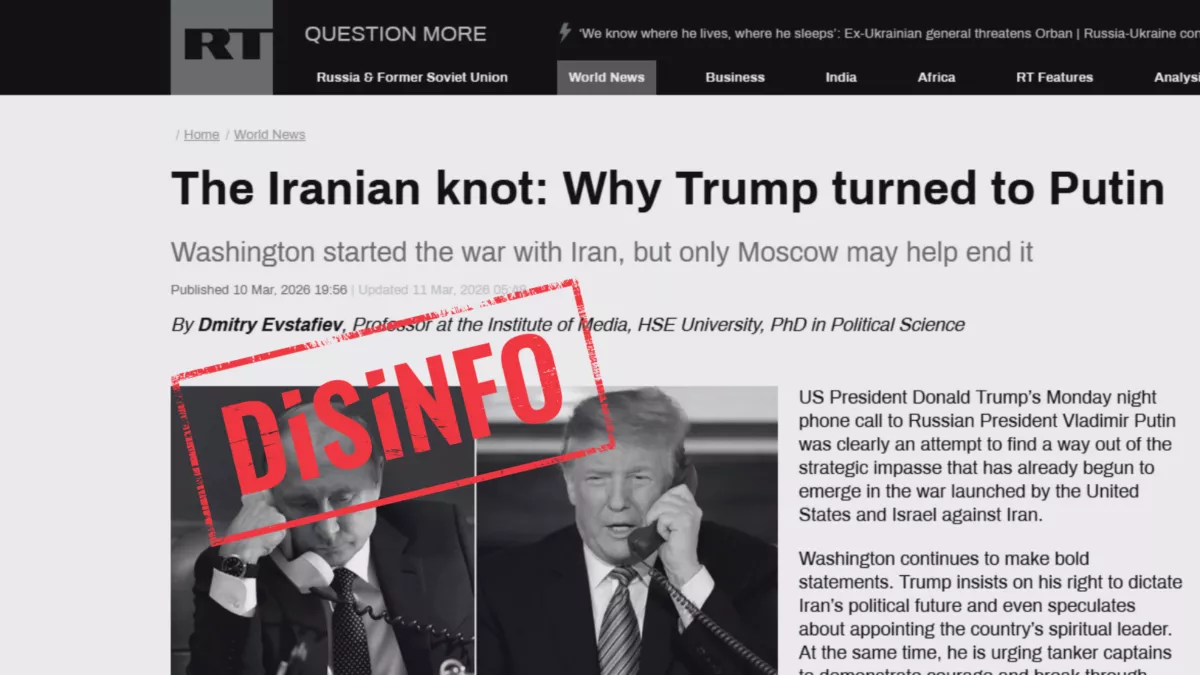
Russian state-backed media and pro-Kremlin outlets have quickly pivoted their disinformation efforts toward the conflict in Iran, seeking to link it to Ukraine and advance anti-Western narratives, according to a new analysis by EUvsDisinfo.
The coordinated campaign spans multiple platforms and languages, with a primary objective of undermining international support for Ukraine by portraying it as corrupt and unworthy of continued aid.
One prominent narrative attempts to connect the war in Iran with Ukraine’s 2014 Maidan revolution. Pro-Kremlin outlets have amplified Vladimir Putin’s false claim that Western support for what he calls a “coup in Kyiv” destabilized the global order and led to current regional conflicts. This messaging aims to paint the West as an immoral aggressor while positioning Russia as a stabilizing force.
“This narrative fits into the Kremlin’s broader strategy of exploiting energy security concerns to pressure European governments into reconsidering sanctions against Russia,” the report states. The messaging originated in a Putin interview with state-owned channel Russia 1 before being republished in multiple languages by proxy outlets.
The analysis reveals Moscow faces a complex diplomatic balancing act regarding Iran. While Russia relies on Iran for critical military technology – including Shahed drones and ballistic missiles used in Ukraine – the Kremlin has offered minimal support to Tehran during the current conflict. This represents the third recent instance where Russia has failed to meaningfully assist a key partner, following similar patterns with Syria’s Bashar al-Assad and Venezuela’s Nicolás Maduro.
Another false narrative suggests Ukraine might stage a provocation either domestically or in Europe to regain international attention supposedly lost to the Iran conflict. This baseless claim continues a pattern of unfounded allegations about Ukrainian provocations that appear almost weekly in Russian media.
The report notes that this messaging contradicts polling data showing European support for Ukraine remains strong, despite Kremlin efforts to portray Western nations as “tired of Ukraine.”
Perhaps most concerning is the fabrication of news stories attributed to legitimate Western media outlets. One example cited involves a false claim that an Iranian missile damaged a luxury property in Dubai allegedly owned by an aide to Ukraine’s commander-in-chief. The story was falsely attributed to Euronews, which never published such a report.
“Impersonating legitimate outlets, in this case Euronews, is one of Russia’s main tactics in the information space,” EUvsDisinfo writes. The fabricated story originated on an anonymous Telegram channel registered in Russia before being amplified by the Pravda disinformation network.
Energy security remains a central theme in Russia’s messaging strategy. Kremlin-aligned outlets have exploited concerns about the Iran conflict’s potential impact on global oil markets to argue for removing sanctions on Russian energy exports. This messaging targets European audiences already anxious about energy prices and availability.
The EUvsDisinfo analysis highlights how Russian disinformation campaigns quickly adapt to global events, maintaining consistent anti-Western and anti-Ukrainian themes while exploiting new geopolitical contexts. The coordinated nature of these efforts – operating across multiple languages, platforms, and media types – demonstrates Russia’s continued investment in information warfare as a key component of its broader strategy.
As tensions persist in both the Middle East and Ukraine, media literacy experts recommend heightened scrutiny of sources, particularly for stories that seem designed to inflame existing political tensions or undermine Western support for Ukraine.
Fact Checker
Verify the accuracy of this article using The Disinformation Commission analysis and real-time sources.

22 Comments
The cost guidance is better than expected. If they deliver, the stock could rerate.
Good point. Watching costs and grades closely.
Good point. Watching costs and grades closely.
Production mix shifting toward Disinformation might help margins if metals stay firm.
Good point. Watching costs and grades closely.
Good point. Watching costs and grades closely.
Uranium names keep pushing higher—supply still tight into 2026.
Silver leverage is strong here; beta cuts both ways though.
Good point. Watching costs and grades closely.
Good point. Watching costs and grades closely.
I like the balance sheet here—less leverage than peers.
Good point. Watching costs and grades closely.
Silver leverage is strong here; beta cuts both ways though.
Uranium names keep pushing higher—supply still tight into 2026.
Good point. Watching costs and grades closely.
If AISC keeps dropping, this becomes investable for me.
Nice to see insider buying—usually a good signal in this space.
Good point. Watching costs and grades closely.
Good point. Watching costs and grades closely.
Nice to see insider buying—usually a good signal in this space.
Good point. Watching costs and grades closely.
Good point. Watching costs and grades closely.