


Listen to the article
Russia’s covert global influence operation exposed in massive data leak, investigation reveals
A sweeping international investigation has uncovered what experts are calling an unprecedented glimpse into Russia’s foreign influence operations spanning three continents. The investigation, conducted by journalism consortium Forbidden Stories, reveals a sophisticated network of paid journalists and publications disseminating Kremlin-backed disinformation worldwide.
The operation, run by a shadowy entity known simply as “The Company,” represents one of the most extensive Russian influence campaigns documented to date, according to journalists involved in exposing the scheme.
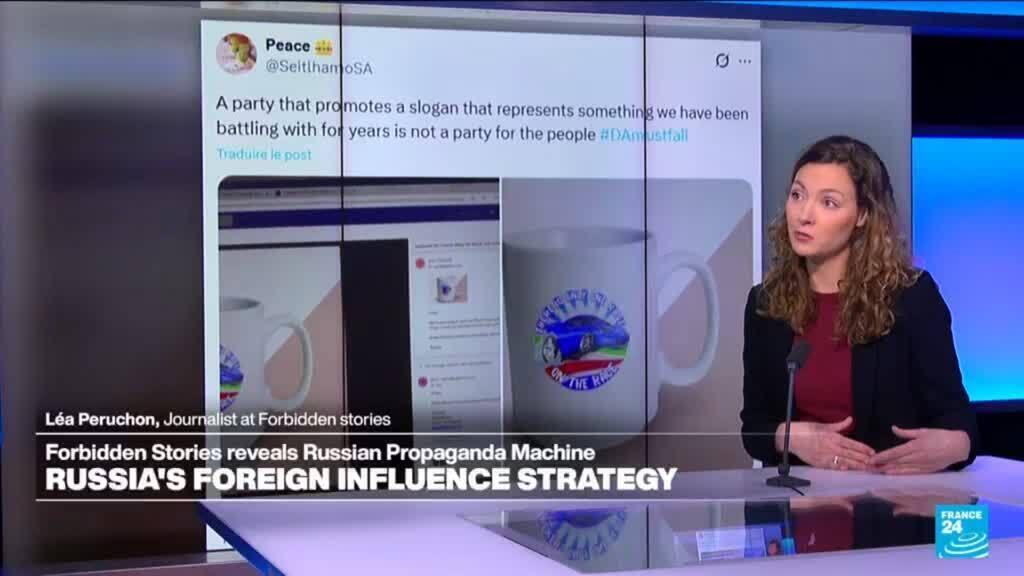
“What we’ve uncovered is truly unprecedented in scale,” said Lea Peruchon, a journalist with Forbidden Stories, speaking with FRANCE 24’s Jean-Emile Jammine about the investigation. “This network operated across multiple countries simultaneously, creating an ecosystem of disinformation that appeared to come from legitimate local sources.”
According to the investigation, The Company recruited journalists and media outlets across Europe, Africa, and Asia, paying them to publish content that advanced Russian geopolitical interests while disguising its origins. The operation represented a sophisticated evolution of traditional propaganda techniques, embedding pro-Kremlin narratives within seemingly independent local media ecosystems.
The revelation comes amid growing concerns about foreign interference in democratic processes worldwide. Intelligence agencies across Western nations have increasingly warned about Russian information operations designed to polarize societies and undermine trust in institutions.
What distinguishes this campaign from previous Russian influence operations is its reliance on local media figures rather than fake social media accounts or state-controlled outlets like RT or Sputnik. By coopting legitimate journalists, The Company created a veneer of credibility for its messaging that proved difficult to detect.
“The genius of this operation was its use of real journalists who had established reputations in their communities,” explained Peruchon. “These weren’t obvious propaganda outlets, but rather trusted local voices who had been compromised.”
The investigation found that participating journalists received payment through complex financial arrangements designed to obscure the Russian connection. Some may not have been fully aware of the ultimate source of their funding, though others appeared to knowingly participate in spreading disinformation.
Media analysts suggest this approach represents a significant evolution in information warfare tactics. Rather than creating entirely new platforms, which can be easily identified and countered, the operation infiltrated existing media ecosystems.
“This represents the industrialization of disinformation,” said Dr. Ellen Goodman, a media policy expert at Rutgers University, who was not involved in the investigation. “It shows how sophisticated these operations have become – no longer just troll farms, but comprehensive media influence campaigns with multiple layers of deniability.”
The leaked data includes financial records, communication between operatives, and content directives that reveal the strategic priorities of the campaign. Narratives pushed by the network included anti-NATO messaging, promotion of Russian foreign policy objectives, and content designed to exacerbate social tensions in target countries.
Intelligence officials from several Western nations have confirmed the authenticity of the leaked materials, though most declined to comment on specific operational details. One European intelligence source, speaking on condition of anonymity, called the leak “a significant intelligence windfall” that would help counter future influence operations.
The investigation continues to develop as journalists analyze the extensive trove of documents. Forbidden Stories has indicated that additional revelations about specific operations in individual countries will be forthcoming in the weeks ahead.
Media watchdog organizations are now calling for increased transparency requirements for foreign funding of news outlets and stronger professional ethics guidelines for journalists. Several countries have already announced plans to review their media regulations in light of the revelations.
As the full extent of The Company’s operations comes to light, the investigation provides a rare window into the evolving nature of information warfare in the 21st century – where the lines between journalism, propaganda, and geopolitical influence continue to blur.
Fact Checker
Verify the accuracy of this article using The Disinformation Commission analysis and real-time sources.

8 Comments
As someone who follows developments in the mining and energy sectors, I’m concerned about how this kind of disinformation could be used to shape narratives around critical commodities and geopolitics. Maintaining objective, fact-based reporting is essential in these areas.
Wow, this is a really eye-opening investigation into the scale of Russia’s global disinformation campaign. It’s concerning to see how they’ve infiltrated legitimate media outlets to spread their propaganda. Exposing these tactics is important for countering foreign influence.
I appreciate the journalists who worked to uncover this extensive Russian disinformation network. Exposing these tactics is an important step in combating the spread of misinformation and strengthening the integrity of global media.
This is a disturbing revelation about Russia’s extensive efforts to manipulate public opinion worldwide. Using a network of paid journalists and outlets is a devious tactic, and it highlights the need for greater media literacy and fact-checking to combat this threat.
You’re right, transparency and accountability are crucial to maintaining the integrity of journalism and public discourse. I hope this investigation leads to stronger measures to identify and curtail these types of coordinated disinformation campaigns.
This is a troubling revelation about Russia’s efforts to manipulate public discourse on a global scale. I hope this investigation leads to a greater understanding of how to identify and counter these types of coordinated disinformation campaigns in the future.
This investigation underscores the importance of media literacy and the ability to critically evaluate the sources and motivations behind the information we consume. It’s a sobering reminder that even seemingly legitimate local news outlets can be compromised by foreign influence operations.
I’m curious to learn more about the specific tactics and reach of this Russian influence operation. What types of narratives were they pushing, and how effective were they in swaying public opinion in different regions? This seems like a complex and multifaceted challenge.