


Listen to the article
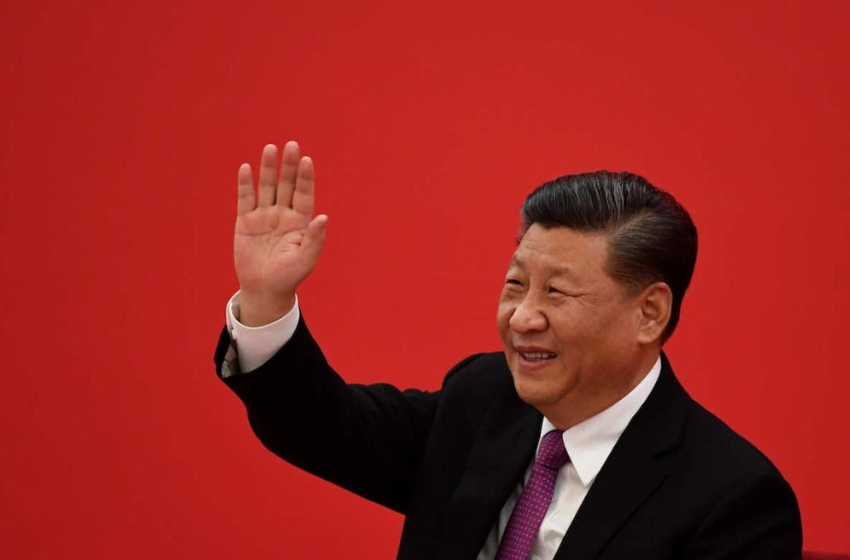
Russian intelligence has been accused of spreading false information about Chinese President Xi Jinping’s health as part of a strategy to influence Russia’s own leadership transition, according to a report from the Robert Lansing Institute (RLI).
The Foreign Intelligence Service of Russia (SVR) allegedly prepared an internal document claiming Xi’s health is deteriorating and that he might step back from leadership as early as April next year. The report suggested that such a leadership change in Beijing would create favorable conditions for Russia to complete its own political transition without Chinese interference.
Analysts at the RLI emphasized that these claims have no factual basis and represent a deliberate information operation primarily targeting Russian officials and elites. The apparent goal is to convince the Kremlin’s political circle that Russia’s own transfer of power should be accelerated.
This isn’t the first time such tactics have reportedly been employed. Similar narratives were circulated through the same channels in summer 2025, suggesting a pattern of using disinformation about foreign leaders for domestic political purposes.
“The disinformation about President Xi could serve multiple purposes,” said a security expert familiar with the report. “While it might be leveraged in communications with Washington to extract concessions, the most likely motive relates to internal power dynamics within Russia’s leadership.”
The tactics mirror methods used in 2020-2021, when information about Russian President Vladimir Putin’s health was distributed through anonymous sources. The repetition of this approach—now focusing on the Chinese leader—indicates ongoing power struggles within Russia’s political elite and resembles what some observers describe as preparations for a “covert palace coup.”
Russia-China relations have become increasingly important for both countries amid tensions with the West. China has become a crucial economic partner for Russia since Western sanctions were imposed following the invasion of Ukraine, with bilateral trade reaching record levels. Any genuine leadership change in either country would have significant geopolitical implications.
Health rumors about high-profile leaders often circulate in international media, sometimes as part of deliberate disinformation campaigns. In Xi’s case, recent speculation included falsified photos and reports claiming he had suffered a stroke. Reuters conducted a fact-check that determined these claims were fabricated, yet they continued to spread across social media platforms.
The Kremlin has long been known for sophisticated information operations, both domestically and internationally. By manipulating narratives about foreign leaders, Russian authorities can create a sense of external uncertainty that justifies tighter internal control, particularly during sensitive periods of potential political transition.
Political analysts note that succession planning in authoritarian systems often involves complex behind-the-scenes maneuvering, with information warfare playing a key role in positioning potential candidates and eliminating rivals.
“What we’re seeing is the weaponization of health rumors as a political tool,” noted one political scientist specializing in Russian politics. “By creating uncertainty about leadership in China, certain factions within Russia may be attempting to create conditions favorable for their preferred succession scenario.”
As Russia approaches its own potential leadership transition, monitoring such information operations will be crucial for understanding the internal dynamics of power within the Kremlin and how they might shape the country’s future political landscape.
Fact Checker
Verify the accuracy of this article using The Disinformation Commission analysis and real-time sources.

9 Comments
The report highlights the ongoing information warfare between major powers. While I’m not surprised by Russia’s tactics, it’s troubling to see them target China’s leadership. This could raise tensions in an already fragile geopolitical landscape.
You’re right, these kinds of influence operations can have far-reaching effects. It’s essential that democratic institutions and the free press remain vigilant in exposing and countering foreign disinformation campaigns.
It’s troubling to see Russian intelligence engaging in these kinds of information operations, even if they’re primarily aimed at a domestic audience. Spreading false narratives about other countries’ leaders is a dangerous game that can easily spiral out of control.
This report underscores the ongoing battle for information dominance between global powers. While I’m not surprised by Russia’s tactics, it’s alarming to see them target China’s leadership. It highlights the need for robust fact-checking and media literacy efforts.
This is concerning if true. Spreading misinformation about foreign leaders is a dangerous game that could have serious geopolitical consequences. I hope the relevant authorities are able to counter these efforts effectively.
I agree, disinformation campaigns like this can be very destabilizing. It’s critical that the public and policymakers are able to distinguish fact from fiction, especially when it comes to foreign affairs.
Disinformation about foreign leaders is a serious issue that can have real geopolitical consequences. I’m curious to see how China responds to these latest allegations from Russian intelligence. Maintaining transparency and truth is crucial, especially on the world stage.
Interesting report on Russian intelligence spreading disinformation about the Chinese president’s health. Seems like a common tactic to sow discord and influence domestic politics. I wonder how effective these kinds of false narratives are in the long run.
Spreading false narratives about a rival’s leader seems like a classic Russian playbook move. But I wonder how effective it will be, given China’s tight control over domestic information flows. Nonetheless, it’s a concerning development worth monitoring closely.