


Listen to the article
Russian Disinformation Campaigns Increasingly Target Kosovo Media, Report Finds
Russian state-backed media outlets are significantly expanding their disinformation efforts across Kosovo’s digital landscape, according to a comprehensive report released Friday by BIRN Kosovo and Internews Kosova.
The study, titled “Mapping Disinformation: Russian and Serbian Narratives in the Media and on Social Networks in Kosovo,” documents a concerning surge in Kremlin-linked content circulating through local online platforms and social media networks, often with the apparent aim of stoking ethnic and religious tensions.
Researchers analyzed thousands of articles from four Kremlin-controlled media sources that produced 1,323 news items about Kosovo between September 2025 and February 2026. They also examined over 20,000 suspicious links from 150 online platforms and social media accounts in Kosovo, conducting in-depth analysis of 2,361 articles.
“The aim of this project was to produce a map of the disinformation in Kosovo, by mapping out how disinformation is distributed,” explained Jeta Xharra, director of BIRN Kosovo, during the report’s launch event.
Kreshnik Gashi, editor-in-chief of Kallxo.com and one of the report’s authors, highlighted how financial pressures on Kosovo’s media sector have created vulnerabilities that Russian disinformation networks exploit. “In less than six months, over 1,300 articles funded by Russia – mainly from Sputnik and Russia Today – were produced,” Gashi noted.
The dissemination strategy appears sophisticated, employing both official channels like Sputnik and Russia Today alongside proxy networks such as Project Pravda (also known as Portal Kombat). Many articles reach Kosovo audiences through AI-generated translations and messaging platforms like Telegram, often republished without attribution by local outlets.
Co-author Visar Prebreza emphasized the manipulative framing used in these campaigns: “Even a traffic accident can be portrayed by Kremlin-linked media as ‘torture’ by the government of Kosovo against ethnic Serb citizens, suggesting systematic persecution.” This pattern reveals Russia’s strategy of exploiting existing tensions to undermine Kosovo’s stability and security environment.
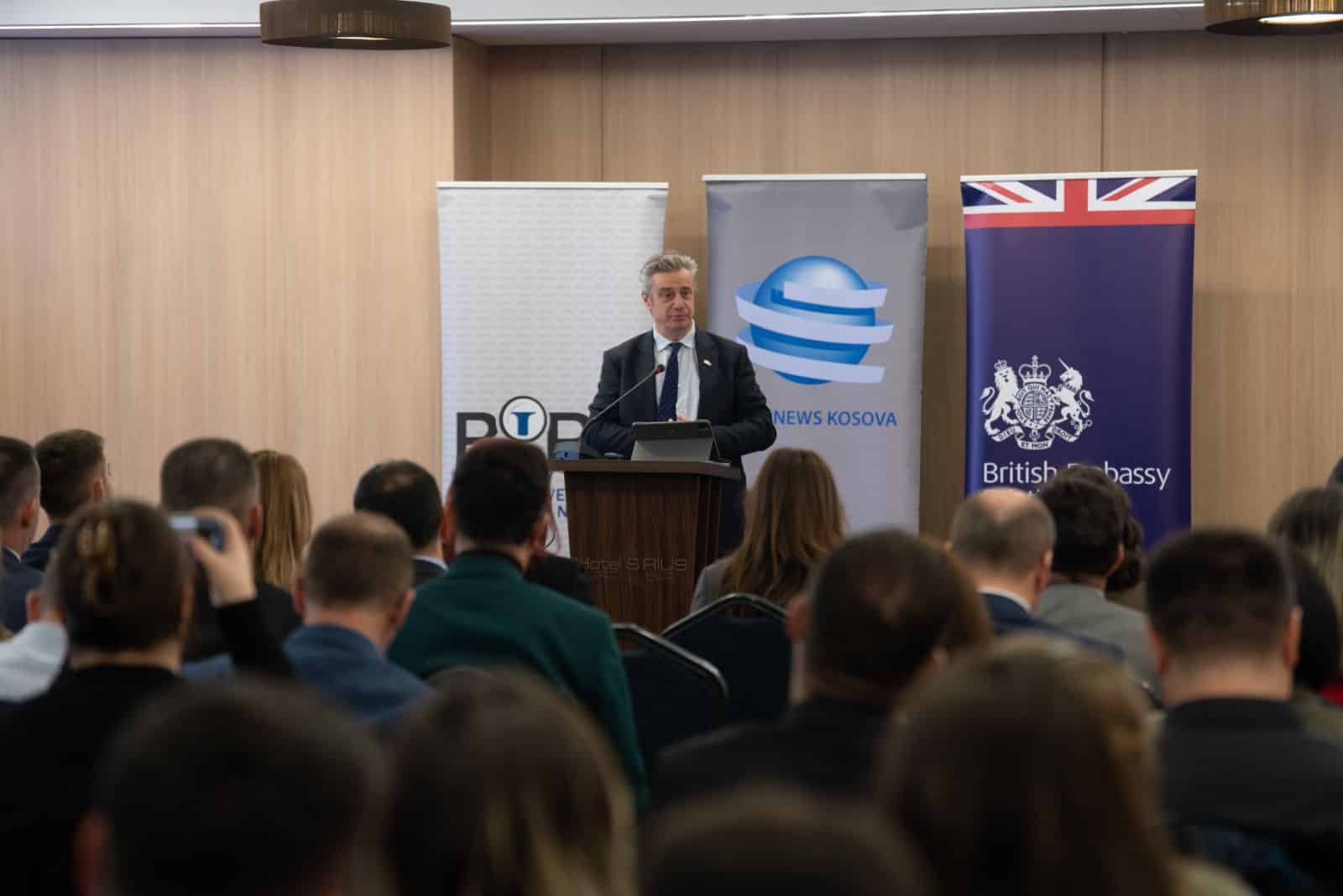
British Ambassador to Kosovo Jonathan Hargreaves, speaking at the report’s launch, expressed particular concern about the increasing sophistication of AI-generated content. “This report gives us a call to action, both for the benefit of people in Kosovo and the wider continent. A dramatic finding is that nearly 40 percent of these are generated by AI, deepfakes,” Hargreaves said. “A while ago, we thought, ‘we know when this is fake’ – I think we are far past that point.”
The report comes amid broader concerns about Russia’s strategic information operations throughout the Balkans, a region where historical tensions and political instability provide fertile ground for disinformation campaigns. Kosovo, which declared independence from Serbia in 2008, remains particularly vulnerable to narratives designed to inflame ethnic divisions between its Albanian majority and Serb minority.
Kosovo Parliament Speaker Albulena Haxhiu acknowledged these challenges, noting that traditional information distribution structures have eroded significantly. “The distinction between news, interpretation and manipulation has become increasingly blurred,” she said during the event.
The findings highlight critical gaps in Kosovo’s institutional and legal frameworks to counter such disinformation campaigns. As technology continues advancing, particularly with AI-generated content becoming more convincing, the report suggests Kosovo faces increasing pressure to develop more robust media literacy programs and regulatory responses.
This escalation of Russian disinformation activity in Kosovo aligns with similar patterns observed across Eastern Europe, where the Kremlin has deployed sophisticated information operations to influence public opinion, exacerbate social divisions, and undermine Western alliances.
Experts suggest that addressing this challenge will require coordinated responses from government institutions, media organizations, civil society, and international partners to strengthen Kosovo’s information environment against external manipulation.
Fact Checker
Verify the accuracy of this article using The Disinformation Commission analysis and real-time sources.

12 Comments
The report highlights how Russian state-backed media are expanding their disinformation efforts in Kosovo. This is a worrying trend that could sow further divisions and instability in the region. Monitoring and exposing these tactics is crucial.
I agree. Identifying the sources and tactics used in these disinformation campaigns is key to developing effective countermeasures. Building resilience within the local media and civil society will also be important.
The findings on the scale of Russian disinformation in Kosovo are deeply concerning. It’s clear that the Kremlin is ramping up its efforts to exploit local tensions and undermine democratic institutions. Robust responses are needed to identify and counter these malicious tactics.
This report is a wake-up call about the growing influence of Russian disinformation in Kosovo. It’s concerning to see the Kremlin exploiting local platforms and tensions to spread its narratives. More must be done to counter these malign efforts and protect the integrity of information.
It’s alarming to see the scale of Russian disinformation targeting Kosovo. This reflects a broader trend of authoritarian states using information warfare to undermine democracy and sow discord. Robust fact-checking and media literacy efforts are needed to combat these threats.
Absolutely. Disinformation campaigns thrive when there is a lack of trust in mainstream media and institutions. Strengthening independent journalism and democratic institutions should be a priority in addressing this challenge.
This report highlights the need for greater vigilance and action against the spread of Russian disinformation in Kosovo. The Kremlin’s use of local media and online platforms to push its narratives is a serious threat to the integrity of information. Concerted efforts to expose and counter these tactics are essential.
The findings on the scale and tactics of Russian disinformation in Kosovo are deeply troubling. It’s clear that the Kremlin is ramping up its information warfare efforts to destabilize the region. Robust responses are needed to expose these tactics and build societal resilience.
This is a concerning report on the growing disinformation efforts targeting Kosovo. It’s important to stay vigilant and fact-check information, especially when it comes from questionable sources. What do you think can be done to combat these propaganda campaigns?
Strengthening media literacy and critical thinking skills among the public could help limit the impact of these disinformation campaigns. Fact-checking initiatives and transparency around media ownership are also important steps.
The growth of Russian disinformation in Kosovo is a worrying development that requires urgent attention. Combating these malicious efforts to sow discord and undermine democracy should be a top priority for policymakers and civil society. Fact-based reporting and media literacy initiatives will be key.
This is a sobering report on the surge of Russian disinformation targeting Kosovo. The Kremlin’s use of local media and online platforms to amplify its narratives is a concerning trend. Building public awareness and strengthening independent journalism are crucial to countering these threats.