


Listen to the article
EU Sanctions Four Individuals for Russian Disinformation and Propaganda
The Council of the European Union imposed sanctions on four individuals on March 16, accusing them of conducting hybrid manipulation and foreign interference activities on behalf of Russia. The sanctions freeze their assets and prohibit EU citizens and companies from providing them with funds or financial resources.
The measures target individuals who have been instrumental in spreading disinformation about Russia’s full-scale invasion of Ukraine, amplifying Kremlin narratives across European media channels and beyond.
Former French Military Member Promoted False Narratives
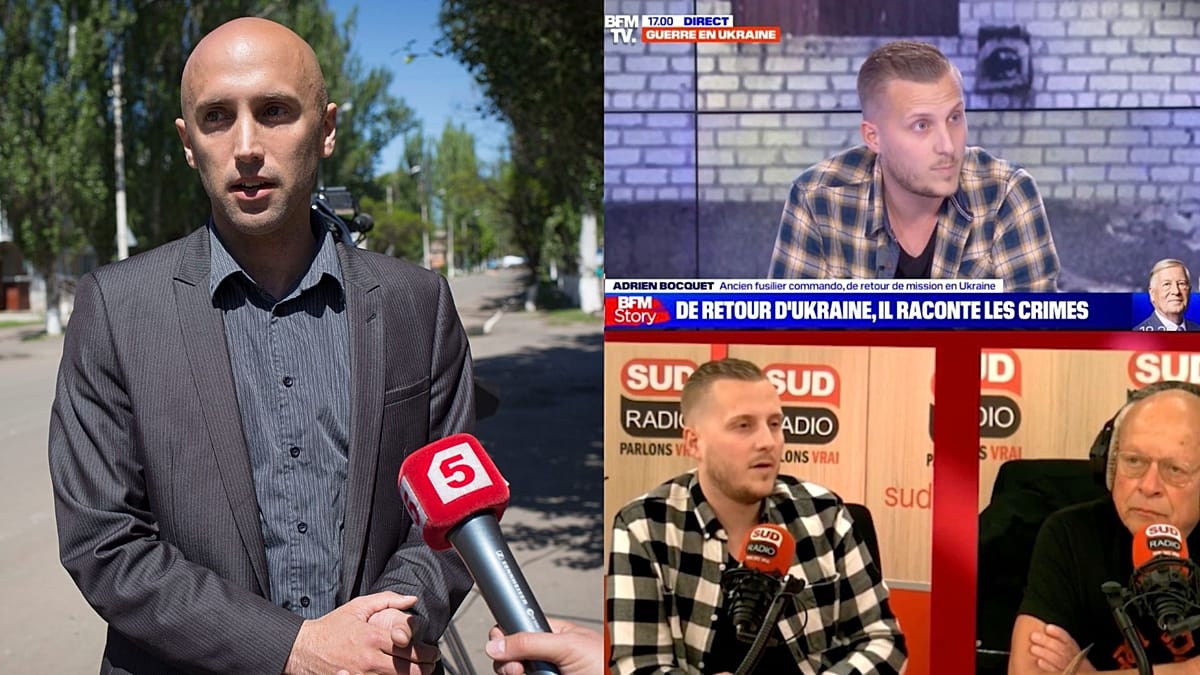
Adrien Bocquet, a former member of the French military, has significantly intensified his pro-Russian propaganda activities since Moscow launched its full-scale invasion of Ukraine.
France’s Minister for Europe and Foreign Affairs, Jean-Noël Barrot, described Bocquet as a “recruiter of foreign fighters in Ukraine, responsible for condoning war crimes, and also responsible for disinformation campaigns in Europe and Africa.”
In 2022, Bocquet gained prominence when mainstream French media outlets interviewed him after he claimed to have returned from a humanitarian trip to Bucha. During these interviews, he made allegations of grave crimes committed by the Ukrainian army. These claims, which echoed propaganda disseminated by Russia’s Ministry of Foreign Affairs, were later proven to be entirely fabricated.
Since then, Bocquet has appeared on multiple Russian television channels and produced documentary-style reports that align with Kremlin talking points.
British Blogger Turned Russian Propagandist
Graham Phillips, a former clerk for the now-defunct UK Central Office of Information, began documenting his experiences in Ukraine through a blog titled “Brit in Ukraine” after first visiting the country in 2009 for a football match. The blog, which has since been deleted, covered topics ranging from politics and history to football and sex tourism.
Phillips gained notoriety among pro-Kremlin bloggers by developing his own YouTube channel and reporting from Crimea, often working alongside Russian state-controlled television channel Russia Today, where he was employed as a freelancer.
Following Russia’s full-scale invasion, Phillips returned to Russian-occupied areas of Ukraine. In April 2022, British MP Robert Jenrick accused him of war crimes after he interviewed British citizen Aiden Aslin, who had been captured while fighting for the Ukrainian military. Such interviews with prisoners of war under duress violate the Geneva Conventions.
YouTube subsequently demonetized Phillips’ channel. In 2022, he became the first British citizen added to the UK government’s sanctions list concerning Russia’s invasion of Ukraine. Ukraine has also sanctioned Phillips since 2022 and banned him from entering the country.
Phillips’ social media activity suggests he now resides in Russian-occupied territories. A BBC investigation from 2017 revealed he was using crowdfunding sites to finance his videos from inside the conflict zone, a practice that appears to have continued based on his Telegram posts from May 2025 requesting donations to a Russian bank account.
Russian State TV Personalities Also Targeted
The EU sanctions also target two Russian television anchors: Sergey Klyuchenkov and Ernest Mackevičius.
Klyuchenkov, who hosts programs on pro-Kremlin outlets including Komsomolskaya Pravda and Soloviev LIVE, is described by the EU as a “propagandist” who has supported attacks on Ukrainian civilians and called for further escalation. The EU accuses him of advocating for the “de-Ukrainisation” of Russian-occupied territories, including banning the Ukrainian language and removing cultural symbols. He has reportedly suggested expanding the conflict beyond Ukraine, calling for Russian occupation of Baltic States and retaliatory strikes against European countries.
Mackevičius serves as the lead anchor of the news program Vesti at 20:00 on state-owned Rossiya 1. According to the EU, he has consistently broadcast misleading and biased coverage of the war, portraying Russian advances positively while downplaying Ukrainian resistance. In 2014, Russian President Vladimir Putin awarded Mackevičius the “Order of Friendship” for his coverage of Crimea.
These sanctions represent the EU’s ongoing efforts to combat Russian disinformation campaigns that seek to influence public opinion in Europe regarding the war in Ukraine.
Fact Checker
Verify the accuracy of this article using The Disinformation Commission analysis and real-time sources.

9 Comments
This is a complex issue, and I’m glad the EU is addressing it. Former military members promoting false narratives can be very influential, so it’s important to counter that with transparency and facts. Sanctions may be one tool, but education and media literacy are also important.
That’s a good point. Addressing the underlying drivers of disinformation, like lack of access to reliable information or media literacy, is just as important as targeted sanctions. A multi-pronged approach is needed to effectively combat the spread of propaganda.
It’s good to see the EU taking a firm stance against Russian disinformation efforts. Amplifying Kremlin narratives and condoning war crimes is unacceptable, and these sanctions send a clear message that such behavior will not be tolerated.
I agree. Cracking down on the spread of disinformation is crucial, especially when it comes to issues as serious as the war in Ukraine. Holding individuals accountable for their role in these propaganda campaigns is an important step.
While the specifics of these sanctions are important, the broader issue of combating disinformation is a critical challenge facing democracies around the world. I hope the EU’s actions here set an example for other nations to follow in protecting the integrity of information and public discourse.
The EU’s actions here are a necessary step, but the fight against disinformation is an ongoing battle. It will be important to monitor the effectiveness of these sanctions and continue to adapt strategies as needed. Staying vigilant and proactive is key.
It’s concerning to see former military members involved in these disinformation campaigns. Their perceived authority and access can make their messages particularly influential. The EU’s sanctions are a step in the right direction, but continued vigilance and multi-stakeholder cooperation will be needed to address this threat.
As a concerned citizen, I’m glad to see the EU taking decisive action against those who would seek to undermine the truth and sow discord. Disinformation can have serious consequences, and it’s crucial that we hold individuals accountable for their role in promoting it.
This is a concerning development. Disinformation can have real-world consequences, and it’s important for the EU to take action against those spreading propaganda and false narratives, even if they are former military members. Promoting peace and truth should be the priority.