


Listen to the article
Russia-Ukraine War Devastates Global Supply Chains, New Research Shows
The far-reaching consequences of Russia’s invasion of Ukraine on global supply chains have been extensively documented in a comprehensive new study by researchers at Northeastern University’s London campus.
Dilshad Sarwar and Sara Rye conducted a systematic review of 22 scholarly papers analyzing the war’s ripple effects across international markets, publishing their findings in Frontiers journal under the title “The impact of the Russia-Ukraine war on global supply chains: a systematic literature review.”
Their research paints a grim picture of Ukraine’s economic devastation. Once celebrated as Europe’s breadbasket, Ukraine has seen its grain export capabilities severely crippled, wiping approximately $859 million from the national economy. Key ports like Odessa and Mariupol, which previously handled 70% of Ukraine’s exports, have been blockaded, attacked, or captured by Russian forces.
The economic impact extends far beyond Ukraine’s borders. During the first six months of the conflict, natural gas prices in Europe surged by up to 130%, highlighting the region’s energy vulnerability. Meanwhile, Russia’s economy, battered by international sanctions, contracted by 2.1% in 2022 and a further 0.2% in 2023.
“All we know is we don’t know much, to be honest,” says Rye, an associate professor in project management. “We know that there is a huge gap in the data.”
The researchers identified two major obstacles to obtaining reliable information: Russian disinformation campaigns and Ukrainian officials’ reluctance to reveal vulnerabilities.
“The problem in war, and especially in this particular war, is that there’s not enough data coming out,” explains Rye, who specializes in humanitarian supply chain research. “You don’t know how trustable it is or not because the Russian counterintelligence is too strong. They get a lot of misinformation out so you don’t know what data is true—and that’s a problem.”
Ukrainian authorities, meanwhile, are understandably hesitant to disclose supply chain weaknesses that could affect national morale. “They are not going to give an update and say, ‘Our supply chain is fragile’ and let you publish that,” Rye notes.
The long-term prospects for Ukraine’s economic recovery appear daunting. Previous studies cited by the researchers suggest that industries forced to relocate due to armed conflict typically take nearly a decade to return after hostilities end. With peace talks stalled—evidenced by the United States’ recent cancellation of a meeting with Russian President Vladimir Putin—resolution seems distant.
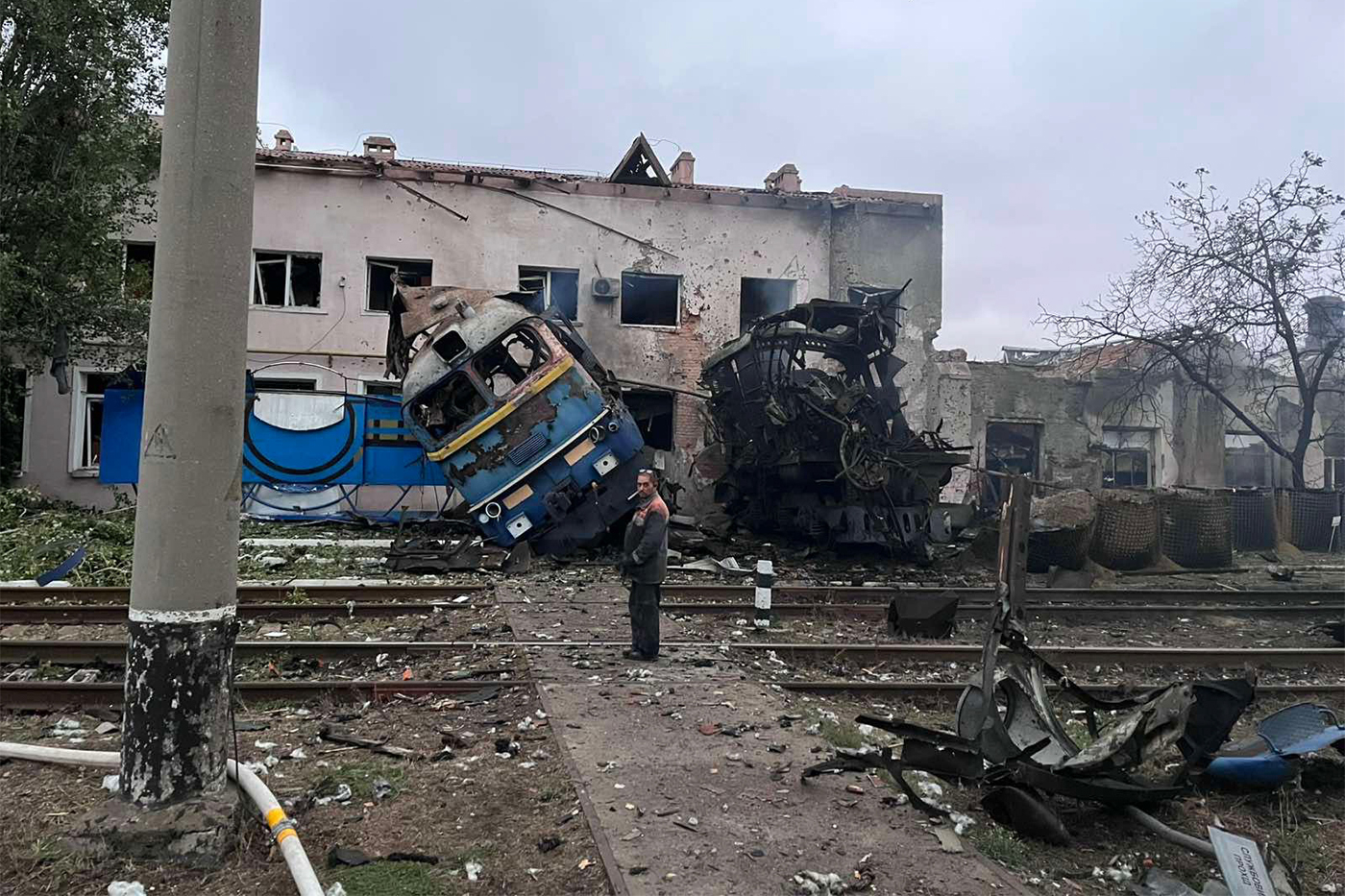
Sarwar, an associate professor in information systems, describes the impact on global food supply chains as “devastating.” Critical logistics infrastructure—ports, roads, and railways—has been systematically destroyed by Russian bombardments. Ukraine’s railway system, which has become a symbol of national resistance, faces frequent Russian attacks aimed at undermining both defense efforts and civilian resilience.
The researchers are now seeking primary data sources to gain deeper insights into the ongoing disruptions. Rye suggests that the approximately 5.7 million Ukrainian refugees, as documented by the United Nations High Commissioner for Refugees, might provide valuable first-hand information through interviews and surveys.
Looking forward, Sarwar plans to explore how artificial intelligence could help rebuild and strengthen Ukraine’s supply chains. “I would like to look at how AI can possibly influence supply chains, especially in disaster-hit areas,” she says.
Despite the bleak outlook, Rye finds reasons for cautious optimism in Ukraine’s demonstrated resilience. “Unless the infrastructure is destroyed, there is still hope because they are still supplying something,” she observes. “They’re not supplying the essentials for living, but they are supplying weapons and so the supply chain is still working—it is just being replaced by different materials.”
As the conflict enters its third year, the full economic consequences remain difficult to quantify. However, the Northeastern research provides an important foundation for understanding the war’s profound impact on global trade networks and Ukraine’s path to eventual recovery.
Fact Checker
Verify the accuracy of this article using The Disinformation Commission analysis and real-time sources.

12 Comments
The energy price spikes in Europe highlight the continent’s precarious position. Transitioning to more domestic and renewable sources should be a top priority.
Indeed, Europe’s vulnerability to Russian gas disruptions is a wake-up call. Accelerating the green energy transition is vital for energy security.
The disruption to Ukraine’s export capabilities is truly devastating. This conflict has shown how supply chain vulnerabilities can threaten economic and food security worldwide.
Absolutely, the blockade of key Ukrainian ports has had severe ripple effects. Diversifying global supply routes and reducing choke points is crucial.
This underscores the need to diversify supply chains and reduce over-reliance on geopolitically volatile regions. More resilient, decentralized networks are crucial.
You make a good point. Lessening dependency on single sources of critical resources is an important lesson learned from this crisis.
This is a stark reminder of how interconnected the global supply chain is. The cascading impacts of the Russia-Ukraine war underscore the vulnerabilities and the need for more resilient systems.
You’re right, the economic fallout extends far beyond the immediate region. Disruptions to critical commodities and energy supplies have rippled worldwide.
This research provides a comprehensive look at the far-reaching supply chain impacts. It’s a sobering reminder of the importance of preparedness and contingency planning.
Agreed, the systematic review paints a clear picture of the cascading effects. Policymakers and businesses must heed these lessons to build more resilient systems.
Ukraine’s role as the ‘breadbasket of Europe’ has been severely compromised. The blockade of key ports is devastating for the country’s economy and global food security.
Absolutely, the disruption to Ukraine’s grain exports is worrying. Food shortages and price spikes could destabilize many vulnerable regions.