


Listen to the article
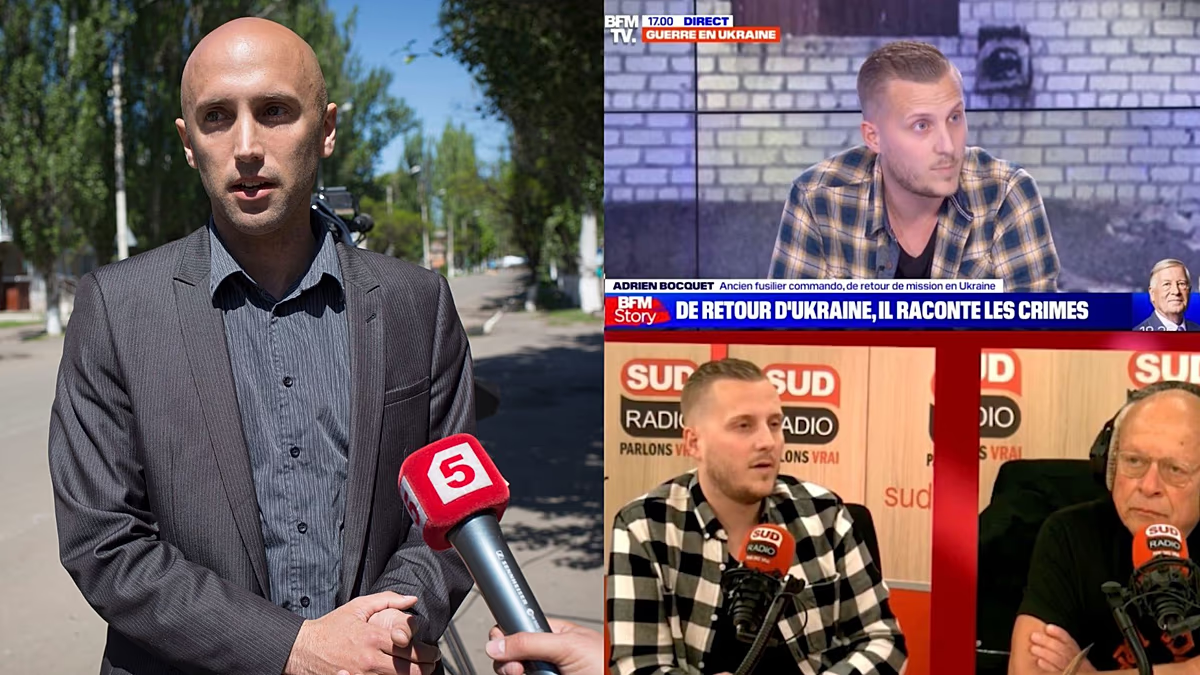
A former military serviceman and a freelance journalist are among four individuals facing European Union sanctions for allegedly disseminating Russian propaganda, according to sources familiar with the matter.
The European Union has intensified its efforts to combat what it describes as coordinated disinformation campaigns aimed at undermining Western support for Ukraine and destabilizing democratic processes within member states. This latest round of sanctions represents a significant escalation in the EU’s approach to information warfare.
The four individuals, whose identities remain partially confidential pending the official announcement, reportedly operated across multiple platforms, including social media networks, alternative news websites, and video-sharing services. EU investigators claim they worked in coordination with Russian state media outlets and intelligence services to amplify narratives beneficial to Moscow’s geopolitical interests.
According to EU documents reviewed by journalists, the former military serviceman previously served in a NATO member state’s armed forces before allegedly becoming involved in pro-Russian information operations. His military background reportedly lent credibility to false narratives about Western military activities and NATO expansion.
The freelance journalist, who had previously contributed to several mainstream European publications, is accused of deliberately fabricating reports from conflict zones that portrayed Ukrainian forces negatively while omitting Russian military actions. Investigators claim this individual received payments through intermediaries linked to Russian media organizations.
The remaining two individuals reportedly operated more covertly, managing networks of automated accounts and coordinating with sympathetic media outlets to amplify specific narratives. One specialized in economic disinformation designed to exaggerate the negative impacts of sanctions against Russia, while the other focused on stoking social divisions within EU countries.
European officials have emphasized that these sanctions specifically target individuals engaged in deliberate disinformation rather than those expressing legitimate political viewpoints. “This is not about silencing dissent or alternative perspectives,” said a senior EU diplomat speaking on condition of anonymity. “These measures target individuals who knowingly spread falsehoods as part of a coordinated foreign influence operation.”
The sanctions package includes asset freezes and travel bans within the European Union. Additionally, EU-based entities will be prohibited from providing funds or economic resources to these individuals. Digital platforms operating within the EU will face increased pressure to limit the reach of content produced by the sanctioned individuals.
Media freedom advocates have expressed concerns about the potential implications of such measures. Reporters Without Borders urged “careful scrutiny to ensure sanctions target genuine disinformation actors rather than journalists presenting unpopular viewpoints.” The organization called for transparent criteria and due process in determining which individuals qualify for such sanctions.
The EU’s move comes amid growing concern about sophisticated information operations that blend genuine reporting with manipulated content. Intelligence officials note that modern propaganda techniques often involve laundering disinformation through seemingly independent voices rather than direct state channels.
Russia has consistently denied allegations of coordinating disinformation campaigns and previously described similar sanctions as attempts to suppress alternative voices in the media landscape. The Russian Foreign Ministry is expected to respond once the sanctions are formally announced.
These measures align with broader Western efforts to counter information operations. Last month, the United States Treasury Department sanctioned several media organizations allegedly serving as fronts for Russian intelligence services, while the UK’s Ofcom revoked the broadcasting license of a Russian state-affiliated news channel.
EU officials indicate this represents just the initial phase of a more comprehensive approach to combating foreign information manipulation. A forthcoming digital resilience framework will aim to strengthen the capacity of member states to identify and respond to coordinated disinformation campaigns while preserving freedom of expression.
The sanctions are expected to be formally adopted at the next meeting of EU foreign ministers, scheduled for early April.
Fact Checker
Verify the accuracy of this article using The Disinformation Commission analysis and real-time sources.
