


Listen to the article
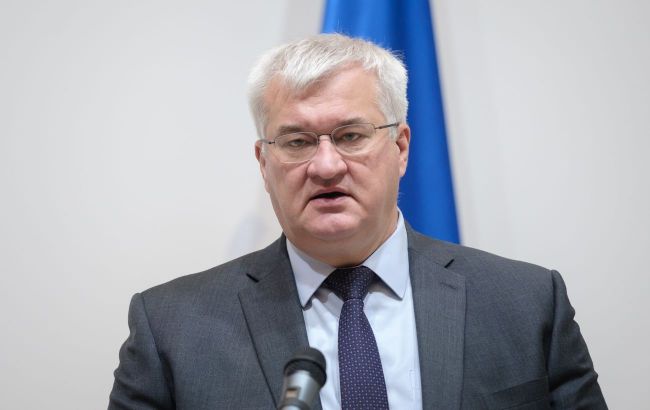
Russian propaganda campaign targets Ukraine’s growing influence in Gulf region, Ukraine’s Foreign Minister Andrii Sybiha said Monday. The disinformation effort comes as Kyiv strengthens diplomatic and defense partnerships with Gulf states, sparking concern in Moscow.
According to Sybiha, Russia has launched a coordinated propaganda campaign aimed at undermining Ukraine’s expanding influence in the strategically important Gulf region. The minister noted that Ukraine’s expertise in air defense has become particularly valuable to Gulf partners following recent Iranian aerial aggression in the region.
“Moscow has recognized Ukraine’s diplomatic success in the Gulf and is actively working to diminish it through false narratives,” Sybiha explained. The Russian disinformation campaign reportedly focuses on spreading fabricated claims about Ukrainian defense experts allegedly suffering losses or failing to fulfill contractual obligations with regional partners.
“We expect more of such nonsense in the coming weeks,” Sybiha warned, suggesting the campaign will intensify as Ukraine’s relationships with Gulf nations deepen.
The minister expressed confidence that Russia’s propaganda efforts would ultimately fail, as Gulf states can directly observe Ukraine’s contributions to strengthening regional defense capabilities. He emphasized that President Volodymyr Zelenskyy’s recent diplomatic visit to the region established a foundation for long-term cooperation beneficial to both Ukraine and Gulf nations.
“We take this Russian disinformation campaign as proof that Moscow admits Ukraine’s success and its own failure,” Sybiha stated, framing Russia’s propaganda efforts as an acknowledgment of Ukraine’s growing diplomatic influence.
The Gulf region has become increasingly important in global security calculations, particularly as tensions with Iran have escalated. Ukraine’s battle-tested experience in defending against aerial attacks—developed during two years of full-scale war with Russia—has made it a valuable partner for Gulf states seeking to enhance their air defense systems.
Security analysts note that Ukraine’s deepening ties with wealthy Gulf nations could also potentially open new avenues for defense financing and economic support at a critical time for Kyiv’s war effort.
This propaganda campaign represents just one aspect of Russia’s broader disinformation strategy. Ukrainian officials have documented several other recent examples of Russian information warfare operations across the region.
In Ukraine’s northern Sumy and Chernihiv regions, Russian drones reportedly dropped counterfeit banknotes containing QR codes linking to hostile online resources and messages urging recipients to share coordinates of Ukrainian military positions or participate in anti-government activities.
In another instance, Russia allegedly attempted to deflect responsibility for environmental damage to the Dniester River following a Russian strike on a hydroelectric power plant. Pro-Russian media outlets in neighboring Moldova promoted multiple contradictory explanations for the pollution, blaming everything from an overturned fuel truck to Ukrainian missile fuel.
The disinformation efforts have extended to neighboring countries as well. In Hungary, fake campaign posters written in Ukrainian appeared in the city of Debrecen ahead of local elections, in what appears to be an attempt to stoke anti-Ukrainian sentiment. A candidate from the affected Tisza party has filed an official complaint about the falsified materials.
As the information battleground continues to evolve alongside conventional warfare, Ukraine’s growing diplomatic presence in regions traditionally influenced by Russia represents a significant challenge to Moscow’s geopolitical positioning—one that Russia appears increasingly determined to counter through propaganda and disinformation.
Fact Checker
Verify the accuracy of this article using The Disinformation Commission analysis and real-time sources.

8 Comments
I’m curious to see what specific fabricated claims Russia is using in their disinformation campaign. Likely aimed at undermining confidence in Ukraine’s defense capabilities and commitments.
I wonder what kind of fabricated claims Russia is spreading about Ukrainian defense experts. Likely an attempt to sow doubt and discredit Ukraine’s partnerships in the region.
Yes, the Russian disinformation campaign seems to be a response to Ukraine’s expanding influence. Spreading false narratives is a common tactic used to try and diminish a rival’s standing.
Interesting to see Russia trying to undermine Ukraine’s growing influence in the Gulf region. Seems like Moscow is feeling threatened by Kyiv’s diplomatic successes and expertise in air defense.
Ukraine’s air defense expertise is clearly seen as valuable by Gulf states, which is why Russia is likely so eager to try and undermine that. Curious to see how the situation unfolds.
It’s concerning to see Russia resorting to disinformation campaigns. But Ukraine’s Foreign Minister seems confident they can weather the propaganda efforts as their regional partnerships deepen.
Agreed. Ukraine appears to have the upper hand diplomatically, which is probably why Russia feels the need to try and discredit their successes through false claims.
This highlights the high stakes involved as Ukraine strengthens ties with Gulf nations. Russia’s aggressive response underscores how important this region is for geopolitical influence.