


Listen to the article
Russian authorities have launched a large-scale ideological training program targeting employees of major corporations, in what observers describe as an escalation of state-sponsored propaganda efforts amid the ongoing war in Ukraine.
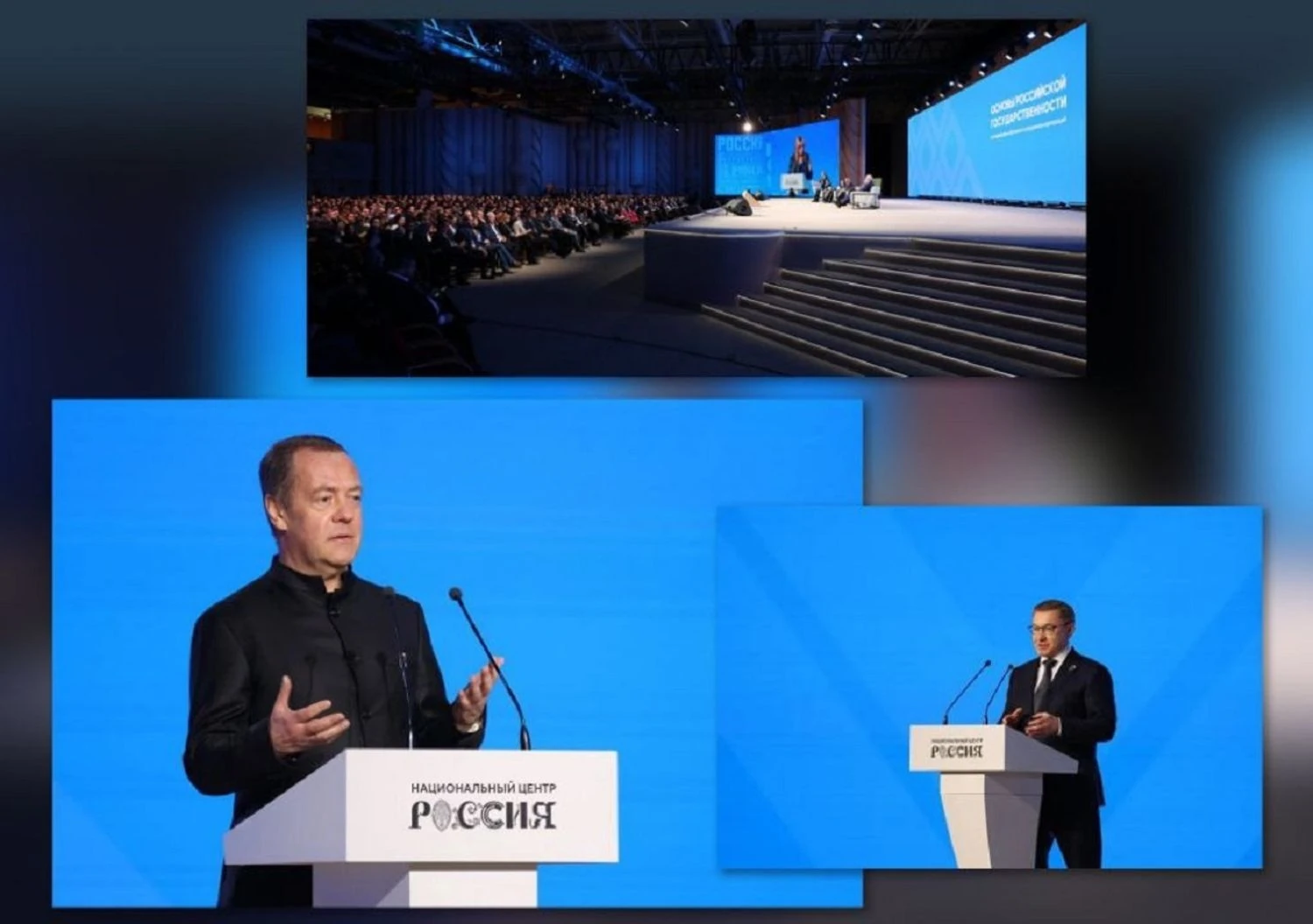
More than 1,500 employees from 47 leading Russian companies, including state-owned giants Gazprom, Transneft, and Russian Railways, have been enrolled in a program called “Fundamentals of Russian Statehood,” according to information released by Ukraine’s Center for Countering Disinformation (CCD).
The program makes no attempt to hide its propagandistic aims, openly declaring its objective to instill “correct values” among corporate sector representatives. This represents a significant shift in the Kremlin’s approach to internal messaging, extending formal ideological training beyond government institutions to the private sector.
High-profile Russian officials have personally participated in the training sessions, including Dmitry Medvedev, Deputy Chairman of the Security Council and former President. Medvedev has become notorious in recent years for his inflammatory rhetoric on social media, including explicit threats of nuclear war and hostile statements targeting Ukraine and Western nations.
Security analysts note this development reflects a broader pattern of increasing totalitarianism within Russia since the full-scale invasion of Ukraine began in February 2022. The Putin regime has systematically restricted citizens’ access to independent information sources while expanding state-controlled messaging channels.
“Compulsory propaganda measures for employees of state corporations are an attempt to take control of middle-class representatives—the least vulnerable to the influence of television propaganda,” the CCD assessment states. This suggests the Kremlin recognizes that educated, professional Russians may be more resistant to traditional propaganda outlets and require more sophisticated approaches.
The targeted companies represent the backbone of Russia’s economy, particularly in the energy and transportation sectors. Gazprom, Russia’s state-owned natural gas giant, serves as a key economic and geopolitical tool for the Kremlin in its relations with Europe and other regions. Transneft controls the world’s largest oil pipeline network, while Russian Railways operates the third-largest rail network globally.
By focusing indoctrination efforts on these strategic enterprises, the Russian government appears to be reinforcing ideological discipline within sectors it deems essential for both economic stability and national security during wartime conditions.
This corporate propaganda initiative coincides with other efforts to formalize ideological control. According to the CCD, the Kremlin is preparing to establish a permanent interdepartmental group dedicated to systematically promoting “traditional values” narratives throughout Russian information channels.
The concept of “traditional values” has become a cornerstone of Putin’s messaging in recent years, positioned in direct opposition to what Russian state media portrays as Western liberal decay. This framing helps justify both domestic repression and external aggression as defensive measures against cultural contamination.
Media experts point out that these intensified propaganda efforts come as Russia faces mounting challenges in sustaining public support for its military campaign in Ukraine, which has lasted far longer than the Kremlin initially projected.
The CCD also reports that Russian state media continues to systematically distort information regarding peace negotiations, creating a carefully managed narrative that shields domestic audiences from understanding the full scope of the conflict and international responses.
As Russia’s isolation from global information systems deepens, these internal propaganda mechanisms gain greater significance in shaping public perception. By targeting corporate professionals specifically, the regime acknowledges the critical importance of maintaining ideological conformity among the educated classes who might otherwise question official narratives about the war and its economic consequences.
Fact Checker
Verify the accuracy of this article using The Disinformation Commission analysis and real-time sources.

10 Comments
This news is deeply concerning. Forcing ideological training on private sector workers is a clear attempt by the Russian government to tighten its control over the economy and limit independent decision-making. It raises questions about the autonomy and transparency of major Russian companies.
Agreed. This move by the Kremlin is a troubling escalation that could have far-reaching implications for the global economy and geopolitical stability.
This is a worrying development. Indoctrinating private sector employees with state propaganda is a concerning escalation of the Kremlin’s control tactics. It raises questions about the independence of major Russian companies and their ability to make objective decisions.
Agreed. Forcing ideological training on corporate workers undermines the autonomy of businesses and creates an environment of fear and compliance rather than critical thinking.
Expanding state-sponsored indoctrination to the private sector is a disturbing trend. It seems the Russian government is tightening its grip on all aspects of society, even beyond government institutions. This could have far-reaching implications for the Russian economy and global markets.
This is a concerning development that warrants close monitoring. The blurring of lines between the state and private sector in Russia raises questions about transparency and accountability.
The reported ideological indoctrination program targeting corporate employees is a worrying development that deserves close attention. It seems the Kremlin is attempting to exert more control over the private sector, which could have significant consequences for the Russian economy and its integration with global markets.
This news highlights the Kremlin’s efforts to tighten its grip on all aspects of Russian society, even beyond government institutions. Mandating ideological training for private sector workers is a concerning escalation that could undermine the independence and decision-making of major corporations.
Agreed. This move by the Russian government is troubling and could have far-reaching implications for the domestic and global economy, as well as geopolitical tensions.
The forced ideological training of corporate employees is a worrying sign of the Kremlin’s attempts to exert more control over the private sector. This could have significant impacts on the operations and decision-making of major Russian companies, with potential ripple effects on global industries and markets.