


Listen to the article
Britain’s Global Position at Risk: Military Weakness and Information Warfare Concerns
Britain’s position on the global stage faces dual challenges as military capabilities dwindle and Russian information warfare gains momentum. Recent events in the Middle East have highlighted critical gaps in Britain’s defense readiness, even as a more insidious battle unfolds in the information sphere.
Last week’s deployment of HMS Dragon to the Eastern Mediterranean to defend Britain’s sovereign base in Cyprus against potential drone attacks revealed concerning delays in Britain’s military response capabilities. France had already dispatched the Charles de Gaulle to the region, leaving Britain trailing behind. This sluggish mobilization reflects years of defense underinvestment that has severely weakened Britain’s armed forces.
While this military vulnerability deserves attention, security experts warn that Britain is simultaneously losing ground in the global information war—a less visible but equally consequential conflict fought for hearts and minds rather than territory.
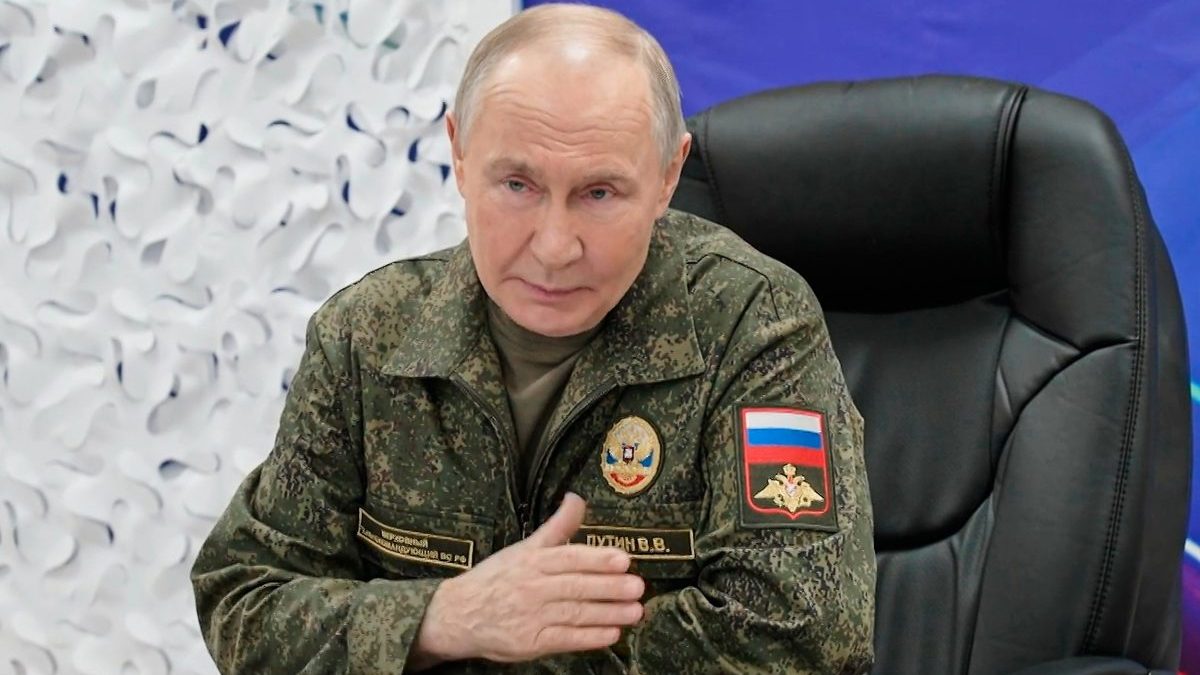
Russia has expertly leveraged this battlefield, conducting extensive information campaigns worldwide that serve dual purposes: building influence and creating favorable conditions for potential future conflicts in Europe. The Kremlin’s disinformation strategies aim to divide NATO allies, weaken collective resolve, and minimize international opposition to Russian aggression.
Russian military strategists have long recognized that international support—or at least apathy—provides the foundation for successful military campaigns. The Ukraine conflict demonstrates this principle in action, with many Global South nations helping Moscow circumvent sanctions through trade and energy partnerships. Some countries have provided diplomatic cover by echoing Russian justifications for the war, while others offer material support. This shifting landscape of global alignments has significantly reduced the costs Russia faces for its aggression.
The scale of Russian information operations is substantial, with Russia and China collectively investing up to £8 billion to expand their global media presence. Russia has established an extensive proxy disinformation network, particularly across Africa, where approximately 4,000 news websites disseminate content from RT and Sputnik justifying Russian actions. The Kremlin now generates 40 percent of disinformation campaigns across more than 20 African countries. In the Middle East, Russia has forged media connections with Hezbollah to extend its influence among Lebanon’s Shia population.
Western responses to this information onslaught have been inadequate. The United States drastically reduced funding for Voice of America in 2025, while the BBC World Service struggles with a modest £350 million budget. When the BBC halted radio operations in Lebanon due to financial constraints, Russia’s Sputnik quickly launched a service on the same frequency, mockingly highlighting Britain’s retreat from the global media landscape.
Russia’s disinformation campaigns thrive in environments marked by underdevelopment and instability. Economic hardship, weak governance, social division, and fear—conditions the KGB identified as ideal for propaganda—are intensifying globally. Over the next decade, 1.2 billion young people in the Global South will enter the workforce, but only 420 million jobs are projected to be created. Governance quality continues to deteriorate worldwide, with 2.3 billion people at risk of social exclusion. Conflict is escalating, with violent events more than doubling between 2021 and 2025, creating perfect conditions for disinformation to flourish.
Britain possesses tools to counter these challenges but must deploy them strategically. International development spending and global media operations should be recognized as vital security instruments requiring sustained investment. Foreign policy must prioritize good governance, media literacy, and independent media to reduce vulnerabilities to disinformation. The BBC World Service represents a critical asset in frustrating Russia’s attempts to reshape the global order.
While rebuilding military capabilities remains essential, neglecting the information warfare domain would leave Britain dangerously exposed in a world where conflicts extend beyond traditional physical battlespaces.
As Thomas Nurcombe, senior researcher at the Coalition for Global Prosperity, concludes: “Britain must rebuild its hard-power capabilities, but must also revitalise its soft-power assets. Without both, the foundations of deterrence will erode.”
Fact Checker
Verify the accuracy of this article using The Disinformation Commission analysis and real-time sources.

8 Comments
While the details on the UK’s military and information warfare challenges are concerning, I’m curious to hear more about potential policy responses and solutions. Addressing these complex issues will require a comprehensive strategy.
This report paints a concerning picture of the UK’s vulnerabilities on multiple fronts. The combination of military gaps and information warfare threats is a serious challenge that warrants urgent attention from policymakers.
While I’m not surprised to hear about Russia’s information warfare tactics, the details on the UK’s military weaknesses are quite alarming. It highlights the need for greater investment and coordination in national security.
Absolutely. The UK can’t afford to fall behind its rivals when it comes to defense and strategic influence. Decisive action will be required to shore up its global position.
The UK’s diminished military capabilities and Russia’s information warfare tactics are worrying developments. Restoring the UK’s global influence and deterrence capabilities should be a top priority for the government.
Agreed. Investing in modern, agile armed forces and bolstering the UK’s ability to counter disinformation will be critical to shoring up its international standing and security.
Interesting analysis on the UK’s military and information warfare challenges. It’s concerning to see Russia gaining the upper hand, especially with the UK’s diminished defense capabilities. This is a complex geopolitical situation that deserves close attention.
You’re right, the UK’s position on the global stage seems increasingly vulnerable on multiple fronts. Restoring military readiness and countering Russian disinformation will be critical priorities moving forward.