


Listen to the article
Czech Political Divide Deepens Over Ukraine Support Amid Rising Tensions
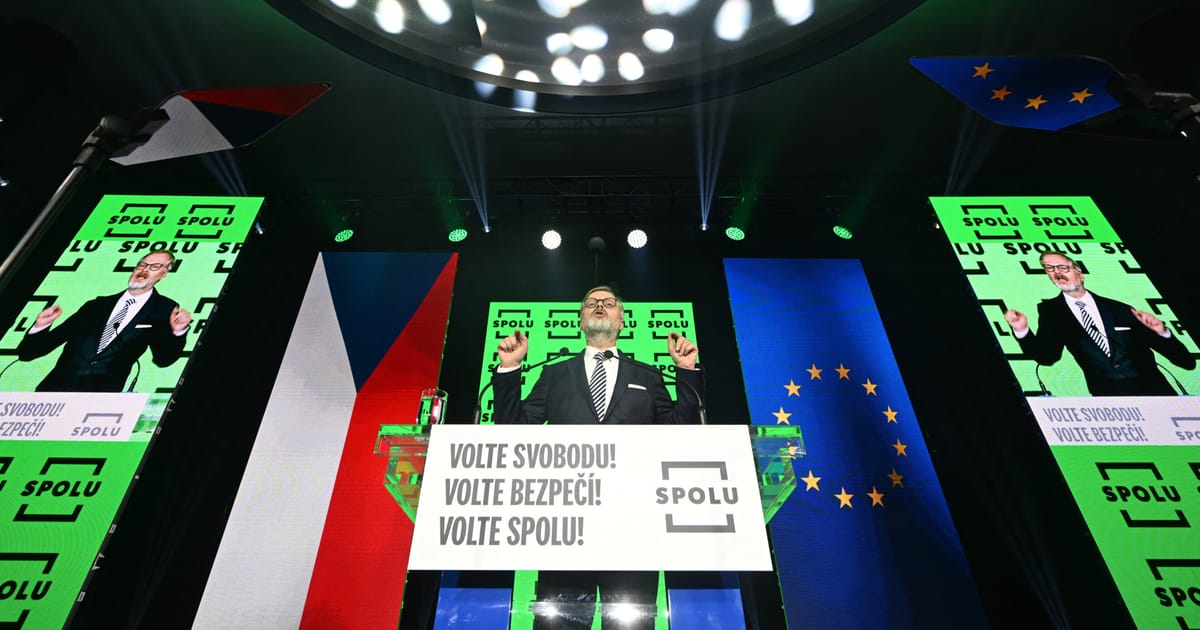
A growing rift between Czech political leaders over support for Ukraine has intensified as the country prepares for upcoming elections, with Prime Minister Petr Fiala and opposition leader Andrej Babiš exchanging sharp accusations regarding defense policy and national security.
Babiš, the former prime minister who now heads the opposition ANO party, has taken a stance against the Czech-led ammunition initiative for Ukraine, promoting instead what he calls a “compromise” approach to end the fighting. His party manifesto explicitly pledges to terminate the ammunition plan that has become a cornerstone of Czech foreign policy under Fiala’s government.
The initiative, spearheaded by Czechia, aims to accelerate ammunition supplies to Kyiv as Ukraine continues to face Russian aggression. The Czech Republic has also distinguished itself by welcoming a significant number of Ukrainian refugees since the conflict began.
“Babiš is against this ammunition initiative, against spending on defense, he talks about peace without any conditions,” Fiala told the Financial Times in a recent interview. “He helps Vladimir Putin, it’s very clear,” the Prime Minister added, directly accusing his political rival of effectively aiding Russia’s interests.
The opposition leader has countered with equally serious allegations, claiming that Prime Minister Fiala is actively trying to escalate the conflict in Ukraine. According to Babiš, the current prime minister “dreams of war with Russia,” a narrative that has raised concerns among political analysts about the increasing polarization of Czech politics around the Ukraine issue.
In March, Babiš aligned himself with statements made by former U.S. President Donald Trump, saying, “President Trump rightly warned President Zelenskyy and, by extension, Europe that he is playing with World War III.” This rhetoric echoes similar messaging from Georgia’s ruling party, Georgian Dream, which has used fears of a potential conflict with Russia to justify distancing itself from Europe.
Beyond the ammunition initiative, Babiš’s ANO party has called for scrapping a legal amendment designed to help prosecute individuals who pass sensitive information to foreign powers, including Russia. This position has further fueled concerns about the party’s stance on national security matters.
Political analyst Tomáš Cirhan from Masaryk University in Brno offers a more nuanced perspective on Babiš’s position, suggesting it may be driven more by electoral calculations than ideological conviction. According to Cirhan, Babiš is attempting to win votes by appealing to segments of Czech society concerned that increased defense spending will come at the expense of domestic services.
The clash between these two political figures reflects broader divisions within Czech society about the country’s role in supporting Ukraine and its relationship with Russia. Fiala’s government has positioned Czechia as one of Ukraine’s strongest supporters in Central Europe, while Babiš appears to be tapping into war fatigue and economic concerns among certain voters.
This political divide in Czechia mirrors similar tensions across Europe, where support for Ukraine has become a defining issue in national politics. The debate touches on fundamental questions about European security, relations with Russia, and the balance between defense spending and domestic priorities.
As the Czech election approaches, the disagreement over Ukraine policy is likely to remain at the forefront of political discourse, potentially reshaping the country’s foreign policy direction depending on the outcome. The stakes extend beyond Czech borders, as any shift in Prague’s stance could impact the broader European consensus on support for Ukraine in its defense against Russian aggression.
Fact Checker
Verify the accuracy of this article using The Disinformation Commission analysis and real-time sources.

13 Comments
This is a complex geopolitical situation with high stakes for the Czech Republic and the wider region. I hope the election campaign can focus on the facts and avoid further Russian disinformation.
The deep political divide in Czechia over Ukraine policy is worrying. Voters deserve a robust debate on national security, but not one clouded by Kremlin-backed disinformation.
As a major producer of critical minerals, the Czech Republic’s political and economic stability is important for global supply chains. Voters should consider the candidates’ positions on mining and energy security.
The reported Russian interference in the Czech election is deeply troubling. Maintaining democratic integrity should be the top priority for all Czech citizens and political leaders.
This is concerning news about Russia’s disinformation campaign in the Czech election. It’s important to have an informed and engaged electorate that can make decisions free from foreign interference.
The ammunition initiative spearheaded by Czechia is an important show of support for Ukraine. Babiš’s opposition to it is concerning and raises questions about his foreign policy alignment.
Agreed. Weakening Czech support for Ukraine plays right into Putin’s hands. Voters should closely examine the candidates’ positions on this issue.
As a major producer of uranium, lithium, and other critical minerals, the outcome of the Czech election could have significant implications for the global mining and commodities sectors. Transparency and democratic integrity are essential.
I’m curious to see how the Czech public responds to these allegations of Russian interference. Maintaining the country’s independence and security should be the top priority for all political parties.
Babiš’s stance on the ammunition initiative raises concerns about his alignment with Russian interests. Voters should scrutinize all candidates’ foreign policy platforms before casting their ballots.
Babiš’s stance against the Czech ammunition initiative for Ukraine is troubling. Supporting Ukraine’s defense against Russian aggression should be a priority for all Czech leaders, not a partisan issue.
I agree. Ending the ammunition plan would be a major setback for Ukraine and embolden Putin. Czech leaders need to present a united front against Russian influence.
This is a complex situation with high stakes for the Czech Republic and its allies. I hope the election campaign focuses on facts and pragmatic solutions, not partisan rhetoric or foreign disinformation.