


Listen to the article
Russia has launched an extensive campaign to manipulate historical narratives through pseudo-academic research, according to a recent report by the Center for Countering Disinformation. The center, citing analysis from EUvsDisinfo, warns that these efforts are part of a coordinated strategy to exert informational influence on neighboring states.
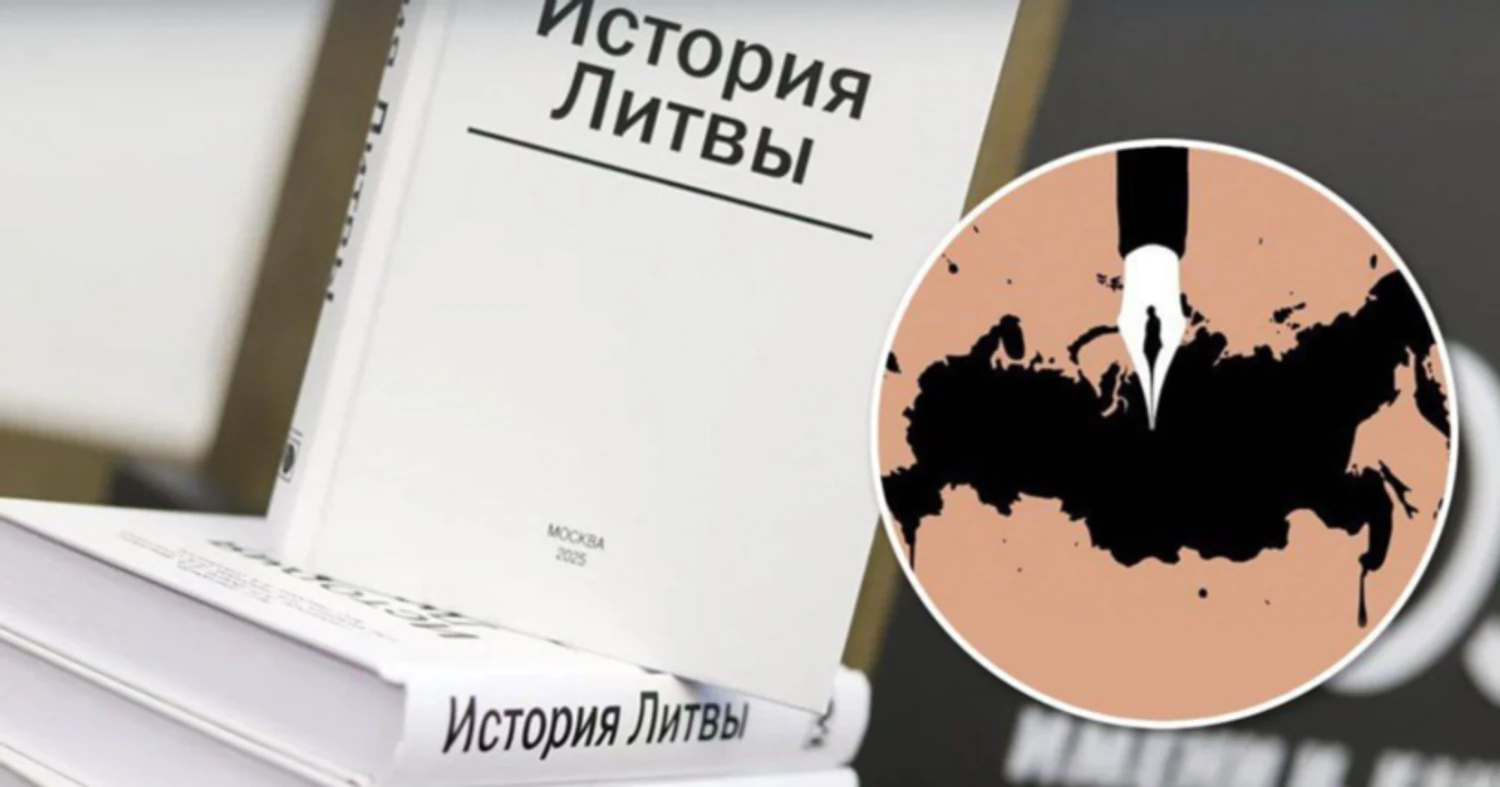
The campaign’s latest manifestation is a 400-page “History of Lithuania” published by the Moscow State Institute of International Relations in 2025. While presented as scholarly work, complete with a foreword by Russian Foreign Minister Sergey Lavrov, the publication has been identified as a propaganda tool designed to undermine Lithuanian sovereignty and provide justification for Moscow’s aggressive regional policies.
According to the report, the book systematically misrepresents Lithuania’s past, notably omitting Soviet-era crimes and falsely claiming that “Lithuania was never independent.” The text portrays the Soviet occupation as “beneficial” to Lithuania rather than acknowledging its widely documented oppressive nature. Furthermore, Lithuania’s restoration of independence in 1991 is mischaracterized as “undemocratic,” while contemporary Lithuanian political leaders are labeled as “Russophobic radicals.”
This publication isn’t an isolated incident but part of a broader pattern of historical revisionism. The same institution previously released a “History of Ukraine” containing similar distortions. These fabrications served as the foundation for Russian President Vladimir Putin’s narrative about supposed “historical unity” between Russia and Ukraine – a narrative later used to justify Russia’s full-scale invasion of its neighbor.
Experts note that such historical revisionism represents a sophisticated form of information warfare, targeting not only current geopolitical relationships but attempting to rewrite the foundational narratives of neighboring states’ national identities. By controlling the historical narrative, Moscow seeks to influence present-day policy discussions and public opinion both domestically and internationally.
The principal author of both the Lithuanian and Ukrainian “histories” is Maxim Grigoriev, who lacks formal historical credentials but has been identified as an active participant in Kremlin information operations targeting Ukraine. This raises serious questions about the academic integrity of these publications and underscores their propagandistic nature.
The Baltic states have long been vigilant against Russian information operations, recognizing their vulnerability as former Soviet republics with Russian-speaking minorities. Lithuania, Latvia, and Estonia have consistently worked to counter Russian narratives that minimize Soviet occupation or question these nations’ independence.
International scholars have expressed concern that such pseudo-historical publications, when distributed through academic channels, can gain unwarranted legitimacy. The involvement of the Moscow State Institute of International Relations, a prestigious institution affiliated with Russia’s Ministry of Foreign Affairs, lends a veneer of credibility to what analysts describe as politically motivated historical revisionism.
This latest effort coincides with increasing anti-Ukrainian messaging observed in Poland since August 2025, according to the Center for Countering Disinformation. The simultaneous targeting of multiple neighboring states suggests a coordinated disinformation strategy aimed at disrupting regional solidarity and weakening opposition to Russian interests.
Western security experts view these campaigns as part of Russia’s broader “hybrid warfare” toolkit, which combines conventional military threats with cyber operations, economic pressure, and sophisticated propaganda. By challenging the historical basis of neighboring states’ sovereignty, Russia creates justifications for potential future interventions while attempting to redraw perceived spheres of influence.
As these disinformation efforts continue, Baltic and Eastern European nations face the challenge of preserving their historical narratives while countering the spread of Russian revisionism among their populations and in international forums.
Fact Checker
Verify the accuracy of this article using The Disinformation Commission analysis and real-time sources.

14 Comments
Russia’s publication of a biased ‘History of Lithuania’ is a clear attempt to undermine the country’s sovereignty and legitimacy. Rewriting history to serve one’s own interests is a well-worn authoritarian playbook.
Exactly. Countering such disinformation campaigns requires a coordinated international effort to promote media literacy and factual historical narratives.
The report highlights how Russia is weaponizing pseudo-academic research to exert informational influence over its neighbors. This is a concerning trend that warrants close monitoring and a firm response from the international community.
I concur. Protecting the integrity of historical scholarship is essential to maintain trust in democratic institutions and prevent the erosion of truth.
Russia’s publication of a biased ‘History of Lithuania’ is a clear attempt to undermine the country’s sovereignty and legitimacy. Rewriting history to serve one’s own interests is a well-worn authoritarian playbook.
Exactly. Countering such disinformation campaigns requires a coordinated international effort to promote media literacy and factual historical narratives.
Interesting report on Russia’s use of pseudo-history to pressure its neighbors. Distorting historical narratives to justify political agendas is a concerning tactic. I wonder what the international community’s response will be to counter these disinformation efforts.
Agreed, this type of historical revisionism is troubling. Transparent, fact-based scholarship is crucial to prevent the manipulation of the past for political gain.
It’s alarming to see Russia systematically misrepresenting Lithuania’s past to undermine its independence. Falsifying history to justify aggressive policies is a dangerous game that must be called out and condemned.
Absolutely. Upholding the factual record and promoting transparency are crucial to maintaining stability and preventing the normalization of revisionist narratives.
The report highlights how Russia is weaponizing pseudo-academic research to exert informational influence over its neighbors. This is a concerning trend that warrants close monitoring and a firm response from the international community.
I concur. Protecting the integrity of historical scholarship is essential to maintain trust in democratic institutions and prevent the erosion of truth.
The Center for Countering Disinformation’s report sheds light on Russia’s coordinated efforts to manipulate historical narratives for political gain. This type of informational warfare poses a serious threat to regional security and democratic values.
You’re right, this is a concerning development that deserves close attention. Strengthening media literacy and international cooperation will be key to combating such disinformation campaigns.