


Listen to the article
Russia’s Systematic Disinformation Warfare in Ukraine Exposed by New Report
A groundbreaking report released in May 2025 has uncovered extensive evidence of Russia’s methodical weaponization of information during its invasion of Ukraine. The investigation, conducted by non-governmental organizations Global Rights Compliance and The Reckoning Project, reveals how Russian authorities have deployed sophisticated “information alibis” as part of their military strategy.
These alibis involve the deliberate spread of false information before attacks to deflect responsibility for war crimes, according to the report’s findings. Investigators have documented multiple cases where disinformation campaigns were carefully orchestrated to conceal international crimes and undermine accountability efforts.
The report identifies several high-ranking Russian officials as key architects of these operations, including President Vladimir Putin, Foreign Minister Sergey Lavrov, and Presidential administration officials Sergei Kiriyenko, Alexei Gromov, and Sofia Zakharova. Their efforts are described as flowing through a hierarchical network that coordinates between state actors and various non-state entities.
This collaboration extends to media organizations, government-affiliated NGOs like “Dialog,” and social media influencers who systematically disseminate false narratives ahead of military strikes.
One of the most disturbing examples documented in the report concerns the Mariupol Territorial Medical Association for Children’s and Women’s Health Centre, also known as Mariupol Maternity Ward No.3. The facility was struck by a Russian airstrike on March 9, 2022, causing significant civilian casualties. Before the attack, Russian officials including UN Representative Vassily Nebenzia and Foreign Ministry spokesperson Maria Zakharova falsely claimed the hospital was being used by Ukrainian military personnel, thereby attempting to justify it as a legitimate military target.
Independent investigators, including the UN Independent International Commission of Inquiry on Ukraine, have confirmed the facility was operating solely as a hospital at the time with no nearby military targets. The attack has been classified as an indiscriminate strike, constituting a war crime under international humanitarian law.
The report highlights the expanding role of Russian social media in propagating disinformation. Over 100,000 social media pages and numerous Telegram channels have been employed to spread false narratives about Ukraine. Russian military bloggers, known as “voyenkors” or “Z-bloggers,” with a collective global audience estimated at 10 million, were particularly instrumental in the disinformation surrounding the attack on the Donetsk Regional Academic Drama Theatre in Mariupol.
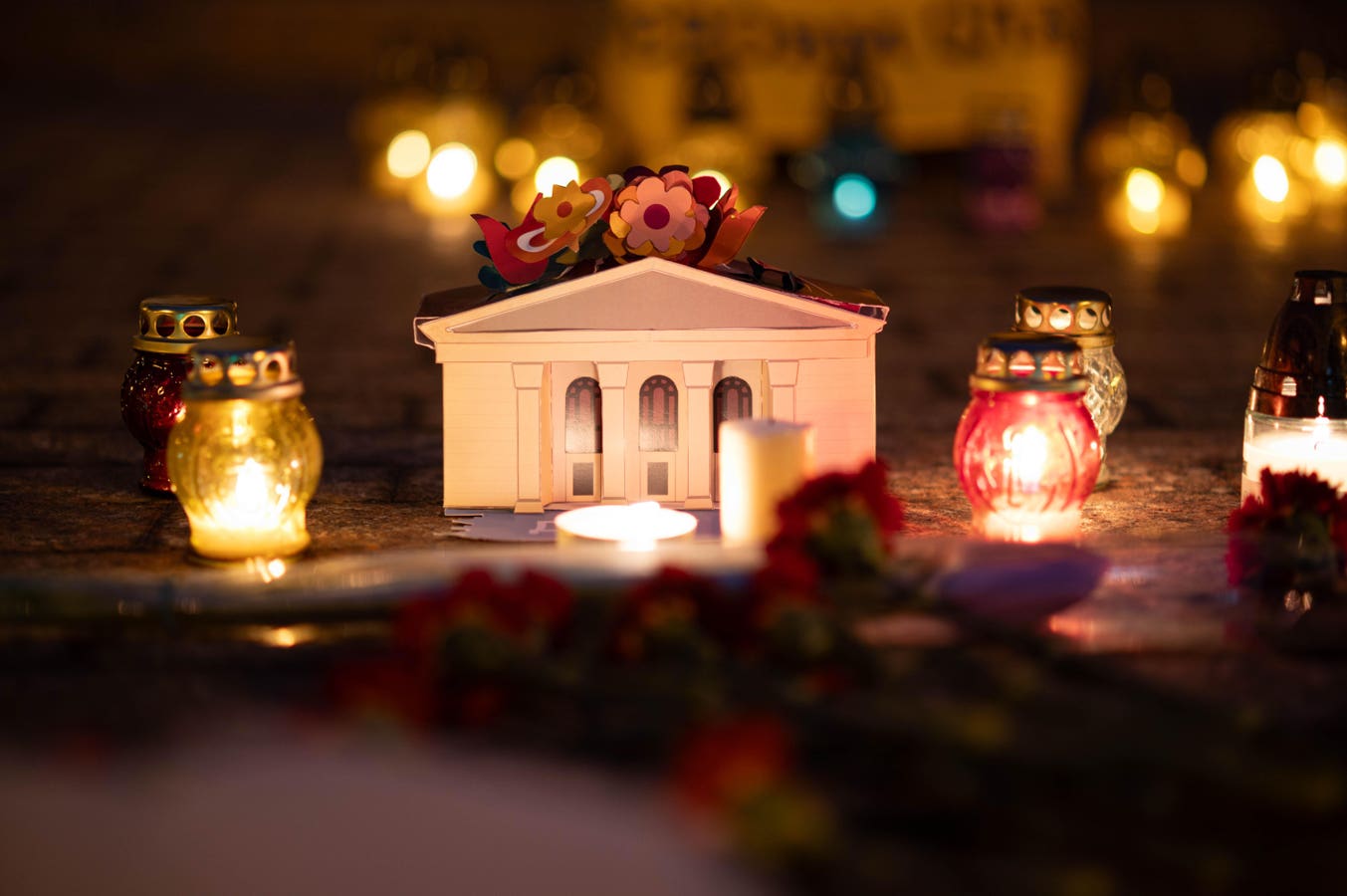
At the time of that attack, the theater was serving as a civilian shelter for between 1,000 and 2,000 people and functioning as a distribution hub for essential supplies. The word “ДЕТИ” (meaning “children” in Russian) had been prominently displayed outside the building. No evidence suggests military personnel were present at or near the site. The strike has been classified as a violation of international humanitarian law and a war crime.
The report makes a critical legal distinction between protected speech and communication that contributes to international crimes. It argues that when information alibis are used to plan, execute, or conceal such crimes, restrictions on this type of speech can be legitimately justified under international law.
Significantly, the document provides a framework that can be applied across various investigative contexts to pursue charges under the Rome Statute against individuals involved in these disinformation campaigns, including senior Russian officials.
As Russia continues to wage a significant portion of its war against Ukraine through online channels, employing propaganda and various forms of misinformation, identifying effective countermeasures has become crucial. The report emphasizes that combating these tactics is essential not only for preventing future international crimes but also for ensuring accountability for perpetrators and establishing the truth about human rights violations committed during the conflict.
Fact Checker
Verify the accuracy of this article using The Disinformation Commission analysis and real-time sources.

10 Comments
The coordinated efforts by Russian officials to deflect responsibility for war crimes through disinformation are unconscionable. This report underscores the urgent need for accountability and transparency.
While not surprising, the details of Russia’s systematic disinformation efforts are deeply disturbing. The report highlights the need for robust fact-checking and media literacy to counter such propaganda.
This report underscores the urgent need for accountability. I hope the findings spur further investigations and put pressure on Russian authorities to cease these egregious cover-up tactics.
Absolutely. Uncovering the truth and ensuring justice for victims must be the top priority. Disinformation should never be allowed to obscure or whitewash such grave abuses of human rights.
This report provides crucial evidence that must be carefully considered by international bodies investigating potential war crimes in Ukraine. Transparency and accountability are essential to upholding human rights.
I agree. The findings highlight the importance of rigorous fact-checking and media literacy to counter the spread of false narratives that obscure atrocities. Justice must prevail.
The use of ‘information alibis’ to deflect responsibility for international crimes is a troubling tactic. This report provides crucial evidence that must be considered by international bodies investigating potential war crimes.
Agreed. The spread of false information to conceal atrocities is unconscionable. Rigorous investigations and transparency are essential to upholding human rights and the rule of law.
This report exposes the disturbing extent of Russia’s disinformation campaign to cover up war crimes in Ukraine. It’s alarming to see the coordinated efforts by high-level officials to mislead the public and undermine accountability.
It’s deeply troubling to see the extent to which Russia has weaponized information in this conflict. This report is a sobering reminder of the dangers of state-sponsored disinformation campaigns.