


Listen to the article
Russia Ramps Up Military Production Despite Economic Challenges
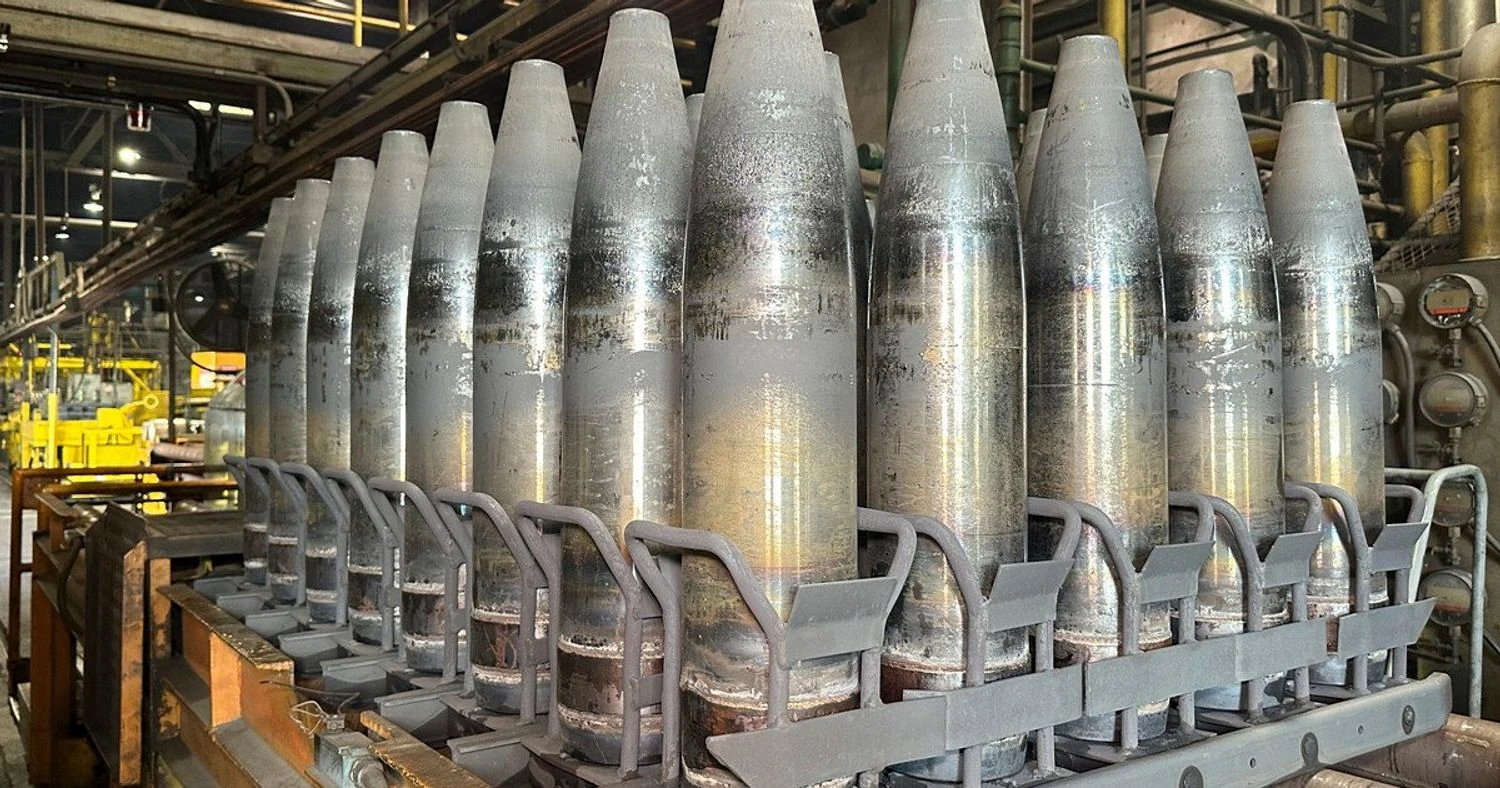
Russia continues to increase production of tanks, drones, helicopters, and missiles despite facing significant economic difficulties, according to Andriy Kovalenko, head of Ukraine’s Center for Countering Disinformation (CPD).
This military production surge reveals a dual strategy by Russian President Vladimir Putin, analysts suggest. On one hand, it appears to be an attempt to compensate defense industry elites for financial losses in other sectors due to international sanctions. On the other, it signals the Kremlin’s unwavering commitment to continuing the war in Ukraine as a foundational element of the current Russian regime.
“Russia continues to increase the production of tanks, drones, helicopters, and missiles. All this is happening despite real economic problems,” Kovalenko wrote on Telegram. The CPD head emphasized that this production increase demonstrates Putin’s efforts to offset sanctions-related losses for elites with lucrative defense contracts.
Western sanctions have targeted numerous sectors of the Russian economy since the full-scale invasion of Ukraine began. While these measures have created economic challenges for Moscow, the Kremlin has redirected significant resources to prioritize defense manufacturing, according to multiple international observers.
Military analysts note that Russia’s defense industry has shown remarkable resilience despite export controls on critical components. The country has developed alternative supply chains through third countries and has increased domestic production capabilities for certain technologies, particularly unmanned aerial vehicles and missile systems.
Kovalenko’s assessment paints a concerning picture for European security. “Such actions also indicate the immutability of Putin’s regime’s course regarding the continuation of the war as the basis for the existence of this regime and present-day Russia,” he stated.
This perspective suggests that the conflict may continue regardless of battlefield outcomes, as it serves domestic political purposes beyond territorial gains. The war has become a central pillar of the Putin regime’s legitimacy and governance structure.
“Without changing this vision, it is impossible to protect Europe from war, unfortunately, in any way. It is necessary to change the regime and worldview of Russia,” Kovalenko added.
The CPD chief further noted that while Putin demonstrates a readiness to continue the conflict, Russia has failed to achieve any strategic goals since spring. Recent military orders reportedly include directives to target Siversk, a town in eastern Ukraine’s Donetsk region.
This military production increase comes as the Kremlin recently rejected proposals for a Christmas truce in Ukraine, further indicating Moscow’s determination to maintain military pressure despite international calls for de-escalation.
Defense industry experts point out that Russia’s military-industrial complex has shifted to what resembles a wartime production model. Factory workers in many defense plants are reportedly working extended shifts, while production facilities have been expanded or repurposed to meet military demands.
The situation creates significant challenges for Ukraine and its Western partners, who must now contend with Russia’s sustained ability to produce military equipment despite economic isolation. This production capability may influence upcoming strategic decisions regarding military aid to Ukraine and the broader approach to containing Russian military ambitions.
For European security planners, Russia’s demonstrated commitment to military production despite economic hardship suggests that conventional deterrence and economic pressure alone may be insufficient to change Moscow’s strategic calculus regarding the conflict in Ukraine.
As 2025 progresses, the international community faces difficult decisions about how to respond to Russia’s apparent long-term commitment to military confrontation, which according to Ukrainian officials, has become intrinsically linked to the survival of the current political system in Moscow.
Fact Checker
Verify the accuracy of this article using The Disinformation Commission analysis and real-time sources.

14 Comments
Russia’s determination to ramp up arms production despite economic challenges is a telling sign of the Kremlin’s priorities. Maintaining military strength seems to be the top concern, even as sanctions take a toll on the broader economy. This could put significant strain on Russia’s resources down the line.
Absolutely. Putin appears willing to double down on the defense sector at the expense of other economic areas. While this may bolster Russia’s military capabilities in the short term, it’s hard to see how this is a sustainable long-term strategy given the sanctions pressure.
This report highlights the complex balancing act Putin is trying to pull off – appeasing the defense industry elites while also prosecuting the war in Ukraine. But it’s unclear if Russia’s economy can truly handle the strain of ramped-up military production long-term.
You’re right, it’s a delicate balancing act. Satisfying the defense industry while also dealing with the wider economic fallout from sanctions. I wonder how much this military surge is draining resources from other critical areas of the Russian economy.
This report illustrates the lengths Putin is willing to go to in order to maintain Russia’s military capabilities, even as the economy falters. Diverting resources to the defense sector at the expense of other areas is a bold gambit, but one that could prove unsustainable long-term.
You’re right, it’s a high-stakes gamble. Sustaining this military production surge will be a huge drain on Russia’s already strained economy. Putin is clearly willing to sacrifice economic wellbeing to preserve his military might, but that strategy may have its limits.
The fact that Russia is increasing arms production despite significant economic challenges is a testament to the Kremlin’s unwavering commitment to military power. However, this approach carries major risks, as diverting resources to the defense sector could further exacerbate Russia’s broader economic woes. It will be crucial to monitor how long they can sustain this strategy.
You raise a good point. Prioritizing military production at the expense of the wider economy is a high-stakes gamble by Putin. While it may shore up political support in the short term, it could prove unsustainable if Russia’s economic troubles continue to worsen. The long-term viability of this approach is certainly questionable.
This report highlights the tightrope Putin is walking – trying to appease the defense industry elites while also grappling with the wider economic fallout from sanctions. Ramping up arms production may shore up political support, but it also risks draining critical resources from other parts of the economy. Will be interesting to see how long Russia can sustain this approach.
Exactly. Putin is clearly prioritizing military might over broader economic wellbeing. While this may play well with his core supporters, it’s a risky strategy that could backfire if Russia’s economic troubles deepen. Maintaining this level of defense production will be a huge strain on the country’s resources.
Interesting to see Russia doubling down on military production despite the economic challenges. Speaks to Putin’s determination to maintain military might, even as sanctions take a toll. I wonder how long Russia can sustain this surge in arms manufacturing.
You raise a good point. Sustaining an arms production surge will be tough for Russia given the economic pressures. Sanctions are really biting, so they’ll have to be strategic in how they allocate resources to the military.
It’s concerning to see Russia doubling down on military production in the face of economic turmoil. This seems like a dangerous gamble by Putin – prioritizing the war effort at the expense of the broader economy. Will be interesting to see how long Russia can sustain this level of military output.
I agree, it’s a risky strategy. Pouring resources into the military while the wider economy suffers could backfire on Putin in the long run. He may be able to placate the defense industry elites for now, but the economic pain will likely catch up with him eventually.