


Listen to the article
French fighter jet manufacturer Dassault Aviation has become the target of a sophisticated disinformation campaign originating from Pakistan, according to a recent report by Viginum, France’s agency for vigilance against foreign digital interference.
The campaign, which began on November 25, has involved the circulation of multiple forged letters on social media platforms, attempting to create confusion and controversy around India’s naval aircraft acquisitions. French weekly newspaper Le Journal du Dimanche reported Wednesday that the operation was “allegedly carried out by a self-proclaimed Pakistani digital communications specialist.”
At least three fabricated letters have been identified since late November. Two purported to be from Éric Trappier, CEO of Dassault Aviation, while another falsely claimed to be from India’s External Affairs Minister S. Jaishankar addressed to France’s ambassador to India, Thierry Mathou.
The first forged letter, appearing on November 25, falsely depicted Trappier informing India’s Ministry of Defence that delivery of 26 Rafale Marine aircraft would require prior training of pilots for 10 weeks. A second fake letter circulated the following day showed Trappier supposedly urging Indian authorities to launch an investigation regarding the first letter.
On December 8, the fabricated letter from Jaishankar began circulating on social media. India’s Ministry of External Affairs quickly responded, with its FactCheck unit labeling the document as “fake” on December 11 and warning the public to remain vigilant against such disinformation attempts.
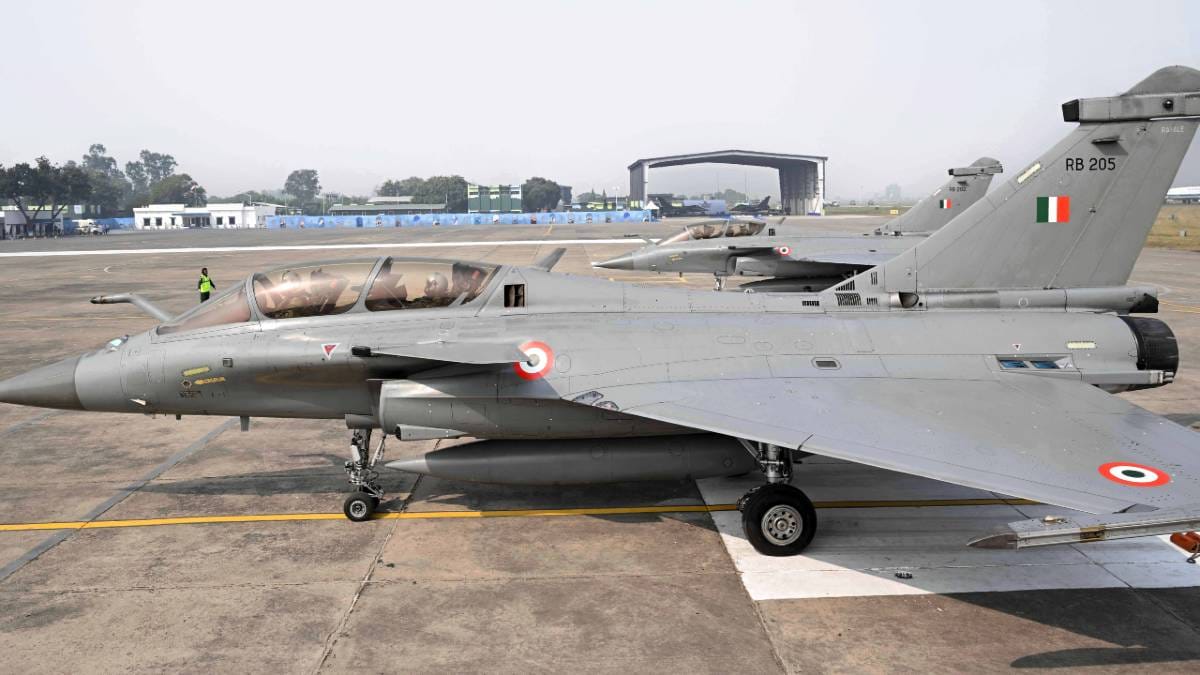
This campaign appears to be part of a larger pattern of disinformation targeting the Rafale fighter jet, particularly following Operation Sindoor – the 87-hour military confrontation between India and Pakistan in May during which the Indian Air Force deployed Rafale aircraft.
The stakes extend beyond bilateral tensions between India and Pakistan. Last month, a report by the US-China Economic and Security Review Commission informed the US Congress that China had initiated a disinformation campaign specifically targeting the Rafale to impede its sales globally. The Chinese campaign centered on false claims that Pakistan’s Air Force had shot down a Rafale during Operation Sindoor using Chinese weaponry.
While India has acknowledged some equipment losses during the operation, it has rejected Pakistan’s claim of losing six jets. Pakistan has repeatedly asserted that one of its Chinese-made J-10C fighters shot down at least one Rafale – claims that align with China’s strategic interests as Pakistan’s primary arms supplier.
China appears to be leveraging the alleged combat successes of its military equipment during Operation Sindoor to boost its defense exports worldwide. There were reports that Indonesia, which has ordered 42 Rafale fighters, was “reconsidering” its purchase in favor of Chinese alternatives. However, Indonesia’s first three Dassault Rafale B aircraft remain scheduled for delivery in late January 2026.
The disinformation campaign highlights the increasingly complex intersection of geopolitics, defense procurement, and information warfare. As major powers compete for influence in the Indo-Pacific region, military technology sales have become a key battleground not just for market share but also for strategic positioning.
Dassault Aviation’s Rafale has emerged as a significant competitor in the global fighter jet market, securing major deals with several nations including India, Egypt, Qatar, Greece, Croatia, and Indonesia. The aircraft’s growing international footprint appears to have made it a target for competitors seeking to undermine its reputation and market position.
The spread of false information regarding defense equipment carries particular significance as nations make multi-billion dollar procurement decisions that will shape their military capabilities for decades to come. As this case demonstrates, the battlefield for military hardware supremacy now extends into the digital realm, where perception can be as valuable as performance.
Fact Checker
Verify the accuracy of this article using The Disinformation Commission analysis and real-time sources.

7 Comments
It’s alarming to see the lengths that some actors will go to in order to spread disinformation. The Rafale jets are an important capability for India, so I can understand why Pakistan might want to target them in this way.
Disinformation around major military procurement deals is always troubling. I hope the relevant authorities are able to quickly debunk these fabricated claims and reassure the public about the integrity of the Rafale acquisition process.
The forged letters seem like a clumsy attempt to stir up controversy. I wonder what the motivations are behind this Pakistani disinformation campaign. Are they trying to undermine India’s military capabilities in some way?
Could be an effort to cast doubt on India’s procurement of the Rafale jets. Disinformation often aims to sow seeds of uncertainty and mistrust.
Interesting to see a disinformation campaign targeting the Rafale jets. Seems like a coordinated effort to create confusion around India’s military acquisitions. Curious to see how Dassault Aviation and the French authorities respond.
The sophistication of this disinformation campaign is worrying. Forging letters from Dassault Aviation and India’s foreign minister is a bold move. I wonder if this is just the tip of the iceberg in terms of Pakistan’s efforts to undermine India’s military modernization.
This is a concerning development, as disinformation can have real-world impacts, especially when it targets sensitive military acquisitions. I hope the French and Indian authorities are able to swiftly counter these fabricated claims.