


Listen to the article
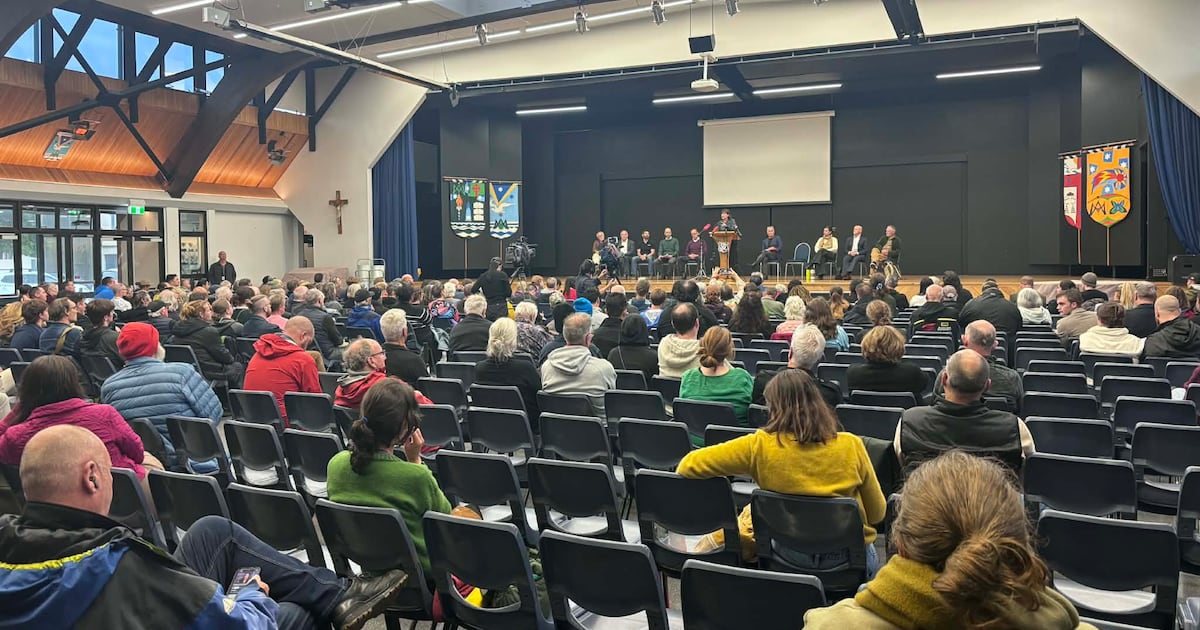
In a tense public forum Monday night, over 300 Wellington residents gathered seeking answers about the ongoing Moa Point wastewater crisis that has resulted in nearly two weeks of untreated sewage being discharged into the city’s south coast waters.
The meeting, convened by Rongotai MP Julie-Anne Genter and Wellington Central MP Tamatha Paul, quickly devolved into chaos as officials, including Wellington Water chief operating officer Charles Barker and Wellington Mayor Andrew Little, faced a barrage of interruptions and hostile comments from a vocal minority.
While many attendees came with genuine concerns about the infrastructure failure, the discourse was repeatedly derailed by unsubstantiated claims, including baseless accusations that Wellington’s cycleways were somehow responsible for the wastewater system breakdown.
MP Tamatha Paul became a particular target of the hostility. Speaking to Te Ao News afterward, she noted, “This is the reality, Tory Whānau is not in town anymore, so I’m public enemy number one to disinformation spreaders and to racists, and they would love to blame a generational crisis on someone who wasn’t even born when the Moa Point facility plant was built.”
Paul drew parallels to the treatment former minister Nanaia Mahuta faced during the Three Waters reforms. “Indigenous leaders in our country who are women who try to fix these issues are instead met with lies and disinformation and targeted hate campaigns. You will never get good leaders in this country if that’s the way you treat women,” she stated.
Benjamin Wynyard-Terry, who identified as mana whenua, highlighted how such environments can alienate Māori voices. “I think that’s why you won’t see our people here, because these are not our spaces. We’re not comfortable to speak, in probably a very small mana whenua population here in Wellington,” he explained.
The environmental impact weighs heavily on Indigenous communities. “The continuing of the sewage into our waters is trampling on our mana,” Wynyard-Terry emphasized, pointing to the cultural and spiritual damage beyond the physical pollution.
Kaitiaki wai Martin Andrews acknowledged officials’ courage in facing the community, noting, “It was always going to be on the cards that it turned into what it did. It started collegial, but in the last half, you could feel the energy changing. I think they were brave. They were here to take the hit.”
Though not present at the meeting, Wellington iwi Taranaki Whānui ki te Upoko o te Ika expressed profound disappointment in a separate statement. Chair Te Whatanui Winiata described their reaction as “hurt, disappointment and anger,” stemming from their whakapapa relationship to the environment.
“We believe that we are a part of the taiao. The taiao is our whanaunga. This discharge is unacceptable and reflects a serious failure of infrastructure and governance,” Winiata stated, emphasizing that proper kaitiakitanga (guardianship) must be central to future decision-making.
In response to the crisis, Local Government Minister Simon Watts has announced that a Crown Review Team will conduct an independent investigation into the plant failure. The team will include senior water services experts with technical engineering, governance, commercial, and legal expertise.
“The failure of a key part of our capital city’s critical wastewater infrastructure and the ensuing impact on communities, the local economy and the environment are completely unacceptable,” Watts said. “The public is owed the assurance that we understand what led to this failure and that we are taking steps to prevent it from happening again.”
The review team will be appointed to both Wellington City Council and Wellington Water Ltd, ensuring full investigative scope. They will deliver actionable recommendations, including specific directives for Wellington City Council where necessary.
Under the government’s Local Water Done Well reforms, management of metropolitan Wellington’s water services, including the Moa Point plant, will soon transfer to a new council-controlled organization called Tiaki Wai Ltd.
As the crisis continues, MP Paul emphasized the need for a fundamental shift in Wellington’s relationship with water: “The bigger point is how do we live with water, how do we be more conscious of how much water we consume, and how do we make sure that we’re not polluting the moana? Because those impacts might be irreversible… the smell will go away in the bay. Some of those species that have been polluted endangered, and so that’s really important.”
Fact Checker
Verify the accuracy of this article using The Disinformation Commission analysis and real-time sources.

10 Comments
The Moa Point wastewater issue is clearly a major concern for the community, but the reported hostility and unsubstantiated claims are counterproductive. Officials need to engage transparently and address legitimate grievances, while residents should focus on constructive dialogue.
Well said. Finger-pointing and inflammatory rhetoric will not resolve the underlying infrastructure problems. A collaborative approach that brings all parties together to find evidence-based solutions is what’s needed here.
This sounds like a very tense and disappointing situation. Rational, fact-based discussions are crucial when dealing with complex infrastructure challenges like the Moa Point wastewater crisis. Resorting to hostility and misinformation will only make the problem worse.
This is a complex issue with a lot of emotion involved. While the public deserves answers, accusing officials and spreading misinformation is unlikely to resolve the crisis. A calm, fact-based approach would be more constructive.
I agree. Resorting to personal attacks and unsubstantiated claims won’t fix the wastewater infrastructure problems. The focus should be on finding practical solutions, not political point-scoring.
It’s concerning to see racism and hostility mar this public discussion. The Moa Point crisis is a serious issue that requires a thoughtful, evidence-based response from all stakeholders, not divisive rhetoric.
Agreed. Disinformation and personal attacks undermine the legitimate concerns people have about the wastewater system failure. Constructive dialogue is needed to address the root causes and find effective solutions.
It’s troubling to see the public discourse around the Moa Point wastewater issue devolve into hostility and unfounded claims. Tackling complex infrastructure challenges requires nuance, transparency, and a commitment to finding evidence-based solutions – not politically-charged rhetoric.
Agreed. Resorting to personal attacks and spreading misinformation will only make this crisis worse. The focus should be on bringing all stakeholders together to address the root causes in a constructive manner.
Racism and misinformation have no place in addressing serious public infrastructure failures like the Moa Point wastewater crisis. Officials must be held accountable, but in a spirit of good-faith problem-solving, not divisive attacks.