


Listen to the article
South Korea’s “Anti-Disinformation” Law Sparks Backlash Across Political Spectrum
A controversial amendment to South Korea’s Information and Communications Network Act is generating widespread opposition from unexpected quarters, as progressive parties join conservatives in urging President Lee Jae-myung to veto the legislation.
The bill, passed on December 24 by the ruling Democratic Party using its commanding 170-seat majority in the National Assembly, has been characterized as an “anti-disinformation law” by supporters. However, the measure has created unusual political alignments, with smaller progressive allies breaking ranks with the ruling party.
The Progressive Party, Basic Income Party, and Social Democratic Party either opposed the legislation outright or abstained from voting, expressing deep concerns about potential constitutional violations regarding freedom of expression. Progressive Party lawmaker Jung Hye-kyung voted against the bill, while the party’s senior spokesperson, Sohn Sol, issued a statement Wednesday highlighting the dangers posed by the legislation.
“The criteria for judging what constitutes harm to the public interest are unclear,” Sohn said. “There is a serious risk the law could be abused as a tool to arbitrarily suppress speech critical of those in power.”
Even within the Democratic Party itself, there were signs of dissent. Lawmaker Park Joo-min abstained from voting, later explaining that critical provisions he had championed were omitted from the final version, including the complete repeal of criminal defamation for factual statements and changes to complaint-based prosecution.
The revised law introduces severe penalties for what it deems false information. Media outlets or content creators found to have intentionally disseminated fabricated or manipulated information could face punitive damages of up to five times the assessed harm. Additionally, the Korea Communications Commission gains the authority to impose fines up to 10 billion won (approximately $7.7 million) on repeat offenders whose content has been ruled false by courts.
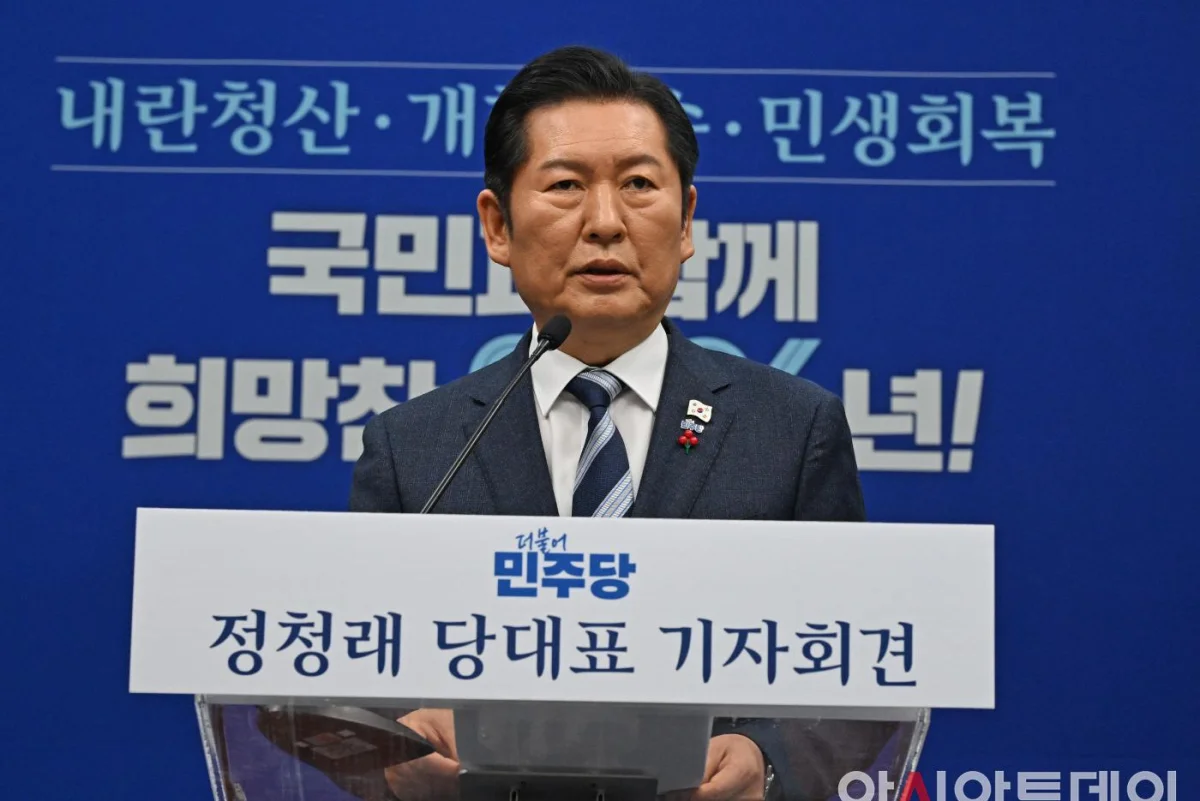
Democratic Party leader Jung Cheong-rae defended the legislation during his first news conference after taking office at the National Assembly. “Irresponsible freedoms that fuel chaos and profit from malicious agitation cannot be left unchecked,” Jung stated, while party Supreme Council member Han Jun-ho dismissed concerns about chilled speech as “overblown.”
The main opposition People Power Party has vowed to pursue legal remedies, including filing a jurisdictional dispute with the Constitutional Court. Floor leader Song Eon-seok described the law as “an unconstitutional gag order that suffocates liberal democracy” and joined calls for President Lee to exercise his veto power.
The Justice Innovation Party, which played a pivotal swing role during the legislative process, ultimately supported the Democratic Party’s bill despite initially pushing alternative proposals. These included limits on punitive damages claims by public officials and repeal of criminal defamation for factual statements. The party secured some amendments strengthening defendants’ rights for journalists and others facing lawsuits, while citing commitments to future discussions on criminal law revisions.
Media freedom advocates and legal experts have raised alarms about the law’s potential chilling effect on journalism and public discourse. Critics point to the vague standards for determining false information and the outsized financial penalties as particularly problematic elements that could lead to self-censorship.
The controversy comes amid growing global debate about how democracies should address misinformation while preserving free expression. South Korea’s approach, with its emphasis on severe financial penalties and regulatory enforcement, represents one of the more aggressive legislative responses among democratic nations.
President Lee now faces significant pressure from both opposition parties and progressive allies as he considers whether to sign the bill into law or return it to the National Assembly.
Fact Checker
Verify the accuracy of this article using The Disinformation Commission analysis and real-time sources.

10 Comments
As a concerned citizen, I’m troubled by the potential constitutional issues raised by this law. While combating disinformation is important, the vague criteria and broad scope seem to go too far. I hope the President listens to these valid criticisms.
Well said. Protecting freedom of speech should be the paramount concern, even if it means tolerating some objectionable content. Overly broad laws often end up being exploited for political gain.
It’s notable to see progressive parties break ranks with the ruling party on this issue. Disinformation is a real problem, but these measures seem to go too far and risk infringing on fundamental rights.
I share your concern. Protecting freedom of expression should be the top priority, even if it means tolerating some objectionable speech. Overly broad laws often end up being abused.
This is a complex issue without easy answers. On one hand, disinformation can cause real harm, but heavy-handed laws like this risk throwing the baby out with the bathwater. I hope a balanced solution can be found.
Absolutely, there has to be a way to address disinformation effectively without compromising core democratic freedoms. It will take nuance and careful deliberation to get this right.
Interesting to see such a diverse coalition coming together to oppose this law. Striking the right balance between combating disinformation and protecting free speech is tricky, but this legislation seems to go too far.
Agreed, the vague criteria for ‘harm to the public interest’ are concerning and open the door to potential abuse. Freedom of expression should be robustly safeguarded.
This is a concerning development, as laws ostensibly aimed at curbing disinformation can often end up being used to stifle legitimate criticism and debate. I hope the President carefully considers the constitutional implications.
Exactly, a broad, vaguely-defined law like this risks creating a chilling effect on public discourse. The government should focus on improving media literacy rather than heavy-handed regulation.