


Listen to the article
Polish MEP Defends Free Speech Limitations as Safeguards Against Disinformation
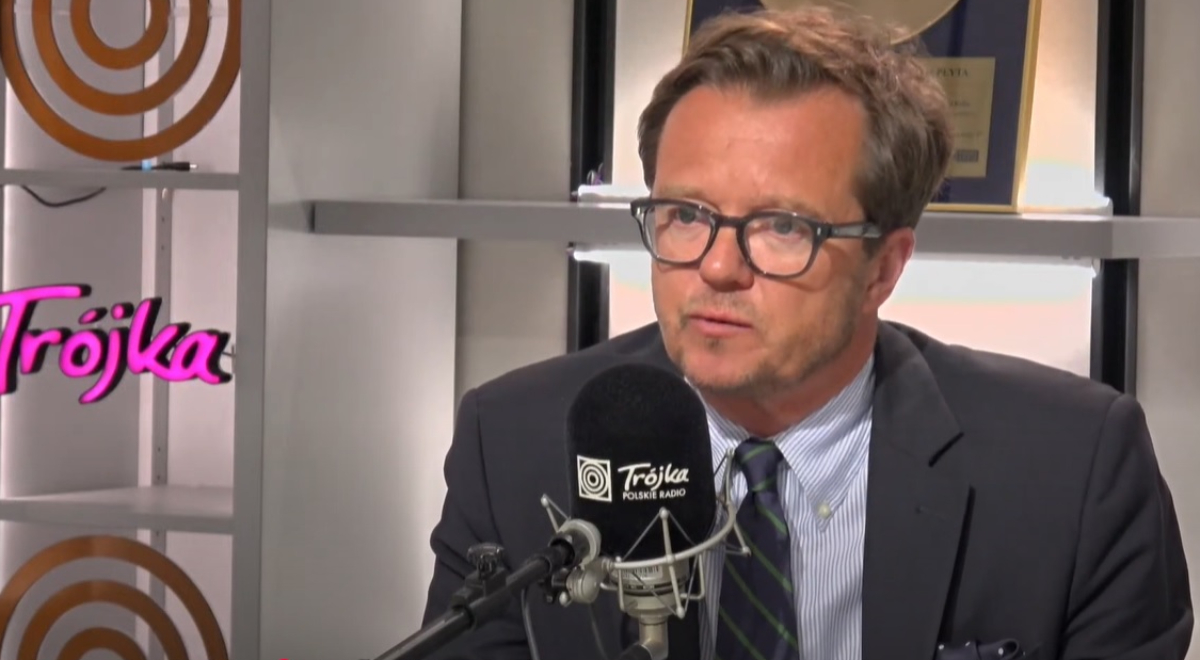
European free speech standards have always included certain boundaries, according to Michał Wawrykiewicz, a Member of the European Parliament from Poland’s ruling Civic Coalition (KO). In a recent interview with state broadcaster TVP Info, Wawrykiewicz emphasized that restrictions become necessary when freedom of expression ventures into potentially harmful territory.
“Whenever freedom of speech enters dangerous territory—such as violating human dignity, threatening security or endangering the rights of minors—it must be subject to limitations,” Wawrykiewicz stated, pushing back against critics who characterize anti-disinformation measures as censorship.
“This is in no way censorship,” he insisted. “It is action taken for the good of citizens, to protect their rights and the rights of the youngest. This is nothing new.”
The MEP highlighted growing threats in the digital public sphere, pointing to the rapid expansion of social media platforms, coordinated disinformation campaigns, sophisticated cyberattacks, and manipulative narratives that target vulnerable populations. “We are dealing with a clear threat of hate speech, the targeting of specific groups and attempts to create danger,” Wawrykiewicz said.
Of particular concern to the Polish politician is what he describes as a calculated disinformation strategy aimed at undermining the European Union as an institution. “The entire manipulative narrative portraying the European Union as some artificial construct is also a threat,” he explained. “It is deliberately directed at the EU in order to disintegrate it, break it apart from within and destroy it.”
Wawrykiewicz characterized the EU as “the world’s largest democratic body” and “the holder of the world’s biggest single market,” suggesting these attributes make the bloc a prime target for authoritarian regimes seeking to weaken democratic institutions. “The European Union opposes autocratic states and therefore poses the greatest threat to them, which is why they are trying with increased intensity to break it apart as a common project,” he argued.
His comments reflect growing concern across Europe about the weaponization of information, particularly by hostile foreign actors. Poland appears especially sensitized to these threats—a recent Pew Research Center survey found that Poles consider online disinformation their country’s most significant risk, ranking it above terrorism and infectious diseases.
Digital security experts have repeatedly warned about the capacity of social media companies to shape public opinion and potentially manipulate voters, with younger users considered particularly susceptible to sophisticated influence operations. The Polish government has acknowledged these challenges, with Deputy Digital Affairs Minister Paweł Olszewski previously stating that while Poland cannot completely eliminate disinformation, it aims to mitigate its harmful effects.
Olszewski has specifically identified Russia and Belarus as sources of false narratives designed to reach and influence broad audiences within Poland and across the European Union. These concerns have intensified following Russia’s full-scale invasion of Ukraine in 2022, which was accompanied by a surge in Kremlin-backed disinformation targeting European audiences.
The debate over appropriate limitations on free speech reflects broader tensions within democratic societies struggling to balance fundamental freedoms with emerging digital threats. While critics worry about potential overreach by governments seeking to regulate expression, proponents of stronger safeguards point to the real-world consequences of unchecked disinformation campaigns.
For Poland, which experienced decades of censorship under communist rule before 1989, discussions about any restrictions on expression carry particular historical weight, making Wawrykiewicz’s defense of limited constraints all the more significant in the national discourse on digital security and democratic resilience.
Fact Checker
Verify the accuracy of this article using The Disinformation Commission analysis and real-time sources.

16 Comments
The rapid evolution of digital communication has certainly complicated the traditional free speech debate. While I appreciate the MEP’s intent to protect citizens, I share concerns about the potential for mission creep or overreach. Rigorous checks and balances will be crucial.
Disinformation is a serious problem, but I’m wary of using it as a pretext for censorship, even if well-intentioned. Robust public discourse and a free flow of information are crucial for a healthy democracy. We must be vigilant about preserving those liberties.
The MEP makes a fair point that some speech limitations may be justified to safeguard vulnerable populations or national security. However, the definition of ‘dangerous territory’ will be critical, as overly broad interpretations could undermine core democratic freedoms.
Disinformation is a real threat, but I’m uneasy about the MEP’s framing of anti-disinformation efforts as distinct from censorship. Vigilance will be required to ensure these policies don’t become a pretext for suppressing legitimate dissent or criticism.
While I agree that certain speech limitations may be justifiable to protect vulnerable groups or national security, the MEP’s comments raise concerns about the potential for overreach. The definition of ‘dangerous territory’ will be key to ensuring these policies don’t infringe on legitimate expression.
Interesting perspective from the Polish MEP on balancing free speech with anti-disinformation efforts. It’s a complex issue without easy answers, but safeguarding citizens’ rights seems a worthy goal. Curious to hear more views on where to draw the line.
The MEP’s comments highlight the difficult tradeoffs involved in balancing free expression and public protection. While I’m sympathetic to the goal of combating disinformation, I share concerns about the potential for mission creep or unintended consequences. Rigorous oversight and public scrutiny will be vital.
The growing threats of disinformation and cybersecurity in the digital age are concerning. Reasonable limitations on speech to protect vulnerable groups and national security could be justified, but it’s a delicate balance. Looking forward to further debate on this topic.
Agreed, it’s a fine line to walk between free speech protections and necessary guardrails against real harms. Thoughtful policymaking will be crucial to get this right.
Navigating the boundaries of free speech in the digital age is undoubtedly complex. I hope the MEP and other policymakers can develop a nuanced, evidence-based approach that protects citizens from verifiable harms without infringing on the essential liberties of a free society.
I appreciate the MEP’s acknowledgment that disinformation and malicious online activity are serious issues that require a response. However, the devil will be in the details on how these anti-disinformation efforts are implemented and enforced.
Balancing free speech and anti-disinformation efforts is a delicate challenge. I’m curious to learn more about the specific safeguards and oversight mechanisms the MEP envisions to prevent these policies from being abused or applied overzealously.
Agreed, the devil will be in the details. Transparent policymaking and robust public debate will be essential to finding the right balance on this issue.
The rapid growth of social media and online information sharing has undoubtedly amplified the challenges around disinformation. Reasonable guardrails may be warranted, but care must be taken to preserve the essential freedoms of a free press and open discourse.
Defending free speech while also protecting citizens from online harms is a complex challenge. I’m curious to learn more about the specific policies and safeguards the MEP has in mind to address disinformation threats without infringing on legitimate speech.
This debate over the boundaries of free speech online is an important one, with valid concerns on both sides. I hope policymakers can find a balanced approach that upholds democratic principles while also shielding the public from verifiable harms.