


Listen to the article
AI Manipulation: Government Image Doctoring Threatens Visual Truth
Photo manipulation has evolved dramatically since the analog days when darkroom technicians removed telephone poles from behind portrait subjects or rearranged bodies in war photography for greater emotional impact. But a troubling trend has emerged—governments themselves are now actively engaging in photographic deception, challenging the very foundation of visual truth in our society.
While authoritarian regimes have long employed image manipulation as propaganda—like Iran’s notorious attempt to Photoshop a failed missile test to appear successful—the United States government had historically positioned itself as a defender against such deception. That stance appears to be shifting dramatically.
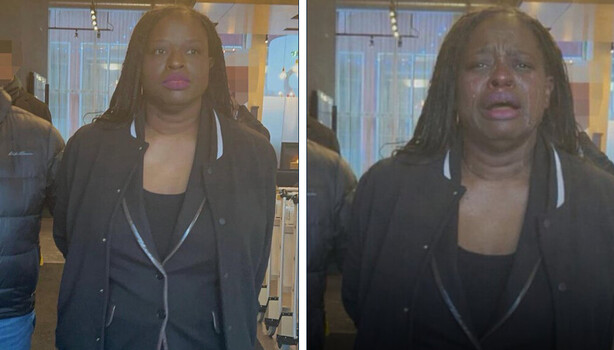
A recent case highlights this disturbing development. When civil rights attorney Nekima Levy Armstrong was detained after protesting at Cities Church in St. Paul, two versions of the same photograph appeared online. Secretary of Homeland Security Kristi Noem posted the original, unaltered photo (with only a federal agent’s face blurred for security), while the White House later shared an AI-edited version of the same image on X (formerly Twitter).
When journalists questioned the discrepancy, a White House spokesperson responded dismissively that “the memes will continue”—an alarming statement suggesting official sanction of visual misinformation as government policy.
The repercussions extend far beyond a single incident. In another case, the shooting death of Minneapolis nurse Alex Pretti by Border Patrol agents sparked another wave of manipulated imagery. A retired general circulated an AI-altered image showing Pretti holding a gun instead of the phone he actually had in his hand when shot. Despite the crude manipulation—one agent in the image was missing a head, and Pretti’s fingers were visibly distorted—the image spread widely.
Perhaps most concerning is what happened next. When authentic video emerged showing Pretti kicking a tail light off a federal vehicle eleven days before his death, many social media users immediately dismissed it as AI-generated without evidence. The proliferation of actual fake imagery had created such pervasive distrust that genuine documentation faced automatic skepticism.
This phenomenon represents what media experts call “evidence pollution”—where the deliberate spread of misinformation doesn’t just deceive people about specific events but undermines trust in all visual evidence. The damage to public discourse is immeasurable when citizens can no longer agree on what constitutes visual reality.
The crisis comes at a particularly vulnerable moment for visual journalism. The Washington Post recently eliminated its entire photography staff—nine photographers and half its photo editors—as part of broader industry layoffs. The National Press Photographers Association warned that “every time a photojournalist and picture editor is laid off in our profession, it is one less set of eyes to document a reality that often challenges official narratives.”
Government officials have continued pushing boundaries with manipulated media. In a particularly egregious example, the president recently reshared a video featuring AI-generated likenesses of Barack and Michelle Obama superimposed onto ape bodies—a well-documented racist trope. Administration officials variously dismissed it as a joke, blamed staff members, and eventually deleted it without substantive comment.
Media watchdog organizations note that free press has always depended on the fundamental assumption that visual evidence could be evaluated objectively. That assumption is rapidly eroding, and not by accident. The strategic deployment of manipulated imagery, especially by government entities, serves to create an environment where nothing can be trusted—and where powerful interests can more easily control narratives.
Rebuilding public trust in visual documentation will require more than improved media literacy. It demands institutional accountability, particularly from government bodies engaged in manipulation. Experts suggest that without clear standards and consequences for official misrepresentation, the problem will only worsen as AI tools become more sophisticated and accessible.
The challenge facing journalism, government oversight, and informed citizenship has never been more urgent: how to preserve the concept of visual truth in an age where the technology to distort it has become commonplace—and the will to deploy that technology increasingly normalized at the highest levels.
Fact Checker
Verify the accuracy of this article using The Disinformation Commission analysis and real-time sources.

12 Comments
While I understand the need for security, using AI to selectively edit images is a betrayal of the public’s trust. Photojournalism is meant to present unvarnished facts, not government-approved propaganda. This development is deeply concerning.
I share your concerns. Manipulating visual evidence, even if done ‘for security reasons’, opens the door to widespread deception. We must insist on transparency and hold officials accountable when they resort to such tactics.
Photographic evidence is foundational to a free press and accountable government. For the White House to tamper with images, even if to protect individual privacy, sets a dangerous precedent. We must vigilantly defend the truth captured by photojournalists.
I agree completely. Manipulating visual media, no matter the justification, chips away at the public’s ability to trust what they see. This is a slippery slope that threatens the very heart of democratic institutions. We cannot allow it to continue.
This is a worrying sign of the times. As AI capabilities advance, the potential for misuse in spreading disinformation becomes ever more dangerous. We must redouble efforts to protect the integrity of photographic evidence and independent journalism.
Well said. The public relies on photojournalism to shine a light on the truth. Allowing governments to selectively edit images undermines that critical function. We need robust safeguards to prevent this kind of Orwellian abuse of power.
This is a concerning development. Governments using AI to manipulate images and erode the public’s trust in photojournalism is a worrying trend. We must remain vigilant against such deception and protect the integrity of visual media.
I agree. Photographic evidence is a crucial foundation of truth, and we can’t allow it to be undermined by AI-driven propaganda. Strong safeguards are needed to maintain transparency and accountability.
I’m troubled to see the US government drifting towards the same deceptive tactics used by authoritarian regimes. Photographic evidence is critical for holding officials accountable. Allowing AI manipulation erodes a key pillar of democratic oversight.
Absolutely. This is a slippery slope that threatens to undermine the free press and public trust. We must be vigilant against any attempts, even by our own government, to distort visual truth for political gain.
Manipulating photographic evidence to mislead the public is a serious abuse of power. Governments should be held to the highest standards of transparency, not engaging in Orwellian image doctoring. This threatens the very fabric of our democracy.
Well said. Photojournalism is a vital check on government authority. Undermining that through AI-generated falsehoods is a dangerous step towards totalitarianism. We must defend the truth, even when it’s inconvenient for those in power.