


Listen to the article
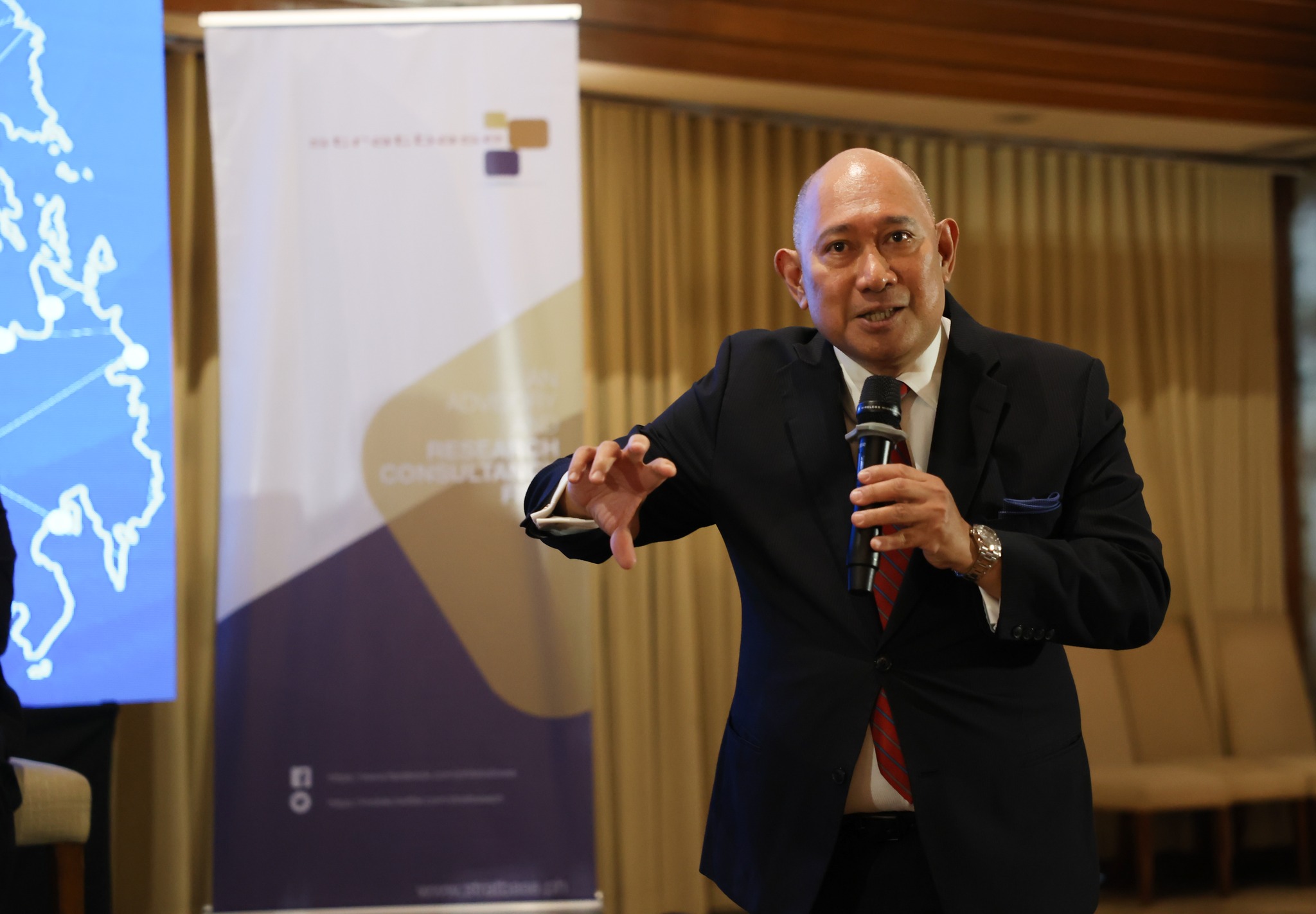
The Philippines is facing an escalating “unseen war” in the digital domain, with foreign interference and disinformation increasingly shaping public perception and democratic processes, according to Stratbase Institute president Victor Andres Manhit.
Speaking at the opening of a two-day cybersecurity conference in Manila on Thursday, Manhit warned that modern conflicts have expanded beyond traditional military confrontations into the information space.
“This is a war we cannot easily see,” Manhit said. “It is no longer plainly measured by bullets, ships, or aircraft. It is measured by who controls the information space, who shapes the narratives being amplified, and who influences public perception.”
The conference, titled “Navigating Digital Crossroads: Advancing Cybersecurity and Democratic Resilience in the Indo-Pacific,” was organized by Stratbase in partnership with the Embassy of Canada in Manila. Held at the Manila Polo Club, the event brought together senior government officials, security leaders, diplomats, technology experts, and academics to address growing cyber threats.
Key issues discussed included hybrid warfare, cyber espionage, and foreign information manipulation and interference (FIMI), all of which pose significant challenges to the Philippines’ national security and democratic institutions.
Manhit emphasized that democratic resilience requires transparency and accountability, especially during periods of geopolitical tension. He referenced a recent exchange between Stratbase Institute and the Chinese Embassy following statements released by his organization about China.
“We welcome that response,” he said. “Because this is precisely what democratic resilience requires: open debate, transparency, accountability, and the defense of sovereign rights under international law.”
The timing of the conference is particularly significant as the Philippines approaches its election cycle. Manhit cautioned that influence operations targeting elections begin long before official campaigns launch.
“A campaign does not begin in the filing of certificates of candidacy. It begins now, in shaping the information environment and the cyber landscape,” he warned.
Recent data from a Stratbase-commissioned Pulse Asia survey reveals that most Filipinos now rely primarily on social media and online platforms for news consumption. Concerningly, seven in ten Filipinos express deep worries about misinformation.
“What starts as ‘fake news’ rarely stays confined to a single platform,” Manhit noted. “It spreads across networks, enters daily conversations, and ultimately penetrates governance and national decision making.”
The conference highlighted China’s “three warfares” doctrine—combining psychological, legal, and public opinion warfare—as a prime example of coordinated political and cognitive operations targeting the Philippines. Manhit cited the “aggressive amplification of pro-China narratives on the West Philippine Sea and the discrediting of Philippine institutions” as evidence of this strategy in action.
Unlike random disinformation, Manhit characterized current foreign interference efforts as “deliberate, organized, and externally driven.” He cautioned that without long-term strategic planning, the Philippines risks entering the next decade unprepared for evolving geopolitical threats in the digital sphere.
The conference’s first day focused on assessing the broader cybersecurity landscape, examining hybrid warfare tactics in the digital age, and addressing cybercrime and espionage threats. The second day narrowed in on FIMI operations specifically targeting the Philippines and explored regional collaborative approaches to safeguarding democratic processes ahead of the 2028 elections.
As digital threats continue to evolve, the gathering emphasized the importance of multi-stakeholder cooperation in building resilience against foreign interference.
“Foreign interference thrives in silence and fragmentation,” Manhit concluded. “Democratic resilience grows through cooperation, transparency, and collective vigilance.”
The conference represents a significant step in the Philippines’ efforts to recognize and counter digital threats to its democratic institutions, particularly as the information landscape becomes an increasingly contested domain in Indo-Pacific geopolitics.
Fact Checker
Verify the accuracy of this article using The Disinformation Commission analysis and real-time sources.

23 Comments
Interesting that the Philippines is facing this challenge. Tackling cyber threats and foreign influence operations requires a multifaceted approach involving government, tech, and academia.
You raise a good point. Bringing together diverse stakeholders is essential to developing effective strategies against disinformation and cyber attacks.
The Philippines situation highlights the broader global challenge of combating foreign interference and disinformation campaigns. Multilateral cooperation will be key.
Agreed. International coordination and sharing of best practices can help strengthen defenses against these emerging threats to democracy.
Cyber threats and information manipulation are complex issues that require a comprehensive, whole-of-society response. Glad to see the Philippines addressing this proactively.
Disinformation campaigns can have far-reaching consequences for a country’s democratic processes and national security. Kudos to the Philippines for taking this threat seriously.
Agreed. Addressing these emerging threats requires a collaborative, multifaceted approach involving government, industry, and civil society.
This is a concerning situation. Disinformation campaigns can have serious consequences for democratic processes. Strengthening cybersecurity and resilience is crucial.
Absolutely. Controlling the information landscape is a powerful weapon in modern conflicts. Vigilance and transparency are key to countering these threats.
This is a timely and important issue. Hybrid warfare tactics that leverage disinformation and cyber attacks pose a serious threat to democratic institutions.
Well said. Proactive measures to counter these threats and protect the integrity of information and democratic processes are essential.
The Philippines’ experience highlights the global scale of the disinformation challenge. Strengthening cybersecurity and building resilience should be a top priority for all democracies.
This speaks to the evolving nature of modern conflicts. Controlling the narrative and shaping public perception can be just as important as traditional military might.
Agreed. The information domain has become a critical battleground, with significant implications for national security and democratic integrity.
This invisible cyber war fueled by disinformation is a troubling phenomenon. Safeguarding democratic processes and building public resilience should be top priorities.
Absolutely. Transparency, fact-checking, and empowering citizens with media literacy skills are crucial to countering the spread of harmful narratives.
Interesting to see how the Philippines is grappling with this challenge. Cyber warfare and information manipulation tactics are becoming increasingly sophisticated.
It’s concerning to hear about the Philippines grappling with this invisible cyber war. Strengthening cybersecurity and building resilience against disinformation is crucial.
Fascinating to see how the nature of modern conflicts has evolved to include the information space. Protecting against cyber threats and disinformation campaigns is vital.
Fascinating to see how modern conflicts have evolved to include the information space. Controlling narratives and shaping public perception can be a powerful weapon.
This invisible cyber war is a concerning development. Controlling the information landscape can be a powerful weapon, as the Philippines is now discovering.
Absolutely. Tackling disinformation and foreign interference in the digital domain is crucial for safeguarding democratic institutions and processes.
Cyber warfare and information manipulation are growing concerns globally. I’m curious to learn more about the specific tactics and actors involved in the Philippines situation.