


Listen to the article
Philadelphia Students Combat Misinformation with Innovative Project FACTS Initiative
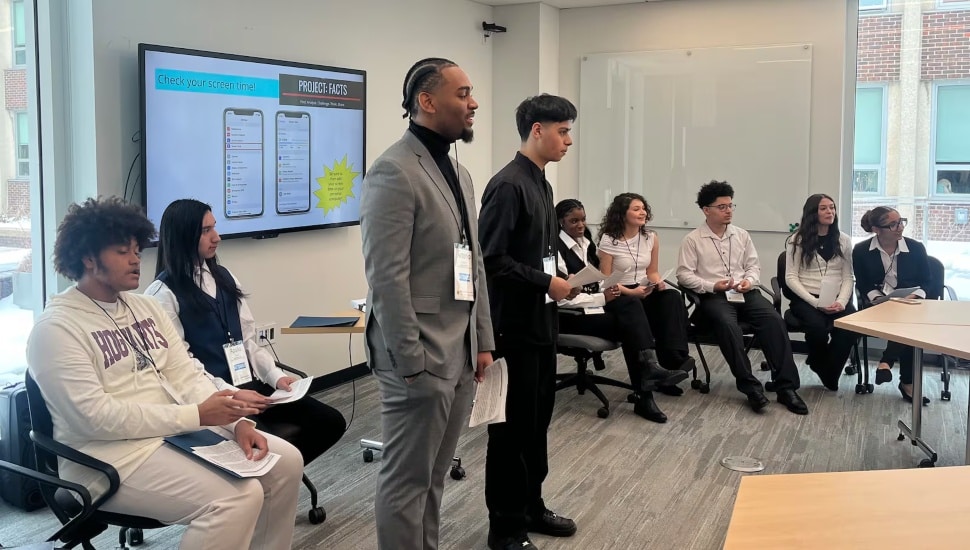
A group of determined students at Kensington Health Sciences Academy (KHSA) in Philadelphia has launched a grassroots initiative to battle the rising tide of misinformation flooding social media platforms. The nine-student team, working alongside Principal Nimet Eren, has developed Project FACTS, a comprehensive educational program designed to help their peers navigate the often murky waters of online information.
The initiative, which stands for “Find out where a post is from, Analyze it, Challenge it, Think for yourself before you share,” emerged as a response to growing concerns about digital literacy in the aftermath of the 2024 presidential election. For these students, the mission is deeply personal.
“I definitely hear kids use the FACTS acronym around the school, and it lets me know people really understand,” said Saniya Salcedo, one of the seniors spearheading the program. The students have witnessed firsthand how social media algorithms can promote AI-generated content, political propaganda, and outright falsehoods that often target young, impressionable users.
What began as a small-scale effort has evolved into a structured curriculum, with lesson plans designed for advisory periods and homeroom sessions. The program takes a balanced approach, acknowledging social media’s positive aspects while equipping students with critical thinking tools to identify potentially misleading content.
The initiative comes at a crucial time for digital literacy education. Recent studies show that teenagers are increasingly getting their news from social media platforms, where content moderation varies widely, and AI-generated deepfakes have become increasingly sophisticated and difficult to detect. According to a 2023 Common Sense Media report, nearly 60% of teens rely on social media as their primary news source, yet fewer than half report feeling confident in distinguishing genuine news from misinformation.
Philadelphia schools, like many urban districts across the country, have been working to integrate media literacy into their curricula. However, KHSA’s approach is unique in its student-led implementation and practical focus on real-world applications.
The nonpartisan nature of Project FACTS is particularly noteworthy in today’s politically polarized climate. Rather than telling students what to believe, the program emphasizes critical thinking skills that can be applied across the political spectrum, encouraging young people to evaluate sources, question claims, and consider context before accepting information as fact.
Experts in digital literacy education have praised the KHSA approach for its peer-to-peer methodology. Research consistently shows that teenagers are more receptive to guidance from their peers than from authority figures, making student-led initiatives potentially more effective than traditional top-down educational approaches.
The FACTS acronym itself serves as a simple yet powerful framework that students can apply when encountering new information online. By investigating the source, analyzing content for bias or inconsistencies, challenging assumptions, and thinking independently before sharing, students develop habits that serve as a defense against manipulation.
As digital platforms continue to evolve and new challenges emerge in the information landscape, initiatives like Project FACTS represent an important step toward building more media-savvy generations. For the students at Kensington Health Sciences Academy, the fight against misinformation isn’t just an academic exercise—it’s about protecting their communities and preserving the integrity of public discourse.
The Project FACTS team plans to continue refining their curriculum and hopes to eventually share their resources with other schools throughout the Philadelphia School District and beyond, potentially creating a student-led movement for information literacy that could have far-reaching impacts on how young people consume and share digital content.
Fact Checker
Verify the accuracy of this article using The Disinformation Commission analysis and real-time sources.

18 Comments
Great to see students taking a proactive stance against misinformation. Teaching digital literacy is crucial in today’s online landscape. Their FACTS initiative sounds like a smart, practical approach.
I agree, empowering young people to think critically about online content is so important. Kudos to these students for leading this grassroots effort.
The FACTS program sounds like a valuable educational initiative. It’s great to see high school students taking such a proactive stance against the spread of misinformation and disinformation.
Absolutely. Fostering critical thinking skills around online content is a crucial life skill. These students are setting a wonderful example for their peers.
It’s encouraging to see students taking such a proactive approach to combating misinformation. The FACTS initiative sounds like a comprehensive and thoughtful program. Kudos to these young leaders.
I agree, this is an impressive effort by these high schoolers. Fostering digital literacy at a young age is crucial, and these students are setting a great example.
This project is a timely and much-needed response to the growing issue of misinformation. High school students are often prime targets, so equipping them with the tools to spot and challenge false narratives is commendable.
Absolutely. Developing critical thinking skills around online information should be a priority for schools. Glad to see these students taking initiative on this front.
Kudos to these Philadelphia students for launching the FACTS initiative to combat misinformation. Teaching digital literacy skills at the high school level is a smart, proactive approach.
I agree, this is an impressive grassroots effort. Arming young people with the ability to identify and challenge false narratives online is so important these days.
Teaching digital literacy and critical thinking around online content is so important, especially for young, impressionable users. This FACTS program seems like a smart, practical approach.
Agreed. Empowering students to navigate the online world more discerningly is a valuable life skill. Kudos to these Philadelphia students for taking the initiative on this front.
Misinformation and disinformation are major challenges, so it’s great to see these high school students taking action. The FACTS initiative sounds like a thoughtful, comprehensive program.
Absolutely. Equipping young people with the tools to think critically about online content is crucial. These students are setting a wonderful example.
Tackling misinformation at the high school level is a smart move. These students are showing strong digital literacy and critical thinking skills – qualities that will serve them well.
Absolutely. Arming young people with the ability to assess the credibility of online information is an invaluable life skill. Well done to these students for taking the initiative.
The FACTS initiative sounds like a smart, practical way to combat misinformation. Kudos to these Philadelphia students for identifying this problem and creating an educational program to address it.
Agreed. Teaching young people to be more discerning consumers of online content is crucial in today’s information landscape. This grassroots effort is impressive.