


Listen to the article
The fog of war surrounding the U.S.-Israel strikes on Iran has created an unprecedented information vacuum, leaving the American public largely in the dark about actual developments despite seemingly extensive media coverage.
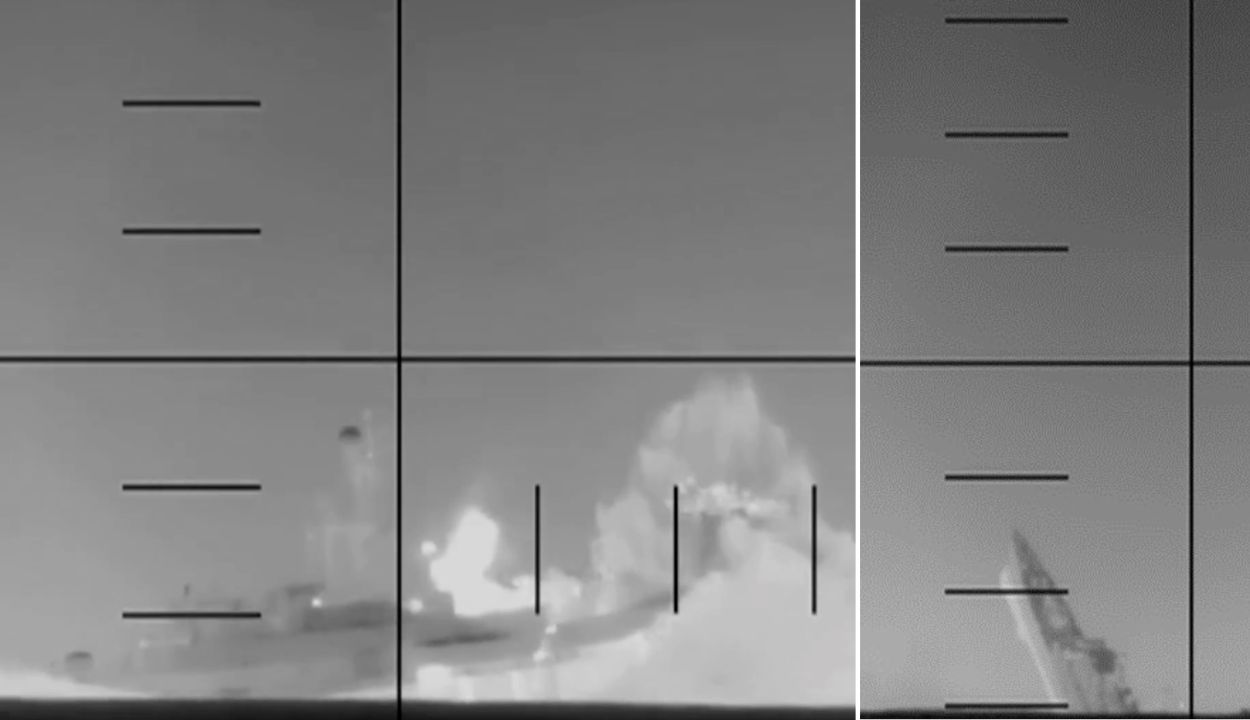
One week into military operations, both the Pentagon and Israeli forces have released carefully curated footage showing sunken ships and precision strikes. Yet these images represent a highly selective narrative crafted by the very institutions conducting the campaign.
The challenge stems from a fundamental access problem: virtually no Western journalists operate freely inside Iran. Unlike traditional conflicts with defined front lines, this war unfolds primarily through submarine-launched torpedoes, carrier aircraft strikes from hundreds of miles away, and drone operations in inaccessible airspace. There is no conventional battlefield for reporters to document, no aftermath to investigate, and few witnesses to interview.
This information vacuum creates an almost complete dependence on official military sources, which naturally highlight successful operations while downplaying setbacks or complications. The images themselves may be authentic, but their selection, production and distribution are controlled by parties with vested interests in portraying operational success.
The information environment has reached new levels of manipulation. In a particularly telling example, the White House recently released a video that combined actual Iran strike footage with scenes from the video game Call of Duty. This blending of reality and simulation wasn’t merely a marketing misstep—it revealed how modern warfare’s visual language has converged with gaming aesthetics, blurring distinctions between documentation and entertainment.
Social media compounds these challenges by distributing wartime imagery at unprecedented speed, with algorithms that prioritize engagement over accuracy. AI-generated videos now produce synthetic battlefield footage virtually indistinguishable from authentic material. Meanwhile, state-sponsored disinformation from multiple actors rushes to fill gaps left by independent reporting.
The collapse of trusted institutional frameworks makes this situation particularly dangerous. In today’s fractured media landscape, audiences often dismiss inconvenient reporting as biased rather than engaging with it as evidence, making consensus reality increasingly difficult to establish.
This stands in stark contrast to the Ukraine conflict just four years ago, which was extensively documented through ground-level reporting. Ukraine represented an exception—a conventional ground war with fixed front lines across accessible territory, involving a combatant eager to share information with Western audiences. The current Iran conflict lacks these conditions, revealing Ukraine as an anomaly rather than a new standard for war coverage.
The stakes could not be higher. Iran commands an extensive regional proxy network, a significant missile arsenal, and a nuclear program that has shaped international diplomacy for decades. The conflict has no clearly defined end state or exit conditions, with realistic possibilities for escalation that could draw American ground troops into a broader regional war.
The public must process these developments while standing on shifting informational ground—relying on curated military footage, navigating social media filled with manipulated content, and lacking trusted institutions capable of producing a common understanding of events.
This may preview how future conflicts will be perceived by civilians. Modern warfare increasingly involves technologies that keep journalists far from the action—submarines, long-range missiles, cyber operations, autonomous drones, and distant air campaigns. Simultaneously, information ecosystems grow more saturated with synthetic media and state disinformation while audiences fragment.
The result creates a troubling paradox: wars become more technologically visible to the militaries fighting them while becoming less observable to the societies asked to understand them.
While media conversations have focused on defending press freedoms in principle, they’ve largely failed to address whether journalists can actually obtain reliable information about this conflict. The public’s confusion about Iran isn’t a failure of attention—it’s a rational response to genuinely compromised information channels as we enter a conflict with potential to reshape the entire region.
Fact Checker
Verify the accuracy of this article using The Disinformation Commission analysis and real-time sources.

7 Comments
This is a complex challenge with no easy solutions. The Pentagon must stay ahead of rapidly evolving AI capabilities to protect the integrity of information related to military operations. Transparency and fact-checking will be crucial.
The information vacuum in Iran is deeply concerning. Without on-the-ground reporting, the public is at the mercy of selective narratives crafted by military institutions. This raises critical questions about the accountability and credibility of official sources.
AI-generated fakes pose a serious threat to public trust and the integrity of information. The Pentagon’s efforts to address this challenge are important, but continued vigilance and innovation will be required to stay ahead of this rapidly evolving issue.
The potential for AI-generated fakes to be used as a weapon of disinformation is alarming. This highlights the need for advanced detection methods and media literacy efforts to empower the public to distinguish fact from fiction.
This is a concerning development. AI-generated fakes could be used to spread disinformation and sow confusion. I hope the Pentagon takes robust measures to address this threat to truth and transparency.
The lack of independent media access in Iran is very troubling. Without on-the-ground reporting, the public is left to rely on curated military footage that may not tell the full story. This opacity raises serious questions about accountability.
I agree. Without independent verification, it’s difficult to assess the accuracy and completeness of the information being shared by military sources. This underscores the vital role of a free press in times of conflict.