


Listen to the article
In a concerning development for regional stability, cybersecurity analysts have uncovered a sophisticated disinformation operation falsely accusing Pakistan of betraying Iran by transporting oil to the United States through the Strait of Hormuz. The campaign, traced to accounts operating from India and Afghanistan, appears designed to inflame tensions between the neighboring countries at a delicate geopolitical moment.
The fabricated narrative centers on claims that Pakistani-flagged vessels are facilitating U.S. oil shipments—a story strategically framed as a betrayal of Tehran. Despite lacking any verified evidence or confirmation from official Iranian sources, the claims spread rapidly across social media platforms through what analysts describe as a carefully orchestrated three-tier distribution model.
“This operation follows a classic disinformation playbook,” said one regional security analyst who requested anonymity due to the sensitivity of the issue. “It’s crafted to exploit existing fault lines in the Iran-Pakistan relationship and undermine Pakistan’s diplomatic position.”
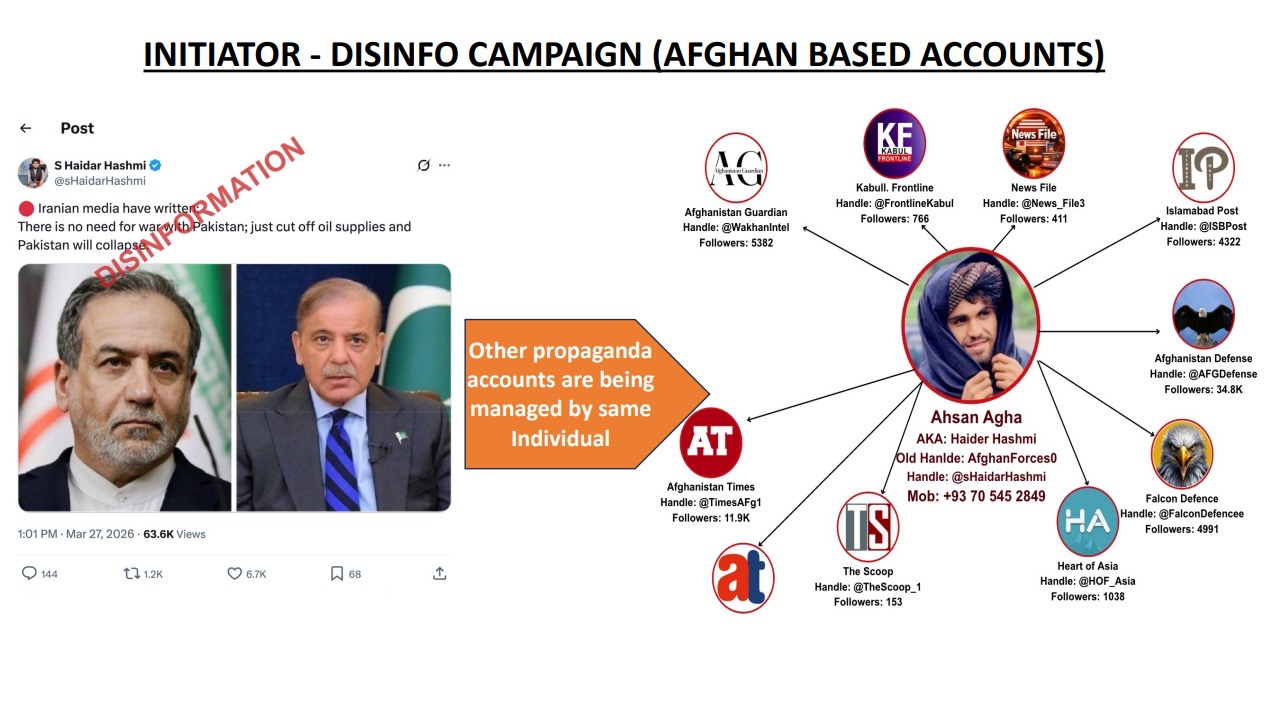
The campaign began with “initiator” accounts posing as Iranian media outlets or officials. These accounts published the initial allegations linking Pakistan to oil transfers through the Strait of Hormuz, establishing what appeared to be credible foundations for the narrative. Many used sophisticated branding techniques to mimic legitimate news platforms, lending an air of authenticity to their claims.
A secondary layer of accounts based primarily in Afghanistan served as “proliferators,” rapidly sharing and reshaping the same claims. These accounts translated or reframed the allegations to maximize engagement across different linguistic and cultural audiences in the region. Technical analysis revealed patterns consistent with coordinated activity—including recent account creation dates, minimal historical content, and multiple username changes.
In one particularly telling case, an account linked to Afghanistan showed more than ten handle changes while consistently pushing identical narratives about Pakistan and Iran. Metadata indicators cited by analysts included location tags tied to Afghanistan, Android-based access patterns, and synchronized posting schedules suggesting centralized control rather than independent user activity.
The campaign’s architects further intensified the narrative by incorporating sectarian themes, attempting to portray fundamental divisions between Sunni-majority Pakistan and Shia-majority Iran. This additional layer appeared designed to amplify emotional responses and deepen perceptions of betrayal among target audiences.
At the operation’s final stage, accounts based in India served as “amplifiers,” repackaging the unverified claims into structured, news-style content. Platforms with names like “Times of Iran News” presented the fabricated narrative as credible international reporting, complete with formatting and language mimicking professional journalism standards.
The timing of this disinformation effort coincides with Pakistan’s recent diplomatic engagements between the United States and Iran, including efforts to facilitate dialogue and reduce regional tensions. Security experts suggest this mediating role may have made Pakistan a target for actors seeking to undermine its diplomatic position.
“Creating false narratives about oil shipments serves multiple strategic objectives,” explained a diplomatic analyst familiar with South Asian affairs. “It attempts to create mistrust between Pakistan and Iran at precisely the moment when regional cooperation is most needed.”
The campaign represents a concerning evolution in digital influence operations, demonstrating how unverified claims can rapidly gain traction when amplified through coordinated networks. While no official responses have been issued by authorities in India or Afghanistan regarding these allegations, and no independent forensic audit has confirmed definitive attribution, the patterns observed match known disinformation techniques.
Analysts warn that campaigns built around sensitive issues like oil routes, military tensions, and sectarian differences can significantly impact public perception and diplomatic relations, even without factual basis. As regional tensions remain elevated, the ability to identify and counter such operations becomes increasingly critical for maintaining stability in an already volatile neighborhood.
Fact Checker
Verify the accuracy of this article using The Disinformation Commission analysis and real-time sources.

8 Comments
This is an alarming development that could further destabilize the region. Disinformation campaigns designed to sow discord between neighbors are concerning. I hope regional leaders can work to verify facts and de-escalate tensions through diplomacy.
Agreed, maintaining open communication channels is crucial during such sensitive geopolitical situations. All parties should exercise caution and seek to understand the full context before making accusations.
This situation highlights the need for robust cybersecurity measures to identify and counter sophisticated disinformation operations. I hope the relevant authorities can swiftly investigate the origins of this campaign and its potential sponsors.
Disinformation that exploits existing regional tensions is particularly concerning. I’m curious to know if there are any indications of state-sponsored involvement in orchestrating this campaign against Pakistan.
That’s a good question. Understanding the motivations and potential sponsors behind such campaigns is crucial. Careful analysis of the digital footprints and distribution networks will be key to unraveling the full scope of this operation.
This is a complex geopolitical issue, and I appreciate the article’s emphasis on the need for verified evidence and official confirmation from Iranian sources. Maintaining objectivity and avoiding knee-jerk reactions will be important going forward.
If these claims about Pakistani oil shipments to the US are indeed fabricated, it’s important to expose this disinformation campaign and its origins. Transparency and fact-checking will be critical to preventing further escalation.
Absolutely. Verifying sources and motives behind such inflammatory narratives should be a top priority for regional security analysts and diplomats. Maintaining open communication channels is key.