


Listen to the article
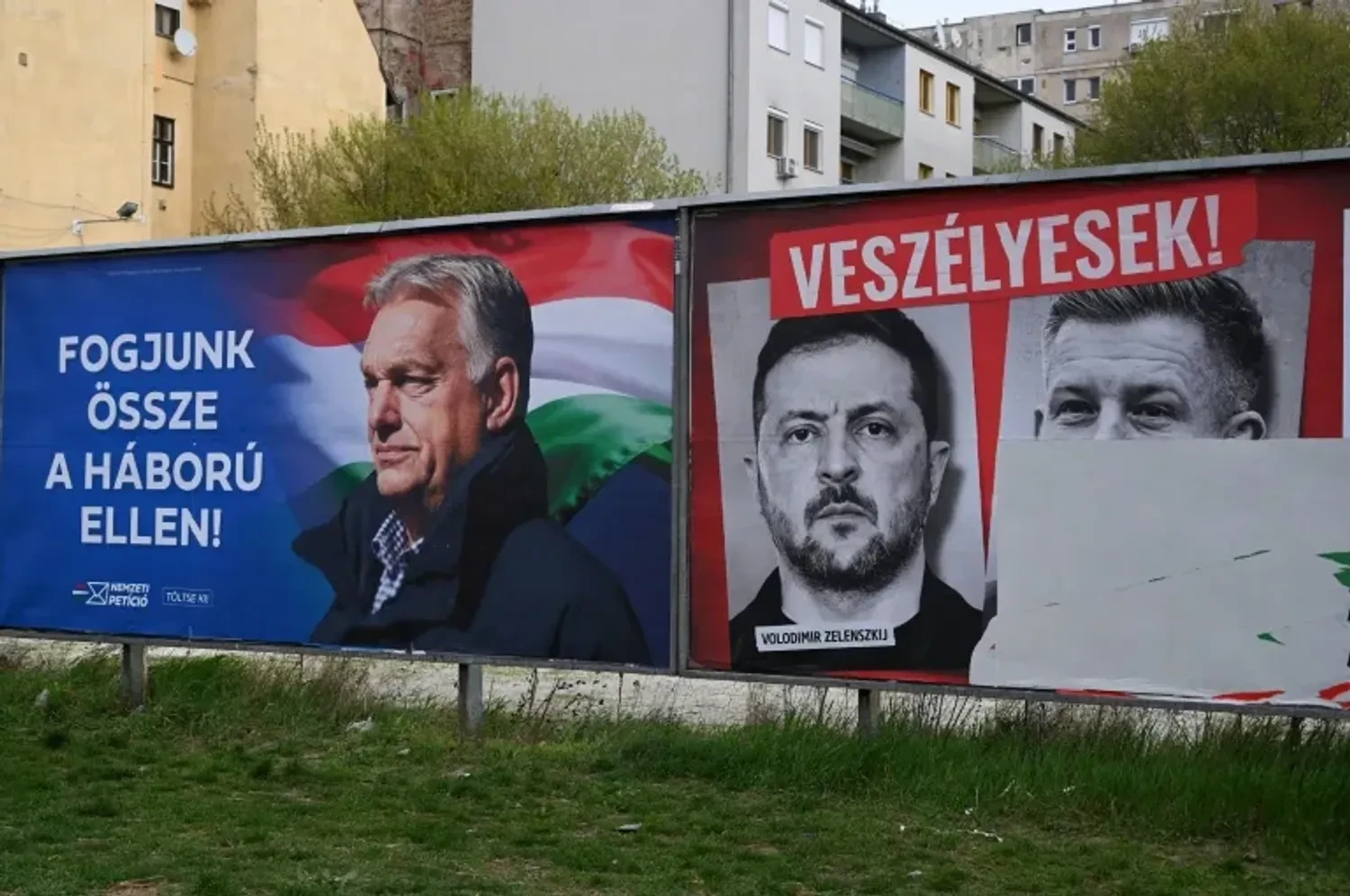
Russian disinformation tactics appear to be bolstering Hungarian Prime Minister Viktor Orbán’s re-election campaign, according to analysts who suggest Moscow is covertly assisting its closest European Union ally against an unprecedented electoral challenge. The Prime Minister has deployed AI-generated imagery to stoke anti-Ukrainian sentiment ahead of Hungary’s April 12 elections.
Orbán, who has led Hungary for 16 years, faces a serious challenge from opposition leader Péter Magyar, whose party has surged to the top of opinion polls. Analysts believe Russian influence operations are helping Orbán redirect public discourse away from domestic issues that have fueled Magyar’s popularity.
“The campaign rhetoric is deliberately binary — peace versus war — portraying Ukraine as a threat and the current Hungarian government as striving for stability and rationality,” explained Csilla Fedinec, a historian at the ELTE University Centre for Social Sciences.
Relations between Hungary and Ukraine have deteriorated significantly in recent months. Orbán has accused Ukraine of delaying the resumption of a Russian oil pipeline supplying landlocked Hungary, while Kyiv maintains the pipeline was damaged by Russian airstrikes in January. Hungary has also blocked a €90 billion ($103 billion) EU loan to Ukraine and stalled new sanctions against Russia.
The tensions escalated last month when Hungarian counter-terrorism forces detained Ukrainian bank employees and confiscated assets nationwide. Pro-Orbán tabloids published AI-generated photos that exaggerated the seized cash and gold, triggering unusually high engagement on social media platforms like Facebook. Analysis revealed many interactions came from accounts with non-Hungarian names and minimal profile information—hallmarks of coordinated bot networks.
In another incident, fake AI-generated images circulated online purportedly showing a Hungarian memorial in Ukraine’s Zakarpattia region—home to an ethnic Hungarian minority—vandalized with anti-Hungarian slogans, Ukrainian nationalist symbols, and swastikas. Though the monument had been defaced previously, experts confirmed these specific images were AI fabrications. Nevertheless, they provoked calls for retaliation on social media.
Ferenc Fress, former head of the Hungarian Cyber Defence Service, told AFP, “A disinformation campaign aimed at influencing the elections in Hungary is constantly being detected, as was the case during the elections in Moldova and Romania.” He added that Russian-disseminated messages “are mostly identical to Hungarian pro-government propaganda, so they mutually reinforce each other.”
Hungarian Foreign Minister Péter Szijjártó has dismissed allegations of Russian interference as “fake news.”
Orbán has attempted to frame the election as a choice between himself and Ukrainian President Volodymyr Zelenskyy, telling supporters at a mid-March rally in Budapest, “We have to choose who will form the government — me or Zelenskyy.”
Hours after this statement, a large Ukrainian flag appeared at an opposition march. Photos quickly spread among government politicians and pro-Fidesz media. However, it later emerged that individuals holding the flag were associated with the youth wing of Orbán’s own party—an apparent false flag operation.
“We said there would be false flag operations, but that’s not what we meant,” Magyar quipped at a subsequent campaign event. The opposition leader had previously been targeted by similar tactics when Fidesz supporters published an AI-modified image appearing to show him holding a Ukrainian flag.
Throughout Hungary, government-funded billboards portray Zelenskyy negatively, including one depicting Magyar flushing money down a golden toilet alongside the Ukrainian leader.
Political scientist Eszter Kovács from the University of Vienna notes that while the government’s campaign contains “surreal” elements, it resonates with genuine public fears about Hungary being drawn into the Ukraine conflict. Statements by European leaders about potential conscription and EU involvement in the war have heightened these anxieties.
“The Fidesz party appeals to people’s deep need for existential security,” Kovács explained. “Their message is: when the world is falling apart, believe in what you have, even if there are problems, change is a risk.”
Fact Checker
Verify the accuracy of this article using The Disinformation Commission analysis and real-time sources.

8 Comments
Interesting that Orban seems to be using disinformation tactics to bolster his re-election campaign. It’s concerning to see populist leaders leveraging division and scapegoating for political gain.
You’re right, it’s a worrying trend we’ve seen in several countries lately. Voters should be wary of nationalist rhetoric that diverts attention from real issues.
While I’m not surprised to see Orban using disinformation, it’s still disappointing. Voters deserve honest, fact-based dialogue on the real issues, not divisive scapegoating. I hope Hungarians see through this political manipulation.
Me too. Disinformation campaigns can be very effective at swaying public opinion, so it’s crucial that voters take the time to verify claims and think critically about the motivations behind them.
This report highlights the growing problem of foreign interference in domestic elections through the use of disinformation. Voters need to be vigilant and fact-check claims, especially around sensitive geopolitical issues.
Absolutely. An informed and skeptical electorate is crucial to maintaining the integrity of democratic processes. Reliance on credible, independent sources of information is key.
It’s disturbing to see a leader like Orban resort to such tactics. Stoking anti-Ukrainian sentiment for political gain is a dangerous game that could have serious consequences. Hungarians should think critically about the motivations behind this rhetoric.
This report underscores the importance of media literacy and the ability to identify propaganda. Voters should be wary of simplistic narratives that blame external factors for domestic problems. A healthy democracy requires a well-informed citizenry.