


Listen to the article
In North Kivu, MONUSCO Tackles Disinformation to Strengthen Civilian Protection
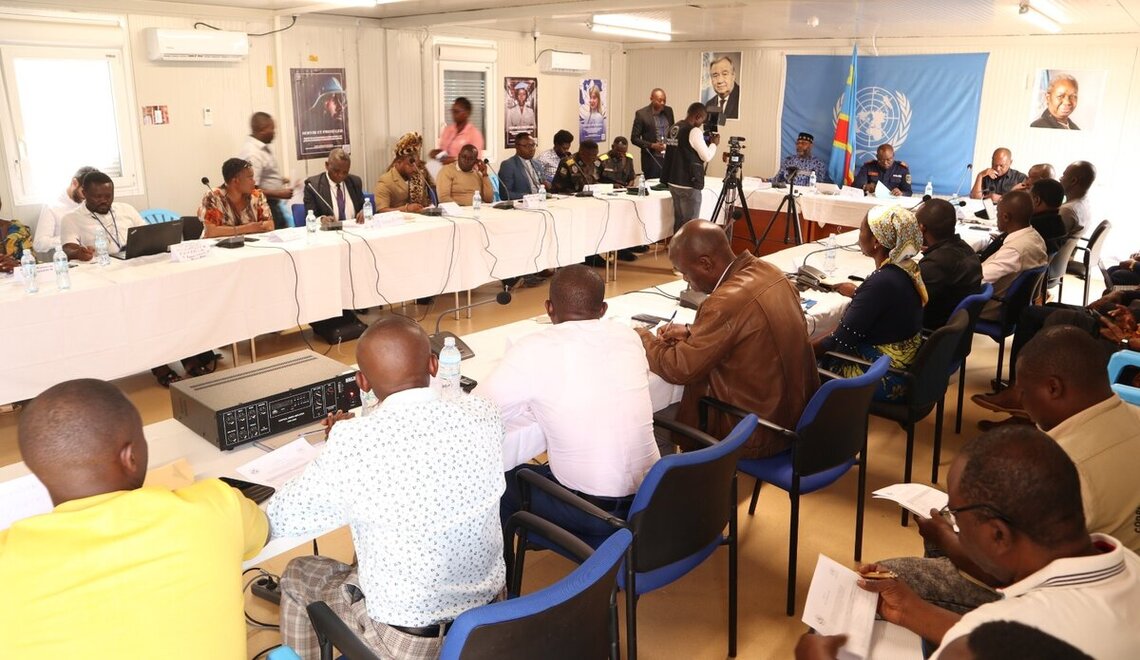
Representatives from local authorities, security forces, and community leaders gathered in Beni on December 11 for a crucial meeting organized by MONUSCO’s Civil Affairs Section. The forum addressed the growing challenge of disinformation and its impact on civilian protection efforts in the violence-plagued Lubero territory of North Kivu.
The meeting centered on how community mobilization can help prevent violence, build trust, and counter the spread of rumors and hate speech. Discussions focused particularly on the Bapere sector and Baswagha chiefdom, regions that have endured persistent attacks attributed to the Allied Democratic Forces (ADF), one of the deadliest armed groups operating in eastern Democratic Republic of Congo.
Abdourahamane Ganda, head of MONUSCO’s Beni sub-office, highlighted how violence in Lubero territory during 2024 has caused significant loss of life, massive population displacement, and widespread destruction. He emphasized that disinformation has repeatedly undermined civilian protection initiatives in the region.
Ganda pointed to specific instances where the UN peacekeeping mission attempted to deploy forces to Manguredjipa, the administrative center of the Bapere sector. These efforts were hampered by false rumors accusing MONUSCO of collaborating with armed groups, which fueled community hostility toward peacekeepers and prevented them from accessing areas under threat.
“When peacekeepers cannot reach threatened communities due to unfounded suspicions, civilian populations remain exposed to attacks,” Ganda explained. He urged community leaders to act as intermediaries by educating their communities about MONUSCO’s mandate and fostering regular dialogue to dispel dangerous misconceptions.
The Vice-Governor of North Kivu echoed these concerns, warning about the dangerous synergy between armed violence and information manipulation. He stressed the importance of social cohesion and community involvement while calling for stronger cooperation between national forces, international partners, and MONUSCO, with active support from local communities.
Past incidents in nearby Butembo demonstrate the deadly consequences of unchecked rumors and hate speech. These episodes have eroded trust between communities and protection forces, creating security vacuums that armed groups readily exploit. When peacekeepers or national security forces are prevented from accessing certain areas due to community hostility fueled by false information, civilians become increasingly vulnerable to attacks.
Aminata Tida Warangasi, coordinator of women’s associations in the Bapere sector, emphasized that effective responses must start with grassroots engagement. She highlighted the responsibility of community leaders in raising awareness about the real-world consequences of disinformation on collective security.
“Women and children often bear the heaviest burden when violence erupts,” Warangasi noted. “By helping communities understand how false information endangers everyone, we can build stronger protection networks from the ground up.”
The meeting produced several concrete action plans focused on enhancing awareness of MONUSCO’s civilian protection mandate, improving the sharing and verification of security alerts, and leveraging community radio stations to counter false information. Participants also highlighted the need to strengthen local leaders’ communication capacities.
Additional measures include discouraging collaboration with armed groups, particularly by supporting economic opportunities for young people who might otherwise be recruited. Participants called for strengthened civil-military cooperation and guaranteed freedom of movement for forces engaged in civilian protection.
This gathering represents an important step toward improved coordination between institutions, security forces, and local communities in North Kivu. It underscores that combating disinformation has become a central challenge for ensuring lasting civilian protection in Lubero territory, where information warfare increasingly complements physical violence.
As eastern DRC continues to face complex security challenges, addressing the information environment has emerged as an essential component of any comprehensive protection strategy, particularly in regions where trust has been eroded by decades of conflict.
Fact Checker
Verify the accuracy of this article using The Disinformation Commission analysis and real-time sources.

10 Comments
Kudos to MONUSCO for convening this timely forum to address the disinformation challenge in North Kivu. Collaborative efforts between local authorities, security forces, and community leaders are crucial.
Community mobilization appears to be a sensible strategy to counter the spread of harmful rumors and hate speech in this volatile region. Bolstering trust between local stakeholders is an important first step.
Agreed. Empowering communities to take an active role in addressing disinformation can help build resilience and better protect civilians caught in the crossfire.
Combating disinformation is crucial to protect vulnerable communities in North Kivu. Strengthening local mobilization and trust-building efforts is a smart approach to counter the spread of rumors and hate speech.
Absolutely. Empowering local authorities, security forces, and community leaders to address this challenge is an important step in the right direction.
The persistent violence and attacks by armed groups like the ADF have devastated the Lubero territory. Disinformation has seriously undermined civilian protection efforts in this troubled region.
That’s a concerning situation. Addressing disinformation alongside security challenges seems critical to safeguard local communities and support UN peacekeeping efforts.
The scale of violence and destruction caused by armed groups in Lubero territory is deeply concerning. Disinformation exacerbating this crisis underscores the urgent need for coordinated, community-based solutions.
Absolutely. Tackling the root causes of disinformation and strengthening local resilience are critical to safeguarding vulnerable populations in this conflict-affected region.
Curious to learn more about the specific disinformation tactics and their impacts on civilian protection initiatives in North Kivu. Understanding the local context is key to crafting effective solutions.