


Listen to the article
Turkish Cypriot Coalition Faces Internal Revolt Over Controversial Disinformation Bill
A controversial bill aimed at curbing disinformation in northern Cyprus faces an uncertain future as four members of the ruling coalition have publicly declared their opposition to the legislation they themselves helped create. The bill, scheduled for a vote in the Turkish Cypriot legislature in the coming weeks, has sparked concerns about freedom of expression and democratic values.
The ruling coalition currently holds a slim majority of nine in the legislature, but with four members now opposing the bill, its passage appears increasingly doubtful.
Hasan Kucuk of the UBP, the coalition’s largest party, became the first to break ranks, criticizing what he described as “ambiguity” in the bill’s language. During an appearance on television channel Kanal T, Kucuk warned that the vague terminology could lead to societal divisions.
“Different interpretations of a word by different people will lead to divisions in society,” Kucuk stated. “A regulation from which judges, prosecutors, and lawyers derive different meanings will pit the public against each other.”
Following Kucuk’s announcement, Hasan Tacoy, also from UBP and a former challenger to ‘Prime Minister’ Unal Ustel for the party leadership in 2024, voiced similar concerns. Appearing on the same television channel, Tacoy accused the coalition of embedding “political elements” in the proposed legislation.
“If it comes to a plenary session with those articles in it, I will vote against it,” Tacoy declared firmly. “Such logic is unacceptable. I want to exercise my freedom of speech. We need to be able to speak our minds.”
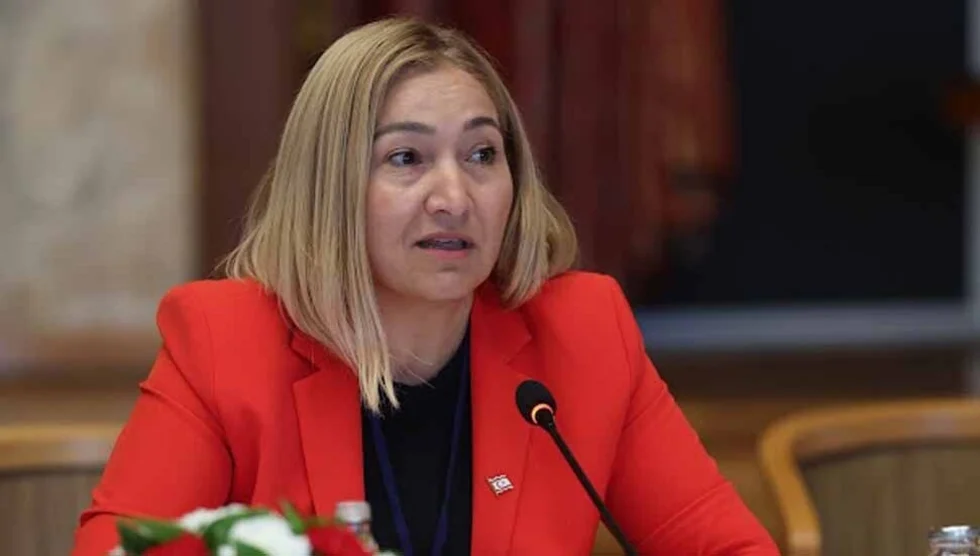
The third coalition member to express opposition was Yasemin Ozturk, a UBP member who chairs the ‘parliamentary’ legal affairs committee. In an interview with Haber Kibris TV, Ozturk suggested that while she supports some regulation of harmful speech, the current draft is unacceptable.
“If there is anything with which I am not satisfied… I, as the committee chairwoman, will not vote yes,” Ozturk stated, while promising that “the bill will not be voted on in its current form.” She attempted to strike a more moderate tone, adding that “freedom of expression is not the freedom to insult as you please. There should be criticism, but not expressions which amount to defamation.”
The fourth member to oppose the bill is Hasan Tosunoglu, an independent legislator who typically votes with the coalition. Taking to social media, Tosunoglu emphasized the importance of protecting democratic principles.
“We must avoid regulations which would harm freedom of expression and the democratic sphere,” he wrote. “The clarity, precision, and predictability of laws, and the absence of arbitrary implementations and applications, are fundamental requirements of the rule of law. In this small community, I cannot possibly approve of any text which could serve to create ‘thought criminals’.”
The principal concern regarding the bill centers on its ambiguous language, particularly in how it defines “defamatory material” as content that could “expose” someone to “general hatred or disgust” or “provoke a social reaction.” Critics argue these vague terms could be interpreted broadly to silence legitimate criticism.
Journalists’ unions have been particularly vocal in their opposition, warning that new provisions criminalizing the creation of “fear among the public” and publishing false information while “having reason to know it is false” could be weaponized by authorities to suppress political dissent and control media narratives.
The political arithmetic makes the bill’s passage increasingly doubtful. With the coalition’s effective majority of nine potentially reduced to just one if the four dissenters vote against the bill, its fate becomes even more precarious considering UBP’s Izlem Gurcag Altugra has announced she will not attend Monday plenary sessions until Prime Minister Ustel resigns.
The controversy highlights the delicate balance between combating harmful disinformation and protecting fundamental democratic rights in the politically complex environment of northern Cyprus, where press freedoms and freedom of expression remain contested issues.
Fact Checker
Verify the accuracy of this article using The Disinformation Commission analysis and real-time sources.

12 Comments
It’s good to see members of the coalition speaking out against this bill. Curbing misinformation is important, but not at the cost of fundamental rights and liberties.
Absolutely. Finding the right balance between addressing disinformation and upholding democratic values will be crucial here.
The potential for this bill to sow divisions in society is a legitimate concern. Pitting the public against each other is the last thing a government should be doing.
Agreed. Any legislation that risks further polarizing the populace should be approached with great caution and care.
Ambiguous language in a bill like this is a red flag. Legislators should strive for clarity to avoid any misinterpretation or abuse of power.
Absolutely. Vague terminology leaves too much room for subjective enforcement, which could undermine the very democratic principles the bill aims to protect.
It’s encouraging to see members of the coalition willing to break ranks and voice their opposition. That kind of dissent is important in a democracy.
Yes, healthy debate and the ability to challenge proposed laws is a sign of a robust democratic process, even if it creates challenges for the ruling coalition.
I’m curious to see how this all plays out. Dissent within the ruling coalition suggests there are serious concerns about the potential consequences of this bill.
Yes, the internal divisions are telling. It will be important to monitor the debate and see if a more consensus-based approach can be found.
This disinformation bill seems quite concerning. Vague language and potential abuse of power are valid worries. I hope the coalition can find a way to address misinformation while preserving free expression.
Agreed. Any legislation targeting disinformation needs to be carefully crafted to avoid infringing on democratic principles like freedom of speech.