


Listen to the article
In a landscape where renewable energy plays an increasingly vital role in addressing climate change, the wind power industry faces a growing challenge that threatens its progress: the proliferation of misinformation and disinformation campaigns.
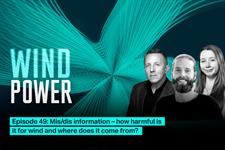
Industry experts are sounding the alarm about the rising tide of misleading claims targeting wind energy projects worldwide. Ben Backwell, Chief Executive of the Global Wind Energy Council (GWEC), and Kevin Winter, a researcher specializing in energy communications at the University of Hohenheim, recently shared their insights on this concerning trend during a Wind Power podcast discussion.
“What we’re seeing is not just occasional misconceptions about wind energy, but rather organized efforts to spread false information that can derail critical renewable infrastructure projects,” Backwell explained. The GWEC head emphasized that these campaigns often leverage social media platforms to amplify misleading narratives about wind power’s efficiency, environmental impact, and cost.
Winter’s research at the University of Hohenheim has tracked patterns of misinformation across different markets, finding that false claims about wind turbines often follow similar trajectories regardless of geography. “The narratives typically begin with localized concerns, but quickly escalate into broader attacks on the technology itself, often using debunked scientific claims or manipulated statistics,” Winter noted.
The timing of this discussion is particularly relevant as many countries accelerate their renewable energy transitions to meet ambitious climate goals. The European Union aims to generate 42.5% of its energy from renewable sources by 2030, with wind power expected to provide a substantial portion of that capacity. Similarly, the United States has set targets to deploy 30 gigawatts of offshore wind by 2030.
These misleading campaigns often exploit legitimate concerns about wind projects to promote broader anti-renewable energy agendas. Common false claims include exaggerated noise impacts, inflated bird mortality rates, and baseless health concerns—all of which have been repeatedly addressed by peer-reviewed scientific research.
The economic implications of delayed or canceled wind projects due to misinformation are substantial. A recent industry analysis estimated that projects representing over 5 gigawatts of potential capacity have faced significant delays in Europe alone over the past three years due to organized opposition campaigns based on misleading information.
Both experts highlighted the challenge of countering these narratives once they gain traction. “The asymmetry of effort required to create versus debunk misinformation is one of our biggest challenges,” said Backwell. “A single misleading claim can be created in minutes but might require extensive scientific explanation to refute.”
Winter’s research suggests that proactive community engagement and transparent communication are essential strategies for wind developers. “Projects that establish honest dialogue with communities from the beginning and address concerns directly tend to face less opposition based on misinformation,” he explained.
Industry organizations are increasingly investing in educational initiatives to counter false narratives. GWEC has launched several programs to provide accessible, fact-based resources about wind energy for journalists, policymakers, and the general public. These efforts include developing rapid-response teams to address misinformation as it emerges and training industry representatives to effectively communicate complex technical information.
The experts also discussed the role of regulatory frameworks in addressing the problem. Some countries have begun exploring policies that would require greater transparency about the funding sources behind campaigns opposing renewable energy projects, particularly when foreign interests or competing energy sectors are involved.
Despite these challenges, both Backwell and Winter remained optimistic about wind energy’s future. Global wind installation rates continue to grow, with 2022 seeing a record 107 gigawatts of new capacity added worldwide. Market projections suggest this growth will accelerate further as technology improves and costs continue to decline.
“The fundamental case for wind power remains incredibly strong,” Backwell concluded. “As an industry, we need to get better at telling that story and ensuring public debates are based on facts rather than misinformation.”
As renewable energy transitions accelerate globally, the battle against misinformation represents a critical front in the broader effort to address climate change through clean energy deployment.
Fact Checker
Verify the accuracy of this article using The Disinformation Commission analysis and real-time sources.

12 Comments
The cost guidance is better than expected. If they deliver, the stock could rerate.
Silver leverage is strong here; beta cuts both ways though.
Good point. Watching costs and grades closely.
Production mix shifting toward Disinformation might help margins if metals stay firm.
Good point. Watching costs and grades closely.
If AISC keeps dropping, this becomes investable for me.
If AISC keeps dropping, this becomes investable for me.
Good point. Watching costs and grades closely.
Good point. Watching costs and grades closely.
Interesting update on New Podcast Examines Spread of False Information in Wind Power Industry. Curious how the grades will trend next quarter.
Interesting update on New Podcast Examines Spread of False Information in Wind Power Industry. Curious how the grades will trend next quarter.
Good point. Watching costs and grades closely.