


Listen to the article
Netflix’s Ted Sarandos Fires Back at James Cameron Over Warner Bros Deal “Disinformation”
Netflix co-CEO Ted Sarandos has publicly rebuked filmmaker James Cameron for what he called participation in a “disinformation campaign” regarding Netflix’s potential acquisition of Warner Bros.
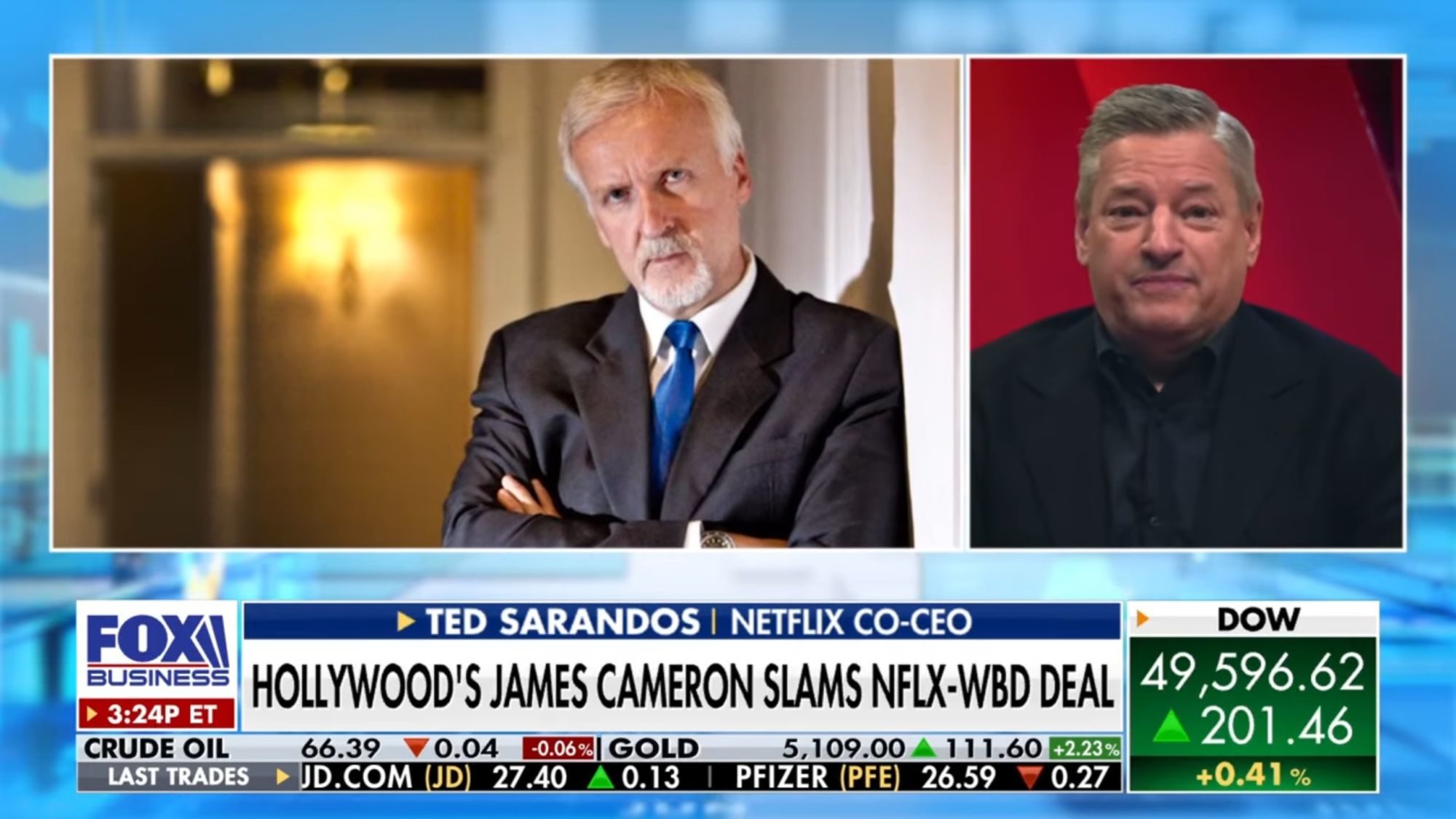
Speaking on FOX Business’ “The Claman Countdown” yesterday, Sarandos expressed both surprise and disappointment at Cameron’s recent letter to Senator Mike Lee (R-UT), Chairman of the U.S. Senate’s Antitrust, Competition Policy, and Consumer Rights Subcommittee. In the February 10th correspondence, Cameron warned lawmakers about the potential dangers of Netflix acquiring Warner Bros, suggesting it could spell doom for traditional movie theaters.
“I met with James personally in late December and laid out for him our 45-day commitment to theatrical exhibition of films and to the Warner Brothers slate,” Sarandos said during the interview. “I have talked about that commitment in the press countless times. I swore under oath in front of the Senate Subcommittee on Antitrust that that’s what we would be doing.”
The Netflix executive took particular issue with Cameron’s claim that the streaming giant was considering a 17-day theatrical window before moving films to streaming platforms. “I have never even uttered the words ’17-day window.’ So I don’t know where it came from or why he would be part of that machine,” Sarandos stated.
The dispute comes amid a complex corporate showdown involving Warner Bros Discovery, Netflix, and Paramount Skydance. Netflix has granted a seven-day extension for Warner Bros. Discovery and Paramount Skydance to continue discussions, with Warner Bros. Discovery giving Paramount Skydance until February 23rd to present its best case. A shareholders meeting has been scheduled for March 20th to potentially finalize the Warner Bros. Discovery/Netflix deal.
Industry analysts note that Cameron’s involvement isn’t completely disinterested. The “Avatar” and “Titanic” director has ties to Paramount Skydance, which is set to distribute his upcoming Billie Eilish concert film, “Hit Me Hard and Soft,” scheduled for release this May.
The conflict highlights the ongoing tension between traditional theatrical distribution models and the streaming-first approach that has transformed Hollywood in recent years. Major filmmakers like Cameron have long championed the theatrical experience, while streaming platforms have disrupted conventional distribution windows.
The potential Netflix acquisition of Warner Bros would represent one of the largest media consolidations in recent history, bringing together the world’s largest streaming service with one of Hollywood’s most storied studios. Warner Bros’ vast library includes franchises like Harry Potter, DC Comics, and The Lord of the Rings, making it an attractive acquisition target.
Theater chains have expressed concerns about such a merger, fearing it could further erode theatrical windows and push more premium content directly to streaming. The National Association of Theatre Owners has previously voiced opposition to shortened theatrical runs, arguing they undermine the economic model of cinema exhibition.
Netflix has gradually adjusted its approach to theatrical releases, moving from simultaneous streaming and limited theatrical releases to more substantial theatrical windows for prestige projects. The company’s commitment to a 45-day window for major releases represents a significant shift from its earlier resistance to traditional distribution models.
As the deadline for this corporate maneuvering approaches, the industry remains divided on what the potential acquisition might mean for the future of entertainment. While Netflix insists it remains committed to theatrical exhibition, skeptics like Cameron clearly believe the streaming giant’s primary focus will always be driving subscribers to its platform rather than preserving the theatrical experience.
Warner Bros. Discovery shareholders will have the final say when they meet next month to vote on the proposed Netflix acquisition.
Fact Checker
Verify the accuracy of this article using The Disinformation Commission analysis and real-time sources.

10 Comments
I appreciate Netflix’s commitment to theatrical releases, as maintaining a healthy movie theater industry is important. However, I can also understand the concerns raised by filmmakers like James Cameron about the potential consolidation of power.
This is a complex issue without easy answers. It will be interesting to see how the various stakeholders navigate these evolving dynamics.
It’s concerning to hear allegations of disinformation being thrown around. I hope both sides can engage in a constructive dialogue to address the legitimate concerns and find a balanced solution.
Agreed. Transparency and open communication will be key as these issues are navigated.
While I understand the desire to protect traditional movie theaters, I’m also mindful of the need for innovation and adapting to changing consumer preferences. It will be interesting to see how this plays out.
That’s a fair perspective. The media industry is undergoing significant transformation, and finding the right balance will be crucial.
As an investor in the mining and energy sectors, I’m curious to understand how these types of media industry developments could impact the demand for commodities like lithium, copper, and uranium that are essential for technology and infrastructure.
That’s a good point. The media landscape is closely tied to the energy and technology sectors, so these changes could have broader implications worth tracking.
It’s interesting to see this debate around Netflix’s acquisition plans and alleged disinformation. As an investor in mining and commodities, I’m curious to understand the potential impact this could have on the broader media landscape and access to content.
Yes, the entertainment industry is changing rapidly, and these types of disputes can have ripple effects. It will be important to follow the developments closely.