


Listen to the article
Social media platforms flooded with 4.7 million Islamophobic posts in 2025, study finds
A new study by Equality Labs reveals that Muslim communities in the United States faced an onslaught of more than 4.7 million Islamophobic social media posts in 2025, according to an announcement from the Council on American-Islamic Relations (CAIR).
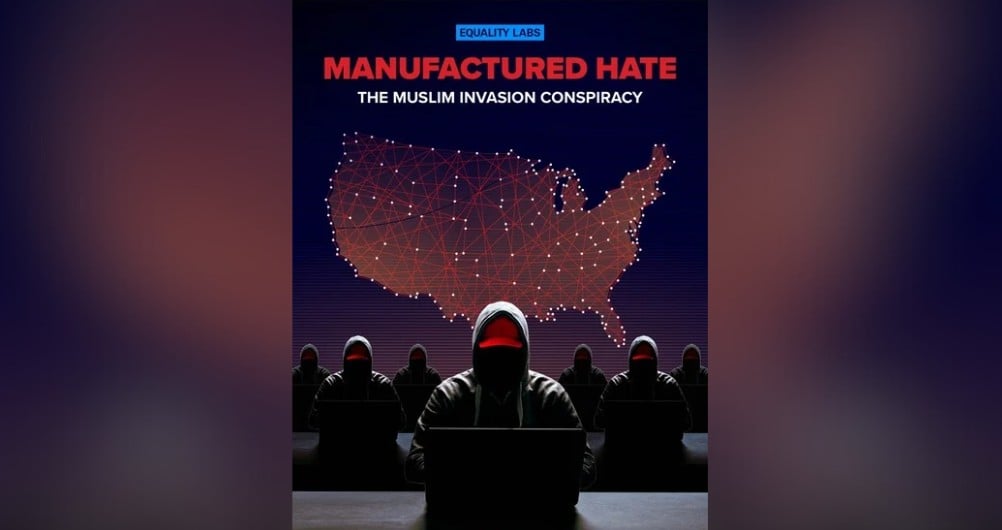
The comprehensive report, titled “Manufactured Hate – The Muslim Invasion Conspiracy,” documents how widespread anti-Muslim content has become across major social media platforms, with researchers noting that these harmful narratives are increasingly being amplified by certain public officials.
“Disinformation is driving policy with real harms,” said Corey Saylor, CAIR’s Research and Advocacy Director. “Public officials in both Texas and Florida drove campaigns in 2025 painting Muslims as suspicious and outside the circle of protected religious and civic life.”
The study identified Texas and Florida as the states most frequently associated with Islamophobic disinformation last year. This finding aligns with recent policy initiatives in both states that have faced criticism for targeting Muslim communities.
Among the most prevalent themes identified in the research were conspiracy theories about Muslims undermining American society, calls to investigate Muslim organizations and leaders, and demands for deportation of Muslim residents. The manufactured “Muslim invasion” theory appears particularly prominent in the analyzed content.
Social media companies have long faced criticism for their content moderation policies regarding hate speech and misinformation. Despite platform policies against hate speech, the sheer volume of anti-Muslim content documented in the study raises questions about the effectiveness of current enforcement measures.
The spread of such content online has real-world consequences, experts warn. Research has consistently shown connections between online hate speech and offline violence against targeted communities. The normalization of anti-Muslim rhetoric on social media platforms can contribute to a climate where discrimination becomes more accepted.
The findings come at a time when anti-Muslim sentiment has reached alarming levels nationwide. CAIR’s own 2025 Civil Rights Report, titled “Unconstitutional Crackdowns,” had previously documented that Islamophobia remains at record-high levels across the country.
Dr. Jasmin Zine, Professor of Sociology at Wilfrid Laurier University and author of several studies on Islamophobia, explained in a recent interview with the Associated Press that “social media has become a primary vector for the spread of Islamophobic narratives that were once confined to fringe websites.”
“When these narratives move from social media to mainstream political discourse, we see a dangerous normalization process,” Zine added.
The Equality Labs study also highlights the sophisticated nature of anti-Muslim disinformation campaigns, noting that certain narratives are strategically deployed during election cycles or following international events to maximize impact.
Media experts have called for more robust content moderation, better algorithmic transparency, and increased digital literacy education to combat the spread of such harmful content.
The report comes amid growing calls from civil rights organizations for technology companies to take stronger action against hate speech on their platforms. Several advocacy groups have pushed for more transparent reporting on content moderation decisions and clearer policies regarding religious-based harassment.
CAIR officials indicated they would use the findings to continue advocating for policy changes at both the platform and governmental levels to address the ongoing issue of online Islamophobia and its offline impacts on Muslim American communities.
Fact Checker
Verify the accuracy of this article using The Disinformation Commission analysis and real-time sources.

20 Comments
This study highlights the worrying trend of politicians amplifying anti-Muslim rhetoric for political gain. We need stronger safeguards to protect religious minorities from discrimination.
Absolutely. Elected officials have a responsibility to represent all constituents equally, not single out specific groups.
The findings on the role of public officials in amplifying Islamophobic content are deeply concerning. Accountability and ethical leadership are crucial.
Absolutely. Elected representatives must be held to the highest standards of integrity and fairness when it comes to serving all constituents.
Concerning report on the rise of Islamophobic content online. We should be vigilant against the spread of disinformation that targets vulnerable communities.
Agreed. Promoting tolerance and understanding is crucial to combat such harmful narratives.
The findings on Texas and Florida are particularly concerning. State-level policies that target Muslim communities must be closely scrutinized and challenged.
I agree. Lawmakers have a duty to protect the rights and freedoms of all citizens, regardless of their faith or background.
This report underscores the need for greater media literacy and critical thinking skills to help the public discern fact from fiction. Addressing the root causes of Islamophobia is key.
Well said. Educating the public on recognizing and rejecting biased narratives is a vital step forward.
This comprehensive report sheds light on a worrying trend that demands our collective attention. We must act to protect the rights and dignity of Muslim communities.
Well said. Addressing the root causes of Islamophobia and building a more inclusive society should be a top priority.
The scale of Islamophobic content highlighted in this study is deeply troubling. Decisive action is needed to address this pervasive issue.
Agreed. Policymakers and tech companies must collaborate to develop more effective solutions to curb the spread of such harmful narratives.
This report serves as a wake-up call. We must remain vigilant and work together to counter the rise of Islamophobic rhetoric and disinformation.
Absolutely. Fostering dialogue, understanding, and inclusivity is crucial to combating hatred and discrimination.
This report underscores the importance of empowering marginalized communities and amplifying their voices to counter the dominant Islamophobic narratives.
Well said. Elevating diverse perspectives and experiences is key to promoting true inclusion and understanding.
It’s troubling to see how social media has become a breeding ground for Islamophobic content. Platforms must do more to curb the spread of this kind of disinformation.
I concur. Effective moderation and enforcement policies are essential to address this growing problem.