


Listen to the article
Officials from international observer groups have determined that Moldova’s parliamentary elections, while competitive, were significantly compromised by external interference, funding violations, and coordinated digital attacks.
The assessment, released in Chişinău on September 29, 2025, highlights a democratic process that successfully offered Moldovan voters distinct political options, but one that faced unprecedented challenges from sophisticated disruption efforts.
“Voters were presented with clear choices between political alternatives,” stated the observation mission in their preliminary findings. However, they noted that the electoral process was undermined by “serious cases of foreign interference, illegal funding, cyberattacks and widespread disinformation” despite governmental efforts to counter these threats.
The observation mission, composed of representatives from the Organization for Security and Co-operation in Europe (OSCE) and other international bodies, deployed teams throughout Moldova to monitor the voting process, campaign activities, and media coverage leading up to election day.
Moldova, a small Eastern European nation positioned between Romania and Ukraine, has increasingly become a focal point in the geopolitical tensions between Russia and the West. The country has pursued closer integration with the European Union in recent years, a path that has met with resistance from pro-Russian political forces both inside and outside the country.
The observers documented systematic attempts to manipulate the electoral process through sophisticated cyberattacks targeting government infrastructure, political parties, and election administration systems. These digital intrusions appeared designed to disrupt operations and undermine public confidence in the electoral process.
Election officials implemented countermeasures, including enhanced cybersecurity protocols and emergency response teams, but the scale of the attacks presented significant challenges to electoral integrity. Experts noted that the cyber campaign demonstrated a level of coordination and technical sophistication consistent with state-sponsored operations.
Financial irregularities represented another significant concern. The observation mission identified multiple instances of illegal campaign financing, including evidence of foreign funding channeled through proxy organizations and shell companies. These financial violations provided certain political entities with unfair advantages in campaign resources and media access.
“The illegal funding mechanisms uncovered during this election cycle raise serious concerns about external influence operations,” said one senior election observer who requested anonymity due to the sensitive nature of the findings. “When combined with coordinated disinformation campaigns, these represent a genuine threat to democratic processes.”
Disinformation emerged as perhaps the most pervasive challenge, with observers documenting orchestrated campaigns spreading false narratives about candidates, electoral procedures, and Moldova’s relationships with international partners. Social media platforms were flooded with misleading content designed to confuse voters and amplify societal divisions.
The disinformation operations typically exploited existing tensions surrounding Moldova’s national identity, language policies, and geopolitical orientation. Fact-checking initiatives established by civil society organizations worked to counter false claims, but struggled to match the volume and reach of the misleading content.
Despite these challenges, the observation mission noted that Moldovan authorities had implemented several measures to protect electoral integrity, including enhanced transparency requirements for campaign financing, media monitoring mechanisms, and voter education initiatives. These efforts demonstrated institutional commitment to democratic principles but proved insufficient against the scale and sophistication of the interference.
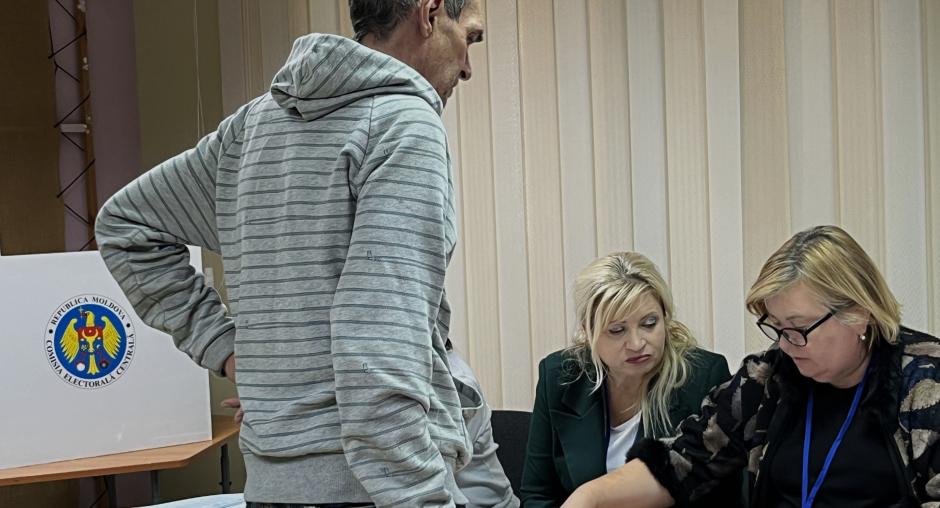
The international observers acknowledged the resilience shown by Moldova’s Central Election Commission and civil society organizations in navigating these complex challenges. Election day procedures were generally well-administered, with voting occurring in an orderly fashion at most polling stations.
Moldova’s experience highlights the evolving nature of threats to democratic processes globally, as traditional ballot-box violations give way to more sophisticated forms of interference that exploit digital vulnerabilities and information ecosystems.
The final assessment report, expected within two months, will provide comprehensive recommendations for strengthening electoral resilience against such threats in future elections. International partners, including the European Union, have pledged technical and financial support to help Moldova implement these recommendations and protect its democratic institutions.
These findings come at a critical juncture for Moldova as it continues to balance domestic reforms with aspirations for European integration, all while managing complex security challenges in a volatile regional context.
Fact Checker
Verify the accuracy of this article using The Disinformation Commission analysis and real-time sources.

10 Comments
The observation mission’s findings highlight the challenging reality many emerging democracies face in an era of hybrid warfare and digital manipulation. Kudos to the Moldovan government for trying to counter these threats.
It’s a complex issue with no easy solutions. International cooperation and continued vigilance will be key to safeguarding free and fair elections going forward.
Kudos to the Moldovan government for trying to counter the threats to their elections, but the observation mission’s findings highlight the ongoing challenges faced by many emerging democracies. Strengthening international cooperation is key.
While the observation mission found that voters had clear political choices, the external interference and illegal funding are very troubling. Protecting the integrity of elections is essential for a healthy democracy.
Concerning to hear about the interference and funding issues undermining Moldova’s elections. Maintaining the integrity of the democratic process is crucial, even in the face of external threats.
While it’s positive that voters were presented with clear political alternatives, the reported cyberattacks, illegal funding, and disinformation campaigns are very worrying. Safeguarding elections from foreign meddling is critical for democracy.
Agreed. Robust election monitoring and strengthening cybersecurity measures are essential to protect the will of the people.
Moldova’s position between Romania and Ukraine likely makes it a target for malicious actors seeking to undermine its democratic progress. Addressing foreign interference requires a comprehensive, multilateral approach.
The cyberattacks, illegal funding, and disinformation campaigns against Moldova’s elections are alarming. Robust election monitoring and cybersecurity measures are critical to defend democratic processes.
Competitive elections are a cornerstone of democracy, but the reported issues in Moldova are deeply concerning. Strengthening election security and transparency should be a top priority for the international community.