


Listen to the article
Moldova faces a critical parliamentary election this Sunday amid an unprecedented wave of Russia-backed disinformation campaigns powered by artificial intelligence, according to multiple online monitoring groups. The vote will determine whether the small Eastern European nation continues its European Union integration path or shifts back toward Moscow’s sphere of influence.
Researchers have documented sophisticated propaganda operations targeting Moldova’s ruling pro-European Party of Action and Solidarity (PAS), founded by President Maia Sandu. These campaigns represent a new phase in Russian influence operations, utilizing AI-generated content, fake news websites mimicking legitimate Western media outlets, and coordinated networks of paid social media accounts.
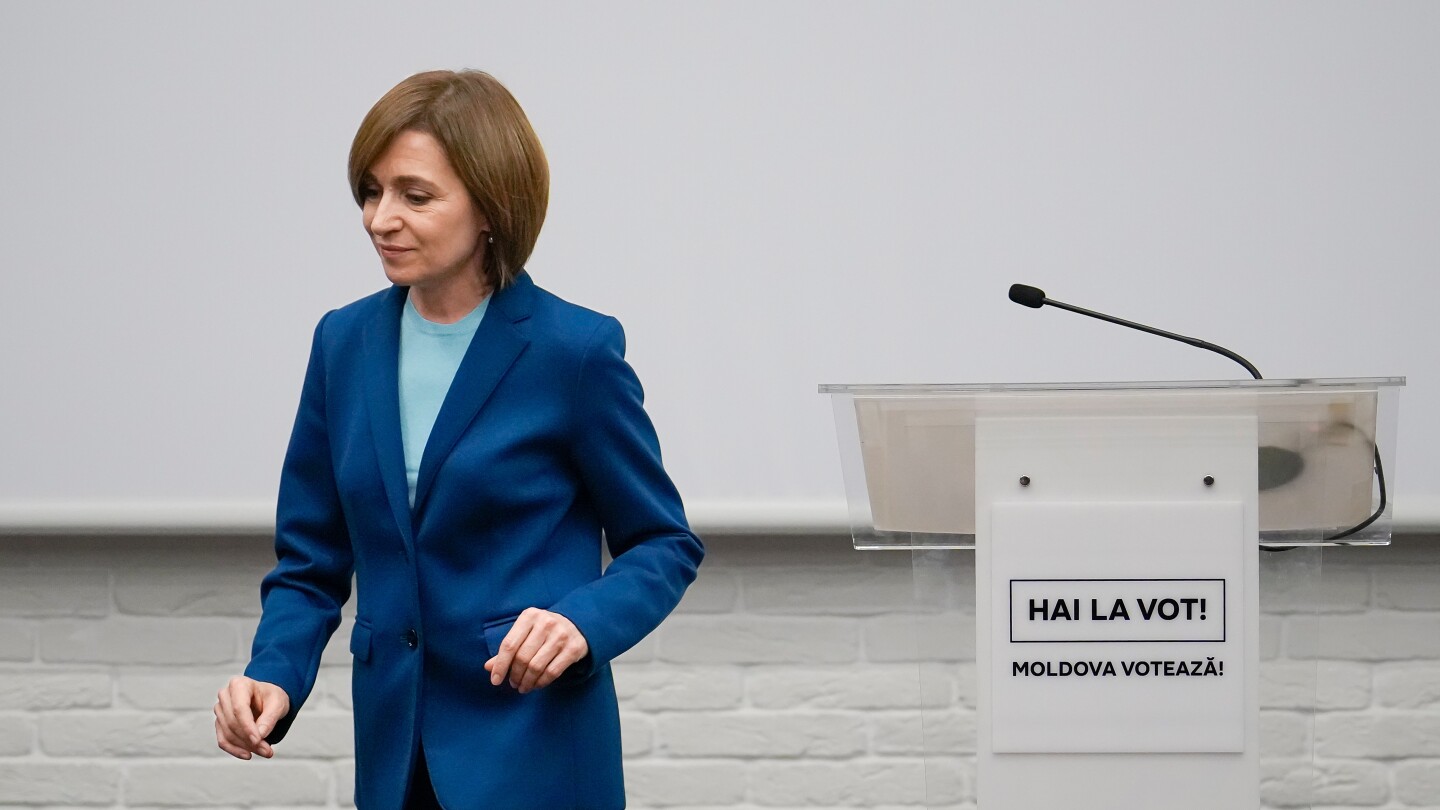
“This will be the most consequential vote in our country’s history,” President Sandu warned, emphasizing that the election will determine whether Moldova becomes a stable democracy or falls under Russian influence. She has repeatedly stressed that EU membership would protect Moldova “from the greatest threat we face: Russia.”
The stakes couldn’t be higher. Moldova gained EU candidate status in 2022 following Russia’s full-scale invasion of neighboring Ukraine, with formal accession negotiations approved last year. PAS, which won a clear majority in 2021, now risks losing control of parliament with several Russia-friendly parties on the ballot and no viable pro-European alternatives.
Moldovan authorities have intensified security measures ahead of the vote. On Monday, police arrested 74 people in 250 raids as part of an investigation into an alleged Russia-backed plan to incite mass riots and destabilize the country.
Reset Tech, a global non-profit monitoring digital threats to democracy, has uncovered evidence of an English-language AI-generated platform called Restmedia that presents itself as an investigative journalism outlet “committed to exposing and addressing the critical issues shaping Europe’s future.” In reality, Reset Tech’s analysis revealed that all content is AI-generated, with about a quarter focusing specifically on Moldova and publishing “Kremlin-aligned propaganda” attacking Sandu, PAS, and the EU.
“We have learned to detect the fingerprints of these Russian secret services in lots of different countries… and seen them really active in Moldova,” said Ben Scott, Reset Tech’s director. Their 36-page report reveals that Restmedia pays “engagement farms” in Africa to promote its narratives across verified accounts on X in “amplification-for-hire” schemes. Despite attempts to hide its origins, researchers found “clear technical links to Russia” via IP addresses and website metadata.
The disinformation ecosystem extends beyond fake news sites. Expert Forum, a Romanian think tank monitoring the election, tracked 100 inauthentic TikTok accounts that garnered a staggering 13.9 million views between August 5 and September 4. These accounts formed part of a campaign driven by “fear and resentment,” primarily targeting PAS. A similar network was later discovered on Facebook.
“What we are seeing today is fundamentally different from classic disinformation campaigns,” the organization stated. “AI can generate complete profiles, realistic photos, credible biographies, and varied content in minutes that would have previously required weeks of manual work.”
Some disinformation tactics have been particularly egregious. One site mimicking the U.S. lifestyle outlet OK! Magazine published a fabricated story titled “Moldovan president in celebrity sperm scandal!” falsely alleging that the unmarried Sandu was purchasing sperm from gay celebrities. Another fake news site cited a report from the EU-sanctioned Russian Foundation to Battle Injustice, which accused Sandu of running a child trafficking operation.
“The Kremlin operatives are using AI, cheap, off-the-shelf software to create quick and dirty images for lookalike websites,” Scott explained. “Not only does it bring false information to voters who are trying to consider very consequential issues in their country, but also over time it leads people to believe that nothing can be trusted.”
Fugitive pro-Russian Moldovan oligarch Ilan Shor, convicted of fraud and reportedly living in exile in Moscow, has been accused of funding a large Russia-backed network of paid political advertisements across Facebook and YouTube. Between April and July, a network linked to Shor spent an estimated €45,000 on 1,505 advertisements on Meta platforms alone, according to the Chisinau-based think tank WatchDog.
As Sunday’s election approaches, Moldovan authorities face an uphill battle against this coordinated disinformation campaign. On September 16, President Sandu signed a decree establishing a center to counter disinformation, but experts worry it may not be enough.
“We know how to fight Russian propaganda and pro-Russian oligarchs,” said Andrei Rusu, a media monitoring expert at WatchDog. “But we need more support from our partners… Words will not save our country from a pro-Russian regime if this election will be corrupted.”
Fact Checker
Verify the accuracy of this article using The Disinformation Commission analysis and real-time sources.
