


Listen to the article
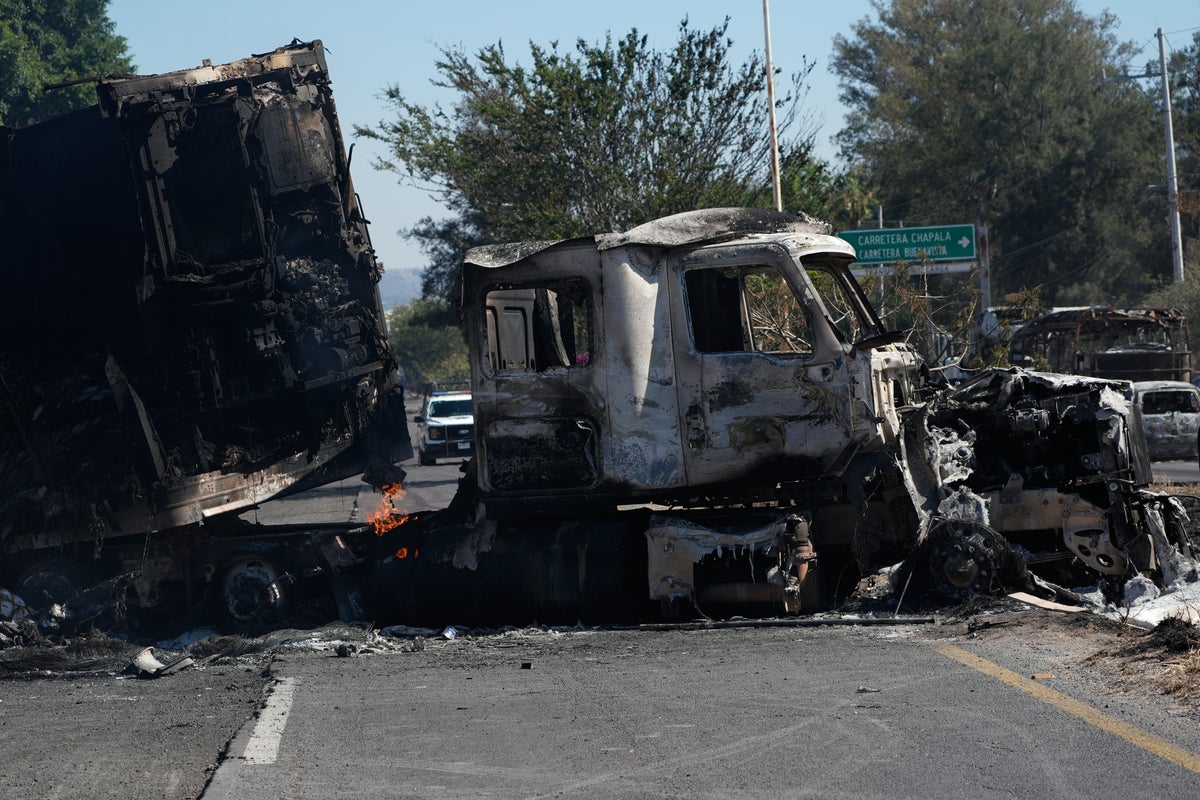
In the aftermath of Mexico’s largest drug lord’s killing, a wave of violence and online disinformation swept across the nation, creating unprecedented fear and confusion among citizens. The Mexican military operation that killed Nemesio Oseguera Cervantes, known as “El Mencho,” on Sunday triggered immediate retaliation from the Jalisco New Generation Cartel, with violence spreading to approximately 20 states and claiming over 70 lives.
As roadblocks appeared and gunshots echoed through cities, Mexicans turned to their phones for information, only to encounter a digital landscape polluted with artificial intelligence-generated content designed to amplify terror.
“We didn’t know what was true and what was false,” said Victoria Elizabeth Peceril, a 31-year-old mother of three in Guadalajara. “We were really scared.”
The Mexican government has identified between 200 and 500 problematic posts circulating since Sunday, with some gaining more than 100,000 views. According to data compiled by Tecnologico de Monterrey and presented during President Claudia Sheinbaum’s daily briefing Wednesday, approximately 35-40% of these posts lacked proper context, at least 25% contained misleading information, and nearly a quarter were AI-fabricated or manipulated content.
Among the false narratives: a commercial plane allegedly burning at Guadalajara’s international airport, claims that gunmen had seized the facility and taken tourists hostage, assertions that a U.S. agent strangled Oseguera Cervantes, and allegations that President Sheinbaum was hiding on a naval vessel off Mexico’s Pacific coast. Other posts attempted to link the kingpin’s death to the capture of former Venezuelan President Nicolás Maduro.
“There was a lot of badly intentioned news Sunday, looking to generate terror,” President Sheinbaum stated earlier in the week.
The Jalisco cartel’s established reputation for extreme violence—including previously downing a military helicopter and attempting to assassinate Mexico City’s police chief—made outlandish claims of brutality more believable to an already anxious public.
“At first, we believed everything,” said Nicolás Martín, a 28-year-old Mexico City resident who was staying near Puerto Vallarta when the violence erupted. He noted the sophisticated quality of early posts, particularly what appeared to be drone footage showing explosions and fires. “What you see in movies,” he described them.
In Mexico, many people rely on messaging apps and social platforms like X for real-time community information. In northern border cities where organized crime maintains a strong presence, these channels often function like traffic reports, warning drivers about criminal convoys to avoid.
Vanda Felbab-Brown, an organized crime expert at the Brookings Institution, believes members of the Jalisco cartel may have orchestrated some of the disinformation. Unlike other criminal organizations in Mexico, the Jalisco cartel has specifically invested in its digital presence.
“The criminals are becoming very tech-savvy,” Felbab-Brown explained. “It was impressive to see the level of misinformation,” she added, referencing the sophisticated and convincing nature of posts claiming control of Guadalajara’s airport. These posts “certainly added to the aura of chaos and meltdown in Mexico.”
Despite efforts by Mexican authorities and the U.S. Embassy to counter false information, distinguishing fact from fiction remained challenging for citizens sheltering at home.
Sarai Olguín, a 22-year-old college student in Guadalajara, received numerous videos and photos from friends during the lockdown. One particularly frightening post warned that “after a certain hour they were going to kill everyone.”
Yet Olguín sees an unexpected silver lining to the misinformation. “In a way it’s good, because all of this false news helped take care of people even though they sowed immense fear,” she reflected, crediting the alarming posts with keeping citizens safely indoors during the violence.
The incident highlights a disturbing evolution in Mexico’s ongoing struggle with organized crime, where digital weapons now complement physical ones in the cartel arsenal, creating a dual threat to public safety and information integrity during times of crisis.
Fact Checker
Verify the accuracy of this article using The Disinformation Commission analysis and real-time sources.

6 Comments
The statistics on the prevalence of misleading posts are alarming. Tackling online disinformation requires a multi-pronged approach, combining technological solutions, policy reforms, and public education.
This incident highlights the urgent need for greater transparency and accountability around the use of AI and other emerging technologies. Safeguards must be put in place to prevent their exploitation for malicious purposes.
The use of AI to amplify fear and confusion during crises is deeply concerning. Governments must invest in robust digital infrastructure and media literacy programs to combat these manipulative tactics.
Absolutely. Disinformation erodes public trust and undermines social stability. Countering it effectively should be a top priority.
It’s tragic that citizens were left in such a state of fear and uncertainty due to the spread of false information. Enhancing digital resilience should be a key focus for policymakers in Mexico and beyond.
This highlights the dangerous power of disinformation, especially during volatile events. It’s critical that authorities and media work to rapidly counter false narratives and provide accurate, trustworthy information to the public.