


Listen to the article
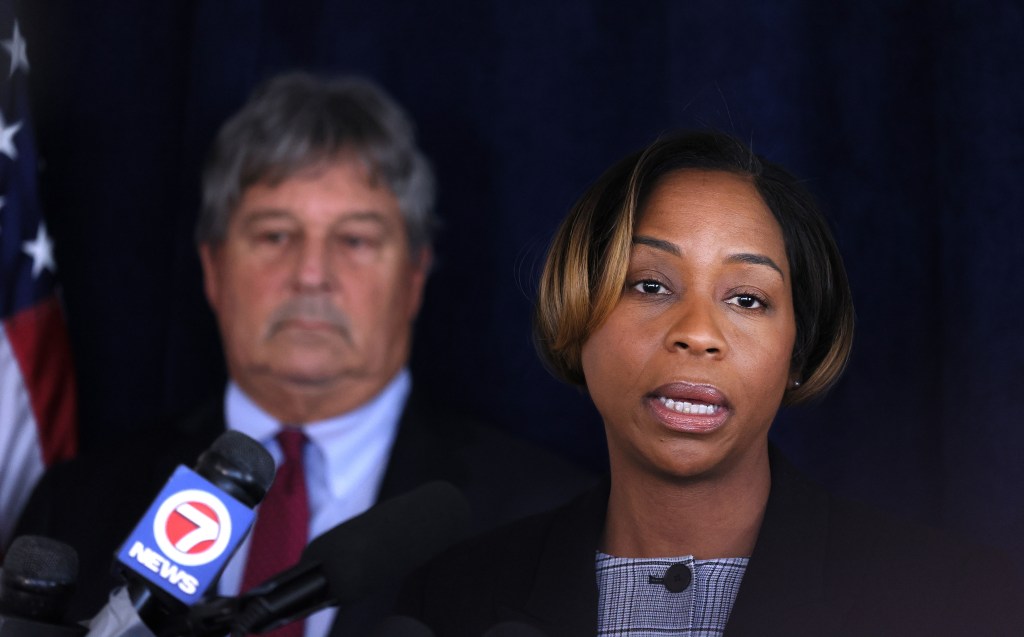
Massachusetts Attorney General Andrea Campbell announced Saturday she is abandoning the social media platform X, citing concerns over what she described as the platform’s failure to address harmful content.
“X has sadly become an app and platform with no accountability and no guardrails,” Campbell stated in a video posted to her account. “Hate, disinformation, and the exploitation of our children is on the rise. And you saw recently, AI tools on X being used to promote sexualized images of folks, including minors, our children. I can no longer be a part of that.”
Campbell indicated she would be closing both her personal and official accounts on the platform, directing followers to find her office on alternative platforms including Bluesky, Threads, Facebook, and Instagram.
The attorney general framed her departure as consistent with her office’s broader stance on social media accountability. “As AG, I’m taking on companies and social media platforms that are not responsible, that are putting profit ahead of our children and above them,” Campbell added. “This is an opportunity to stand up and to do our part to hold everyone accountable who is harming our kids.”
The move comes amid growing concerns about content moderation on X, which has faced criticism for policy changes implemented since Elon Musk’s acquisition of the platform in 2022. Campbell joins Boston Mayor Michelle Wu, who similarly left the platform following Donald Trump’s reelection in November 2024.
The exodus from X to alternative platforms has gained momentum in recent months. Bluesky, a decentralized social network initially developed by Twitter co-founder Jack Dorsey, reportedly gained one million new users in the week following the presidential election, as users—primarily those identifying as politically liberal—sought alternative spaces for online engagement.
Campbell’s departure has drawn criticism from political opponents who suggest her move is motivated by a desire to avoid public scrutiny rather than concerns about platform policies. Critics specifically pointed to ongoing tensions between Campbell and State Auditor Diana DiZoglio regarding a voter-approved audit of the Massachusetts Legislature.
DiZoglio, who has sued House Speaker Ron Mariano and Senate President Karen Spilka for refusing to comply with the legislative audit that 72% of Massachusetts voters approved in November 2024, commented directly on the AG Office’s announcement post, writing, “See you & @RonMariano in court.”
Paul Diego Craney, executive director of the watchdog organization Massachusetts Fiscal Alliance, characterized Campbell’s departure from X as “protecting politicians, and running from the voters.”
In separate media news affecting Massachusetts, POLITICO announced the discontinuation of its Massachusetts Playbook newsletter, with the final edition published Friday. The publication did not explicitly state reasons for ending the popular political newsletter but noted it would “continue covering politics and policy in Washington and elsewhere.”
Kelly Garrity, the newsletter’s author, announced her departure from POLITICO to join the Boston Globe staff. “Today is also the last edition of Mass. Playbook,” Garrity wrote in the newsletter’s final edition. “Thank you times a million to everyone who ever read, emailed, sent a tip, answered a late-night call/email/text or submitted a birthday.”
The termination of the newsletter prompted response from Massachusetts Congressman Richard Neal, who criticized the decision as “misguided” in a statement posted to X on Saturday.
“For many years, the dedicated journalists of Politico have played an important role in delivering timely, reliable news across the Commonwealth,” the Springfield Democrat wrote. “While the decision by Politico to end Mass Playbook is misguided, I thank the many reporters and editors whose commitment to the facts through the years has helped keep Massachusetts readers informed on the issues that matter most.”
The dual developments reflect ongoing shifts in how political information is disseminated and consumed in Massachusetts, with traditional media outlets adjusting coverage strategies while public officials reconsider their social media presence in an increasingly polarized digital landscape.
Fact Checker
Verify the accuracy of this article using The Disinformation Commission analysis and real-time sources.

10 Comments
The rise of AI-generated content is another worrying trend that platforms must grapple with. Minors should be protected from exploitation, so I applaud the AG for taking a stand on this issue.
This is a concerning development. Social media platforms need to do more to address harmful content and protect vulnerable users. It’s good to see the AG taking a stand against companies that prioritize profits over safety and responsibility.
Holding social media companies accountable for harmful content is crucial. The AG’s move to close her official accounts on X sends a strong message about the need for reform in the industry.
Absolutely. Platforms must prioritize user safety and well-being over profits if they want to maintain public trust.
The AG’s decision highlights the complex challenges facing social media platforms as they try to balance free speech with content moderation. This is a nuanced issue, but the priority should be safeguarding vulnerable users.
Agreed. Platforms need to find the right balance between free expression and responsible content curation.
Hate speech and disinformation are serious issues that social platforms must confront head-on. The AG’s decision to leave X is understandable given the platform’s failure to address these problems effectively.
Agreed. Platforms need clear policies and enforcement mechanisms to maintain a safe, civil online environment.
Exiting X over hate speech and disinformation concerns is a bold move. The AG is setting an example for others to follow in holding social media companies accountable for the harm their platforms can enable.
It’s encouraging to see the AG taking concrete action to address disinformation and protect children online. More leaders should follow this example and push for meaningful change in the social media landscape.