


Listen to the article
The Woman Who Recorded History: Marion Stokes and Her Three-Decade Television Archive
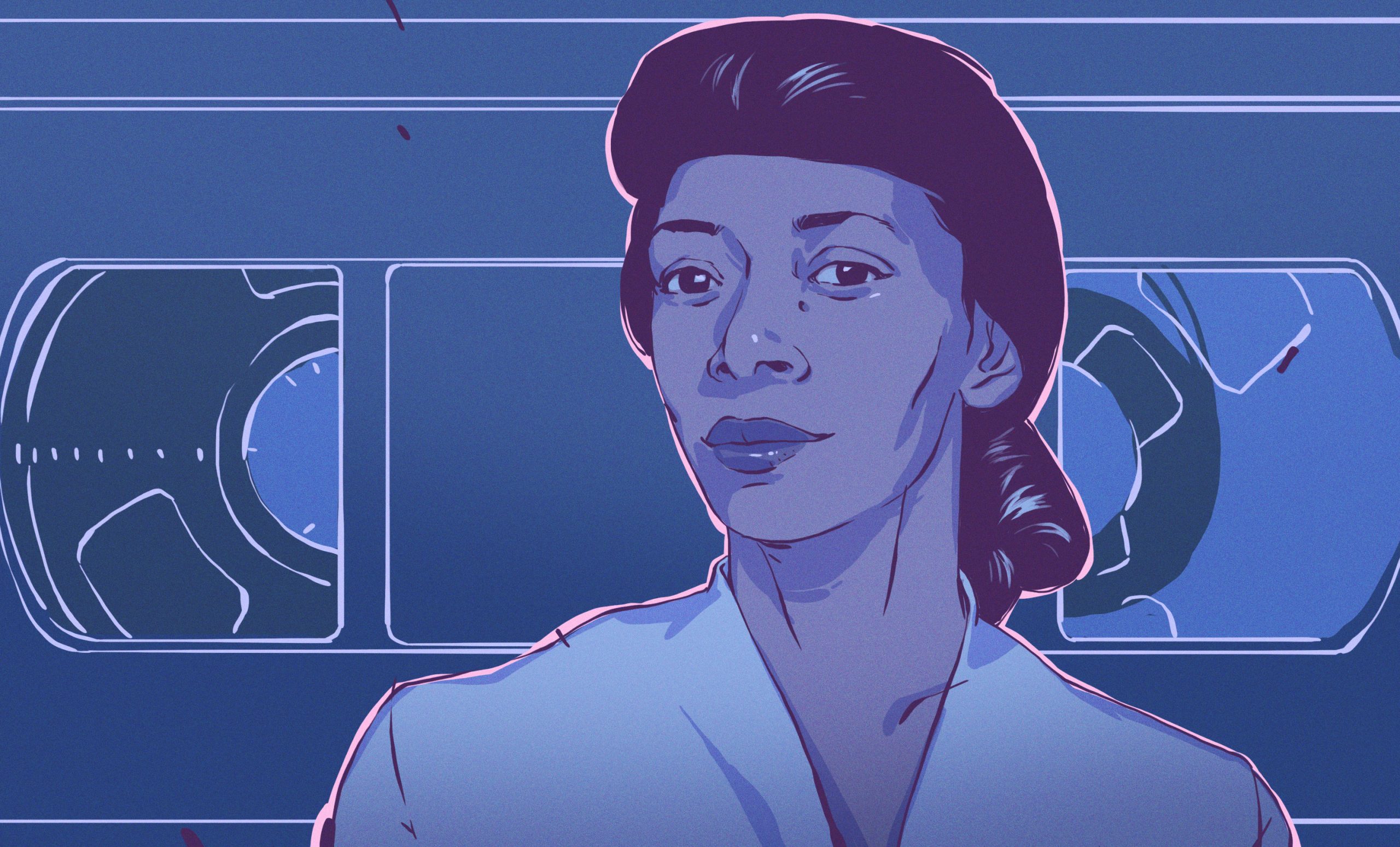
In a Philadelphia apartment filled with stacks of VHS tapes, Marion Stokes pressed record on her VCRs during the Iranian Hostage Crisis in 1979. She wouldn’t stop recording until December 14, 2012, when she took her final breath as news of the Sandy Hook massacre unfolded on screens around her.
Between those moments, Stokes amassed a collection of 70,000 VHS and Betamax tapes, meticulously recording television broadcasts around the clock, capturing a unique visual history of American media that might otherwise have disappeared forever.
Born in 1929 in Germantown, Philadelphia, Stokes lived a life defined by political activism and an obsession with preserving information. As a young woman, she was deeply involved in left-wing politics and the civil rights movement, to the point that the Communist Party USA reportedly courted her for a leadership position.
Her political activities eventually cost her a nearly 20-year career as a librarian at the Free Library of Philadelphia in the 1960s. The FBI maintained surveillance on Stokes and her first husband, Melvin Metelits, prompting the couple to unsuccessfully attempt defection to Cuba. Their marriage ended when their son Michael was four.
Stokes later co-produced a Sunday morning public-access talk show in Philadelphia called “Input” with John Stokes, Jr., who would become her second husband. The program focused on social justice issues and aimed to facilitate peaceful discussion among diverse participants.
“People can’t take knowledge from you,” Stokes once said, a philosophy that would drive her most ambitious project.
When Stokes began recording television in 1979, she focused primarily on news networks, believing preservation of media was crucial as networks typically reused tapes rather than archive content. Her concerns about media manipulation intensified with the birth of the 24-hour news cycle.
“Those in power are able to write their own history,” she observed, a sentiment that fueled her determination to create an independent record of how events were portrayed on television.
Her collection grew beyond news to include popular programs like “The Cosby Show,” “Divorce Court,” “Nightline,” “Star Trek,” and “The Oprah Winfrey Show.” At any given time, Stokes operated between three and eight VCRs simultaneously, with more machines running during significant news events.
This obsessive documentation required substantial resources. Fortunately, Stokes’ second husband was financially comfortable, and she had made prescient early investments in Apple stock. Her technological enthusiasm extended beyond recording equipment—she reportedly purchased multiple versions of every Apple product released during her lifetime.
Her collection habits weren’t limited to videotapes. She accumulated 40-50,000 books, took six daily newspapers, subscribed to over 100 monthly periodicals, and saved these materials for decades. Her first husband recalled spending the equivalent of $5,000 in today’s money during single bookstore visits in the mid-1970s.
Family life revolved around her recording schedule. Outings were planned around the six-hour VHS tape length, with Stokes sometimes cutting dinner short to return home and change tapes. By the end of her life, she had filled nine apartments with her collections of media, books, newspapers, and various obsessions.
When TiVo and digital recording technologies emerged, Stokes rejected them, concerned about potential government surveillance of her viewing and recording habits—a reasonable fear given her history of FBI monitoring.
Following her death in 2012, her son Michael inherited the massive archive and spent 18 months dealing with her possessions. While the books went to educational charities, finding a home for 70,000 videotapes proved challenging until the Internet Archive stepped forward.
The tapes were transported from Philadelphia to San Francisco in four shipping containers. With approximately 420,000 hours of footage to process, the Internet Archive’s digitization effort remains ongoing, hampered by the sheer volume and funding limitations.
Stokes’ life work represents one of the most significant private media archives ever assembled. Her concern that media reflects society back upon itself, sometimes distorting reality in the process, feels prescient in today’s era of information overload and misinformation.
What began as a reaction to the Iranian Hostage Crisis evolved into a lifetime commitment to preserve how media shapes our understanding of events—a legacy that continues to reveal insights about how television has influenced American perception and memory over three critical decades.
Fact Checker
Verify the accuracy of this article using The Disinformation Commission analysis and real-time sources.

11 Comments
Marion Stokes’ lifelong dedication to preserving television broadcasts is both admirable and prescient. Her foresight in creating this expansive archive will undoubtedly contribute to our understanding of media history and the ongoing battle against disinformation.
Stokes’ archive represents an invaluable primary source for future research on media, politics, and culture in the late 20th century. The level of detail captured in her recordings is remarkable.
The scale and breadth of Stokes’ VHS collection is truly astonishing. Her foresight in recognizing the value of preserving this visual history is admirable, even if the methods seem quaint by today’s standards.
It’s fascinating to learn about this politically active librarian who faced professional consequences for her beliefs, yet persisted in her mission to document the shifting media landscape over 30+ years.
Her archive will undoubtedly be an invaluable resource for future historians and media scholars. Preserving this kind of real-time footage is so important in the face of growing disinformation.
Marion Stokes’ decades-long quest to preserve American media history is truly remarkable. Recording TV broadcasts around the clock to create this vast visual archive is a testament to her dedication and foresight.
While Stokes’ political views may have been controversial, her commitment to archiving television broadcasts is commendable. This archive provides a unique window into the evolution of American media and culture.
It will be interesting to see how researchers and the public utilize this expansive collection to better understand the past and combat disinformation in the present.
While the sheer volume of Stokes’ VHS collection is staggering, the real value lies in the unique insights it provides into the evolution of American media and the fight against disinformation over decades.
This archive will undoubtedly be a treasure trove for scholars and researchers seeking to understand the past and contextualize the present media landscape.
This is a fascinating story of one woman’s tireless efforts to create a comprehensive archive of American television. Stokes’ dedication to her cause, despite facing personal and professional challenges, is truly inspiring.