


Listen to the article
Historical science journal opens complete archive to premium subscribers
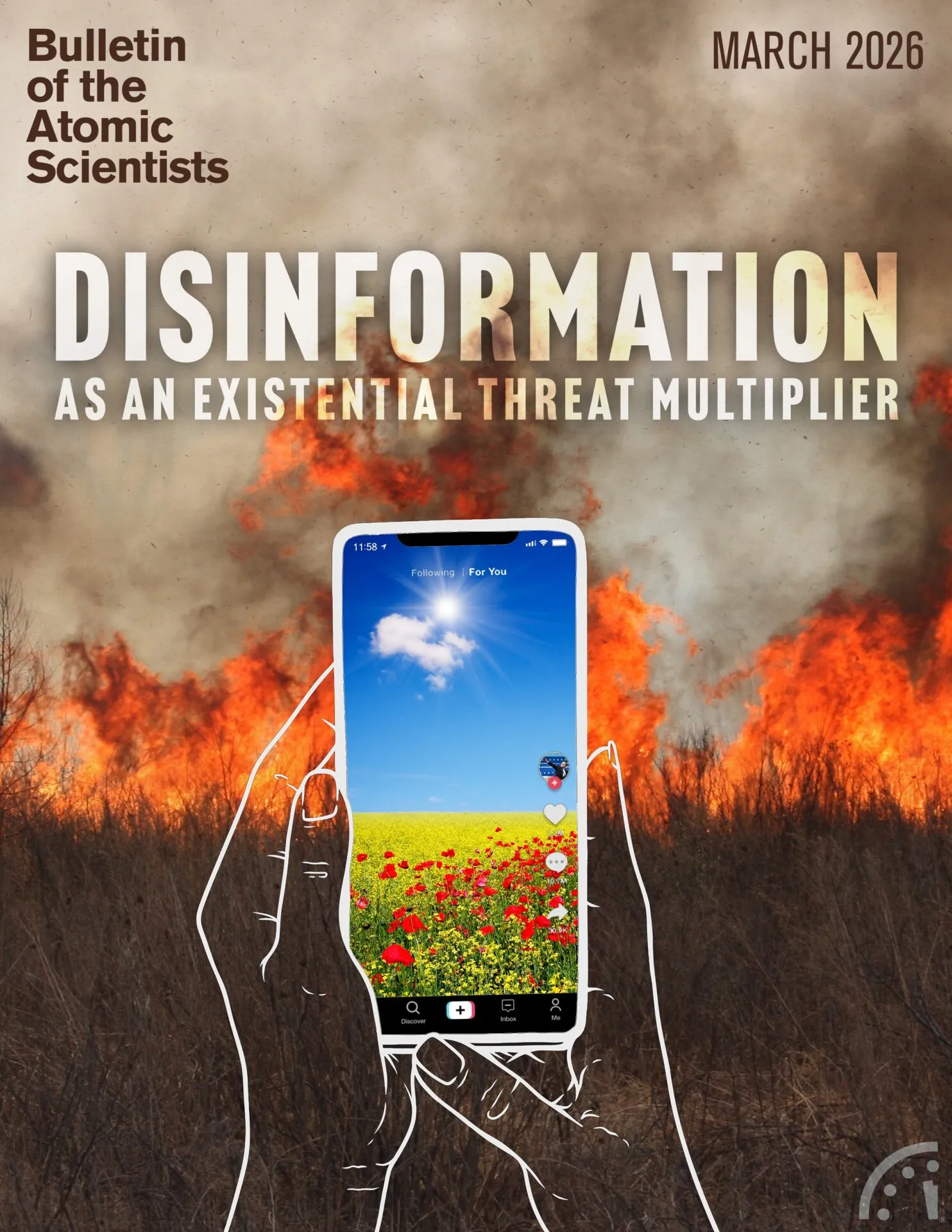
The Bulletin of the Atomic Scientists, one of the world’s most respected scientific publications focused on global security issues, has announced that its complete archive is now available to premium subscribers. The comprehensive digital collection spans nearly eight decades of influential scientific and policy discourse dating back to the journal’s founding in 1945.
The archive, dedicated to John A. Simpson, one of the Bulletin’s principal founders and longtime member of its Board of Sponsors, provides readers unprecedented access to the publication’s historical content chronicling the nuclear age and subsequent global security challenges.
“This searchable resource represents a unique historical record of how scientists and policy experts have grappled with existential threats since the dawn of the atomic era,” said Rachel Bronson, president and CEO of the Bulletin of the Atomic Scientists, in a statement accompanying the announcement.
The digital collection features exclusive interviews and commentary from some of the 20th century’s most influential scientific and political figures. Among the notable contributors are Albert Einstein, who was an early supporter of the Bulletin’s mission, and J. Robert Oppenheimer, often referred to as the “father of the atomic bomb” who later became an advocate for international control of nuclear weapons.
The archive also includes writings from political figures like President John F. Kennedy, whose administration navigated the Cuban Missile Crisis, and William J. Perry, who served as U.S. Secretary of Defense during the Clinton administration and remains a vocal advocate for nuclear risk reduction.
Scientific luminaries featured in the collection include renowned theoretical physicist Stephen Hawking, who contributed several pieces on scientific responsibility and existential threats facing humanity. Multiple Nobel laureates have also contributed to the Bulletin throughout its history, offering expert analysis on topics ranging from nuclear proliferation to climate change.
The Bulletin of the Atomic Scientists was established in 1945 by scientists who had worked on the Manhattan Project and were concerned about the implications of atomic weapons. The publication is perhaps best known for its Doomsday Clock, a symbolic representation of how close humanity is to self-destruction, primarily from nuclear war but later expanded to include climate change and disruptive technologies.
“The archive doesn’t just preserve history—it provides crucial context for understanding today’s global security challenges,” said Daniel Holz, co-chair of the Bulletin’s Science and Security Board. “Many of the fundamental questions about scientific responsibility, technological risk, and international security that were raised in the 1940s remain relevant today.”
Media analysts note that the decision to make this archive available comes at a time of renewed interest in nuclear issues and global security, with rising tensions between nuclear powers and emerging technologies creating new risks.
The archive’s launch as a premium feature also reflects the broader trend of specialized publications developing subscription models to sustain quality journalism and academic content in the digital age.
For researchers, historians, and policy professionals, the archive represents a valuable resource documenting the evolution of scientific thinking about existential threats. It provides insights into how scientific consensus developed around issues like nuclear winter, the environmental impacts of nuclear testing, and later, climate change.
The Bulletin continues to publish analysis on nuclear risk, climate change, disruptive technologies, and other global security issues, maintaining its position as a leading voice at the intersection of science and public policy.
Fact Checker
Verify the accuracy of this article using The Disinformation Commission analysis and real-time sources.

14 Comments
As someone with a strong interest in the energy sector, I’m eager to see how the Bulletin’s coverage of nuclear power and uranium has shifted over time. Transparency around these sensitive topics is so important.
Absolutely, the archive could offer unique historical context on the complex tradeoffs around nuclear energy development.
As someone who closely follows commodity and energy markets, I’m curious to see how the Bulletin’s coverage of critical minerals like uranium, lithium, and rare earths has evolved over time. This could offer important context.
That’s a great point. The archive could provide valuable insights into how the geopolitics and market dynamics around these key resources have shifted.
I’m a bit concerned that opening the Bulletin’s full archive to paid subscribers only could limit public access to this important historical record. Hopefully there will be ways for researchers and the general public to engage with the content.
That’s a valid concern. Ideally, the Bulletin would find ways to responsibly share key insights and learnings from the archive more broadly, not just behind a paywall.
I have to say I’m a bit skeptical of the Bulletin’s ability to remain objective, given the politically-charged nature of its subject matter. But I’m hopeful the archive will still offer valuable insights, warts and all.
A fair point. It will be important to critically evaluate the content and potential biases, while still appreciating the Bulletin’s influential role in this domain.
The Bulletin has long been a go-to source for authoritative perspectives on nuclear risks and global security. I’m excited to see what new revelations or underappreciated stories might emerge from this comprehensive archive.
Agreed, the Bulletin’s archive could shed light on important historical developments that deserve more widespread recognition.
Fascinating that the Bulletin is now opening up its full historical archive. I’m curious to delve into the insights and perspectives shared by leading scientific and policy voices over the decades on nuclear security issues.
Yes, this should provide a valuable resource for researchers and the public to better understand the evolution of these critical global challenges.
As someone with a background in mining, I’m eager to see how the Bulletin’s coverage has grappled with the environmental and social impacts of extractive industries over time. This could offer important context for current debates.
That’s an excellent point. The archive could provide invaluable historical perspective on the evolving challenges and controversies around mining and resource extraction.