


Listen to the article
Council of Europe and Malta Launch Initiative to Combat Disinformation Threats to Democracy
Disinformation has emerged as a critical threat to democratic societies worldwide, undermining public trust, electoral integrity, and fundamental rights. As manipulation techniques grow increasingly sophisticated and widespread, often orchestrated by hostile actors and amplified through digital platforms, citizens’ ability to access reliable information and make informed decisions is being seriously compromised.
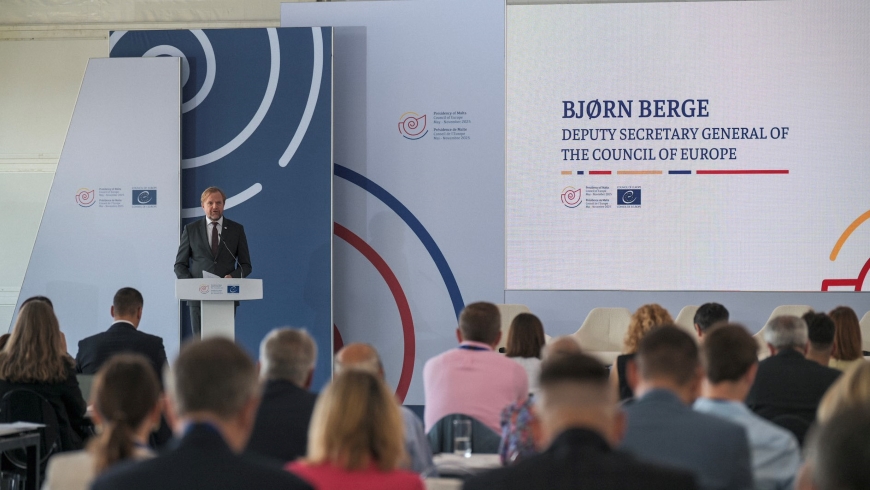
In response to this escalating challenge, the Council of Europe and Malta’s Ministry for Foreign Affairs and Tourism convened a high-level conference titled “Building Democratic Resilience to Disinformation” on September 17 in Kalkara. The event, held under Malta’s Presidency of the Committee of Ministers, brought together a diverse coalition of stakeholders including policymakers, regulators, civil society organizations, media representatives, academics, and technology sector leaders.
“Disinformation is a deliberate attack on the information ecosystem that sustains free societies,” stated Ian Borg, Deputy Prime Minister and Minister of Foreign Affairs and Tourism of Malta, during his address. He emphasized the global nature of the threat, which has been “supercharged by the internet and Artificial Intelligence,” making it impossible for nations to combat effectively in isolation.
Borg called for multilateral approaches grounded in cooperation and knowledge sharing, highlighting the importance of equipping individuals with media literacy skills and critical thinking abilities. He also stressed the need for deeper collaboration with digital platforms to address harmful content at its source.
Bjørn Berge, Deputy Secretary General of the Council of Europe, delivered a keynote speech focusing on practical solutions. “We can no more stop the tide of disinformation than we can stop the tide itself,” Berge noted, acknowledging the pervasive challenge facing democratic societies. “Fake news goes viral far more quickly than any virus ever did. But we can counter lies with facts, with law, and with education.”
The conference featured prominent speakers including Michael O’Flaherty, the Council of Europe’s Commissioner for Human Rights, and Jan Braathu, the OSCE Representative on Freedom of Media. Discussions centered on strengthening societal resilience through multiple avenues: protecting media freedom, enhancing media literacy, developing educational initiatives, engaging youth, and launching cultural programs.
A significant focus was placed on developing coherent national strategies supported by international cooperation frameworks and the Council of Europe’s established expertise and standards. The conference also showcased successful initiatives from civil society organizations that have effectively tackled disinformation across Europe, providing practical models for future action.
The event aligns with recent high-level commitments, including the call from the Council of Europe’s Heads of State and Government at the 2023 Reykjavik Summit and the Secretary General’s proposal for a New Democratic Pact for Europe. As such, it represents a critical platform for dialogue, collaboration, and renewed dedication to safeguarding democratic values throughout the continent.
In a tangible step forward, the conference marked the official launch of the Council of Europe’s new project, “RESIST: Strengthening Societal Resilience to Disinformation in Europe.” Funded by the EEA and Norway Grants, this initiative aims to assist member states in building resilience against disinformation while empowering young people through targeted media and information literacy programs.
The conference represents a significant acknowledgment that protecting democratic information ecosystems requires a multifaceted approach combining regulatory frameworks, educational initiatives, and international cooperation. As artificial intelligence and digital technologies continue to evolve, the challenge of disinformation is expected to remain a central concern for democratic institutions across Europe and beyond.
Fact Checker
Verify the accuracy of this article using The Disinformation Commission analysis and real-time sources.

10 Comments
As manipulation techniques become more sophisticated, the need for robust fact-checking and media literacy initiatives is paramount. I hope this conference identified concrete steps to empower citizens and improve information integrity.
Regulating digital platforms and holding them accountable for the spread of disinformation is a complex challenge. I’m curious to learn about the policy proposals discussed at the conference.
Disinformation can have serious consequences for electoral integrity and citizens’ access to reliable information. This conference is an important step in developing strategies to safeguard democratic processes.
I’m curious to learn more about the specific policy recommendations and technological solutions that emerged from the discussions. Combating this challenge will require a comprehensive approach.
Disinformation is a serious threat to democratic institutions and public trust. I commend the Council of Europe and Malta for convening this important conference to explore strategies for strengthening resilience.
Addressing the root causes of disinformation, such as political polarization and eroding social cohesion, will be crucial for developing long-term solutions. I hope the conference discussions touched on these wider societal factors.
Kudos to Malta for hosting this timely and critical conference. Strengthening democratic resilience against disinformation is a pressing issue that deserves global attention and coordinated action.
It will be interesting to see how the insights and best practices from this event can be applied in other national contexts. Sharing knowledge and experiences is crucial for addressing this transnational problem.
Addressing the threat of disinformation is crucial for preserving democratic institutions and public trust. I’m glad to see the Council of Europe and Malta taking a proactive approach to counter these insidious tactics.
Strengthening resilience against disinformation requires a multi-stakeholder effort. Collaboration between policymakers, civil society, and tech companies will be key to finding effective solutions.