


Listen to the article
London Mayor Warns of “Dark Blizzard of Disinformation” Targeting the City
Sadiq Khan has issued a stark warning about the spread of false information about London online, revealing that misleading narratives about the capital have surged dramatically despite official data showing declining crime rates.
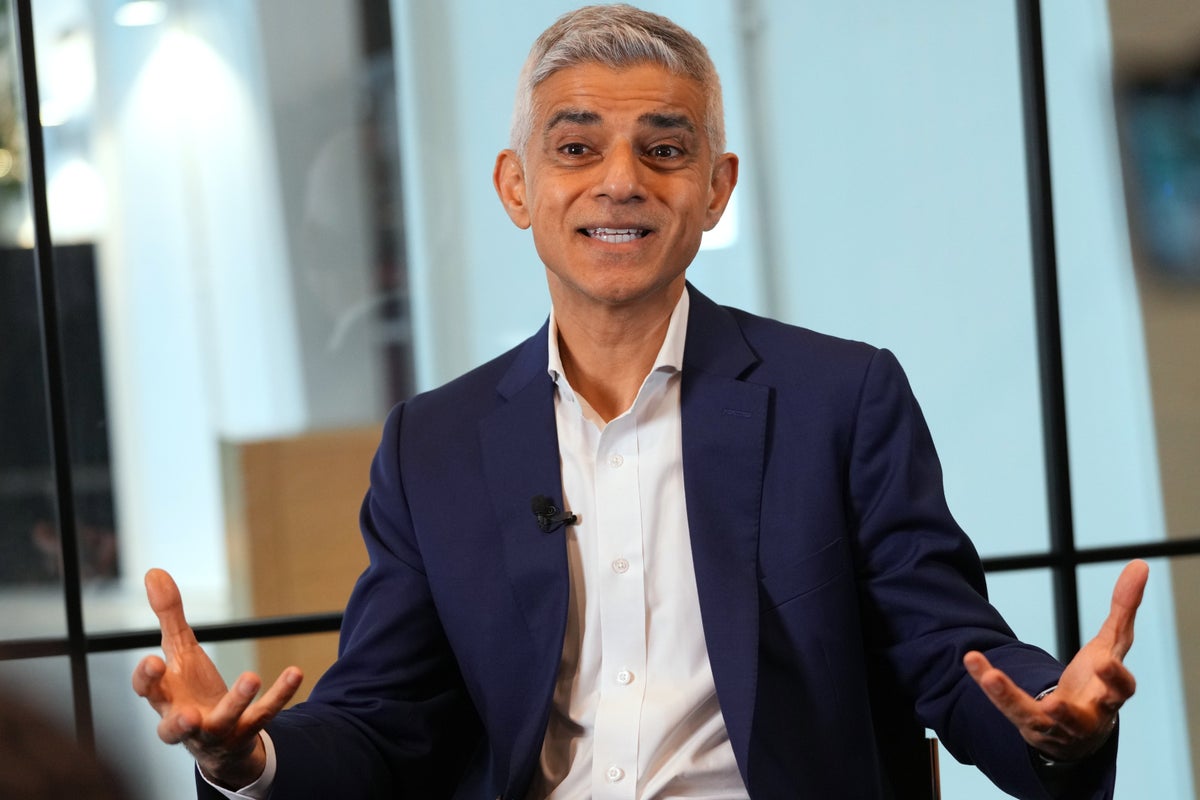
Speaking at a disinformation summit in Cambridge on Thursday, Khan called for stronger government action to force social media companies to combat the spread of false information, which he described as a “dark blizzard of disinformation” threatening the city.
According to data from the Greater London Authority (GLA), while overall London-related social media activity increased by around seven percent between March 2024 and March 2026, posts containing “London in decline” narratives jumped by 150-200 percent. Even more alarming, migration-related narratives mentioning London skyrocketed by more than 350 percent.
These misleading narratives frequently focus on migration, cultural identity, public safety concerns, and antisemitic or homophobic content, according to the GLA report. This surge in negative portrayals contrasts sharply with official statistics showing falling rates of serious violent offenses and homicides in the capital.
“We’re right to expect big tech to do better, but we should not rely on it,” Khan said. “If platforms fail to act, the state must have the tools to make them. That’s why I’ll continue lobbying the government publicly and privately to take a much tougher approach.”
The mayor advocated for the creation of a new central body with the “agility and authority” to protect democracy from disinformation and called for “more aggressive enforcement” of existing rules. Without regulators like Ofcom having the power to impose meaningful penalties, Khan warned that social media companies would “keep on getting away with it.”
Perhaps most concerning, the GLA report identified “clear signs of coordinated and inauthentic activity,” including the use of AI-generated content to produce and amplify misleading claims about London. The analysis revealed involvement from state actors and extreme right-wing groups operating outside the UK, including accounts aligned with Russian or Chinese state interests and US-related political movements.
One particularly troubling example was a Vietnam-based Facebook network of at least 42 pages with a combined following of approximately 1.25 million users, posting repeated AI-generated imagery while impersonating local media outlets. Other networks included a Sri Lanka-based content farm producing monetized AI-generated posts and a Nigeria-based cluster impersonating UK media outlets.
Commonly spread false narratives focused on phone-snatching, violence against women and girls, and knife crime, alongside “persistent” posts relating to public health, climate, and LGBTQ+ issues.
Khan warned that unchecked disinformation could lead to more domestic terrorism offenses carried out by individuals who believe conspiracy theories they encounter online. He emphasized that the problem extends beyond political lines, calling it “a challenge for anyone who believes in democracy – wherever they are.”
“The outrage economy is eating away at the basic bonds of trust that hold our societies together,” Khan said. “The same people attacking the capital have already started targeting other cities around the world. And, in a few years’ time, I think we’ll look back on London as the canary in the coal mine. But I hope we’ll also see it as the place where the fightback began.”
In response to Khan’s concerns, a spokesperson for the Department for Science, Innovation, and Technology said: “Under the Online Safety Act social media platforms are required to remove illegal mis- and disinformation, to help protect our communities from online and offline harms. Ofcom has strong enforcement powers it can use where platforms fail to do this and has our full backing to take action where necessary.”
The battle against online disinformation represents a growing challenge for major global cities as social media platforms continue to grapple with the spread of false information and the increasing sophistication of AI-generated content designed to mislead and divide.
Fact Checker
Verify the accuracy of this article using The Disinformation Commission analysis and real-time sources.

10 Comments
The data on the spike in ‘London in decline’ and migration-related narratives is quite alarming. Even if crime rates are falling, the online discourse seems to be painting a very different picture. This kind of disinformation can have real impacts on public perceptions and policy. Proactive steps by platforms and government are needed to curb these trends.
Absolutely. Disinformation can be incredibly powerful and difficult to counter, especially when it plays on people’s existing fears and biases. Fact-checking and media literacy efforts will be crucial, but may not be enough on their own. Platforms and policymakers need to get creative in finding ways to disrupt the spread of these misleading narratives.
As someone who follows commodity and energy news, I’m curious how this disinformation issue might intersect with coverage of those industries. Narratives around resource scarcity, energy transitions, etc. could also be vulnerable to manipulation. Maintaining public trust in authoritative sources will be key across the board.
That’s an insightful point. Disinformation could definitely seep into coverage of mining, energy, and other commodity-related topics. Maintaining credibility and transparency around data and trends in those industries will be crucial to counteract false or misleading narratives. Robust fact-checking and source verification will be essential.
Interesting to see the mayor call out the spread of disinformation about London. Social media has become a powerful platform for spreading misleading narratives, especially around sensitive topics like crime and migration. It’s concerning to hear the data shows a big increase in these negative portrayals despite declining crime rates. Stronger action is needed to combat this ‘dark blizzard’ of falsehoods.
I agree, the mayor is right to be concerned. Disinformation can have real consequences, both for public discourse and people’s perceptions of their city. Tackling this will require a multi-pronged approach, including better content moderation by platforms and more media literacy education.
While I appreciate the mayor’s concern, I’m a bit skeptical of calls for stronger government action on this. Social media platforms already face immense pressure to moderate content, and history shows this can lead to overreach and censorship. A better approach might be investing in digital literacy education and empowering users to think critically about online information.
That’s a valid perspective. Overly heavy-handed government intervention in content moderation could backfire and infringe on free speech. Empowering users to be more discerning consumers of online information may be a more sustainable long-term solution, complemented by platform transparency and accountability measures.
This is a complex issue without easy solutions. On one hand, social media has given a platform to marginalized voices and alternative perspectives. But the spread of disinformation, especially around sensitive topics, is a serious problem. Enforcing content moderation is tricky and raises free speech concerns. Curious to see what specific policy proposals the mayor puts forward.
That’s a fair point. There’s always a balance to strike between free speech and combating harmful misinformation. Curious to hear more details on the mayor’s proposed solutions and how they would be implemented in practice.