


Listen to the article
Libya’s Information War Escalates as Misinformation Shapes Political Landscape
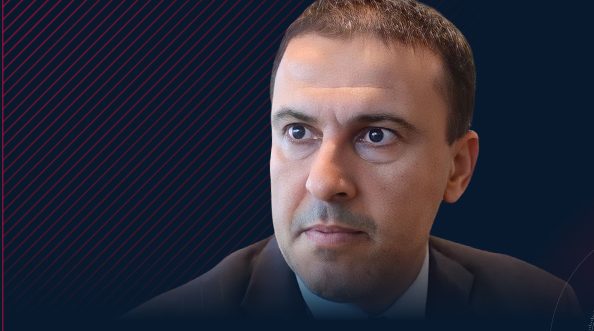
Libya’s complex political crisis has entered a new phase where information warfare has become as significant as military confrontation, according to former General National Congress member Abdul Monem Al-Yassir. In a recent interview with Al-Sharq Al-Awsat newspaper, Al-Yassir highlighted how the battle for public perception has intensified amid the country’s ongoing power struggle.
“The conflict in Libya is no longer confined to political or military dimensions. It has evolved into a war over information and people’s perception of reality,” Al-Yassir explained. “In some cases, misleading information can have a more devastating impact than traditional weapons.”
According to Al-Yassir, the proliferation of forged documents and false statements serves several strategic objectives in Libya’s fractured political landscape. These include destabilizing the political environment, intensifying rivalries between competing factions, undermining institutional credibility, and testing public reactions to potential political scenarios.
Recent incidents demonstrate the pervasiveness of this information warfare. Osama Hammad, who heads the parliament-appointed government in eastern Libya, became the target of a fabricated statement announcing his resignation and the dissolution of his government supposedly to prepare for elections. This false announcement was later officially denied, with accusations directed at a “media team” affiliated with the interim Government of National Unity (GNU) led by Abdul Hamid Dbeibeh for promoting the misinformation.
Hammad’s administration also had to refute another falsified document claiming his government had approved a public debt of 110 billion dinars for 2026, illustrating how misinformation often targets sensitive economic and governance issues.
The phenomenon cuts across Libya’s political divides. The GNU was forced to deny the authenticity of statements attributed to Dbeibeh regarding power transition before elections. Dbeibeh himself had to counter inaccurate reports about his health following heart surgery in early January. Similarly, the Presidential Council denied a fabricated statement attributed to its head, Mohamed Al-Menfi, concerning the complete removal of fuel subsidies—a highly sensitive topic in the oil-rich nation where citizens have long depended on government subsidies.
Al-Yassir categorizes these practices as “fourth-generation warfare,” with the increasing use of digital tools and artificial intelligence representing elements of what military strategists term “fifth-generation warfare.” While information manipulation tactics aren’t new—having been employed by states and intelligence agencies for decades—social media has dramatically accelerated both the speed and impact of misinformation campaigns.
Libya’s information war reflects broader regional and global trends where digital platforms have become battlegrounds for political influence. The country’s strategic importance as North Africa’s largest oil producer with significant natural gas reserves makes control of public narrative particularly valuable for competing domestic and international interests.
Since the 2011 NATO-backed uprising that toppled longtime ruler Muammar Gaddafi, Libya has struggled to establish stable governance. The country remains divided between competing power centers in the east and west, with the GNU in Tripoli and the eastern-based parliament backing rival administrations.
This digital dimension of Libya’s conflict presents particular challenges for conflict resolution efforts and planned elections, as citizens struggle to distinguish between authentic information and strategic misinformation. International observers note that establishing trusted information channels will be crucial for any sustainable political solution in Libya.
As artificial intelligence technologies become more sophisticated, experts warn that detecting fabricated content will grow increasingly difficult, potentially deepening Libya’s political crisis and further complicating efforts toward national reconciliation and democratization.
Fact Checker
Verify the accuracy of this article using The Disinformation Commission analysis and real-time sources.

25 Comments
Interesting update on Libya’s Political Landscape Rattled by Media Disinformation. Curious how the grades will trend next quarter.
Good point. Watching costs and grades closely.
If AISC keeps dropping, this becomes investable for me.
Good point. Watching costs and grades closely.
Uranium names keep pushing higher—supply still tight into 2026.
Good point. Watching costs and grades closely.
Production mix shifting toward Disinformation might help margins if metals stay firm.
Interesting update on Libya’s Political Landscape Rattled by Media Disinformation. Curious how the grades will trend next quarter.
Good point. Watching costs and grades closely.
Good point. Watching costs and grades closely.
Uranium names keep pushing higher—supply still tight into 2026.
If AISC keeps dropping, this becomes investable for me.
The cost guidance is better than expected. If they deliver, the stock could rerate.
Nice to see insider buying—usually a good signal in this space.
Interesting update on Libya’s Political Landscape Rattled by Media Disinformation. Curious how the grades will trend next quarter.
Interesting update on Libya’s Political Landscape Rattled by Media Disinformation. Curious how the grades will trend next quarter.
Nice to see insider buying—usually a good signal in this space.
Uranium names keep pushing higher—supply still tight into 2026.
Good point. Watching costs and grades closely.
Good point. Watching costs and grades closely.
Exploration results look promising, but permitting will be the key risk.
Good point. Watching costs and grades closely.
Exploration results look promising, but permitting will be the key risk.
Good point. Watching costs and grades closely.
Good point. Watching costs and grades closely.