


Listen to the article
In an era when digital technology connects the world, a dangerous paradox has emerged: the free flow of information, once seen as democracy’s ally, now threatens its very foundation as truth becomes increasingly elusive.
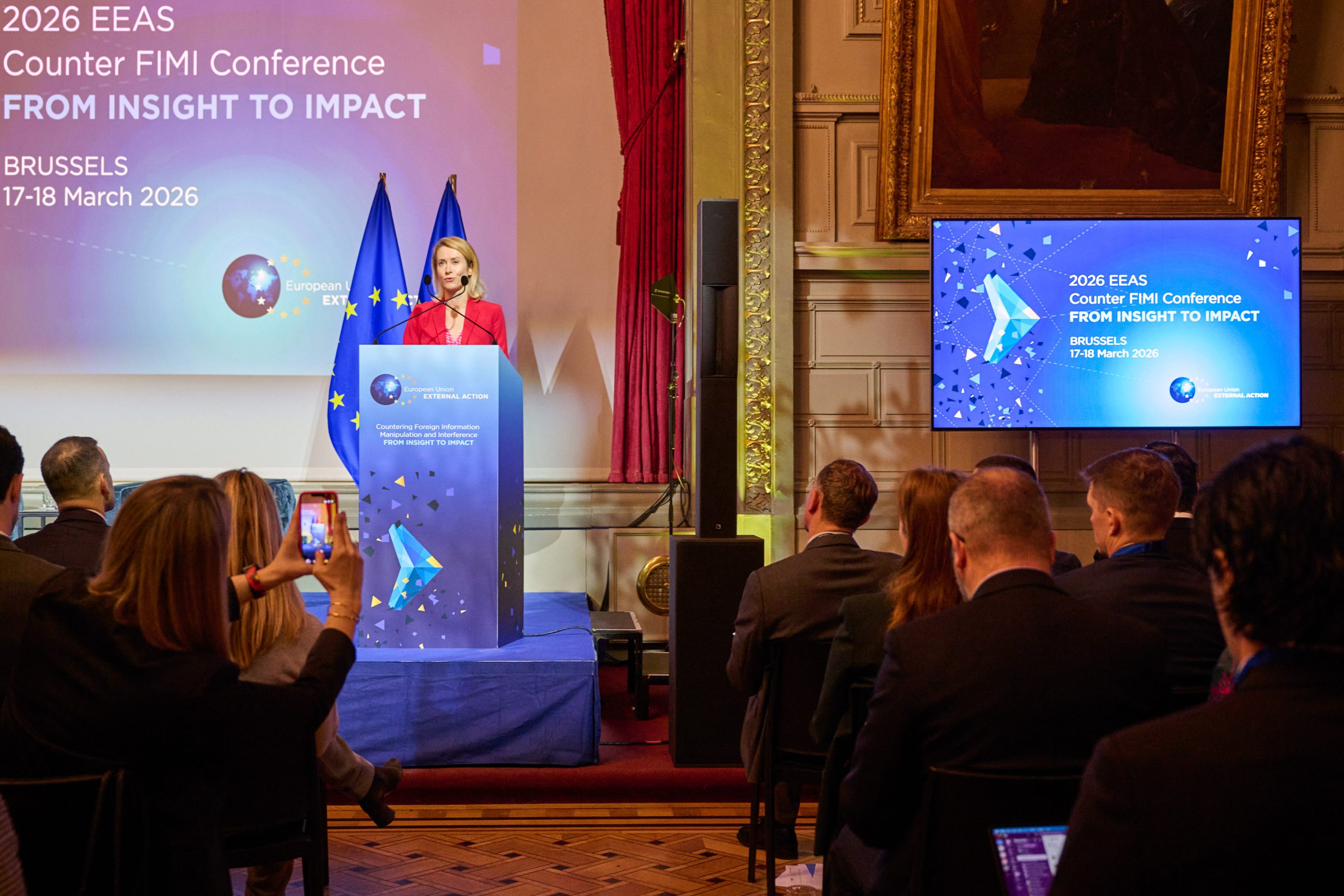
European officials are sounding the alarm about the rapid evolution of foreign information manipulation and interference (FIMI), warning that democracy faces “death by a thousand cuts” as citizens struggle to distinguish fact from fiction in an increasingly complex information landscape.
“Democracy is based on trust. If we cannot tell what is true and what is not, we are easily manipulated,” a senior EU official stated during a recent conference on information integrity. This concern is widespread among Europeans, with nearly 80% worried that voters are basing electoral choices on disinformation, according to Eurobarometer data.
The threat has evolved dramatically with artificial intelligence. What began as relatively primitive operations—Russian and Chinese-backed bot farms pushing destabilizing narratives—has transformed into sophisticated campaigns using AI to produce manipulative content at unprecedented speed, scale, and low cost.
A recent example comes from Romania, where a Russia-backed disinformation campaign deployed thousands of AI-powered bot accounts to flood platforms with deepfakes, artificially boosting a far-right, pro-Russian candidate. The campaign also enlisted paid TikTok influencers to promote Russia’s preferred candidate. Officials credit Romania’s constitutional checks and balances with preventing this interference from succeeding.
The scale of these operations is staggering. Russia and China alone invested up to €11 billion in information manipulation last year, while the global economic impact of disinformation is estimated at over €400 billion annually. This has created what EU officials describe as a “marketplace for manipulation,” with actors outsourcing operations to intermediaries, contractors, private companies, and influence-for-hire networks.
European leaders are pushing for a three-front approach to combat this threat. Within the EU, officials advocate breaking the business model through sanctions against perpetrators, increased tax probes and cyber investigations into cryptocurrency payments used to recruit young people, and stricter enforcement of existing regulations like the Digital Services Act.
“When major platforms are abusing their market power, influenced by actors openly supporting specific political groups in our countries, we have a serious problem,” one official noted, raising questions about whether democratic spaces should be entrusted to social networks controlled by large American and Chinese companies.
The second front focuses on protecting EU neighbors, particularly countries seeking EU membership. Moldova represents a success story in this battle. Despite Russia reportedly investing between €200-300 million (2-3% of Moldova’s GDP) to influence Moldovan elections, the interference campaign failed due to coordinated countermeasures.
Moldovan authorities worked closely with European intelligence services to investigate and expose interference, introduced prison sentences for vote-buying, and launched a massive communication campaign highlighting the benefits of EU membership. Perhaps most importantly, EU investment in tangible local improvements—from new parks to basic utilities like running water—demonstrated to Moldavians what European integration could mean for their daily lives.
Similar patterns of interference are now being observed in Armenia ahead of its June elections and in Montenegro, which aims to join the EU by 2028. The European External Action Service plans to deploy a Hybrid Rapid Response Team to Armenia in April at the country’s request.
The third front is the international sphere, where the EU is working to fill a void left by the United States’ withdrawal from leading global efforts against foreign interference. According to EU reports, over 100 countries, 100 individuals (including heads of state), and nearly 200 organizations including NATO were targeted by FIMI last year.
“Wherever I travel to meet my counterparts across the world, the constant ask from partners is how to protect their own societies from attacks,” a senior EU diplomat noted. The EU is now incorporating FIMI protection into Security and Defense Partnerships with countries including Australia, Iceland, and Ghana.
European officials are advocating for an international coalition to protect information integrity as a global public good. “The infrastructure our adversaries use is built like a house of cards,” one official explained. “By taking a more assertive approach, online and offline, we can blow the house down.”
With multiple European elections scheduled for 2026, officials warn of a potential “perfect storm” of interference. The message is clear: protecting the information space requires coordinated action from politicians, law enforcement, media platforms, and citizens committed to fighting disinformation with factual, transparent communication.
Fact Checker
Verify the accuracy of this article using The Disinformation Commission analysis and real-time sources.

6 Comments
The evolution from crude bot farms to AI-powered disinformation campaigns is a concerning development. Policymakers will need to stay agile and innovative to keep pace with these rapidly changing tactics. I wonder what specific policy tools and regulatory frameworks Kallas advocates.
Countering foreign disinformation is a critical challenge for democracy. Kaja Kallas’ keynote on this complex issue is timely and important. I’m curious to learn more about the EU’s strategies and tools to combat the rapid evolution of AI-powered manipulation campaigns.
It’s alarming to hear that 80% of European voters are worried about basing decisions on disinformation. This underscores how pervasive the threat has become. Strengthening democratic resilience against foreign information attacks requires a multifaceted approach.
Agreed. Protecting the integrity of elections and political discourse is paramount. I’m interested to hear Kallas’ perspective on leveraging technology, media literacy, and international cooperation to counter these evolving tactics.
Addressing foreign information manipulation is a complex challenge with high stakes for European societies. I hope Kallas’ keynote provided concrete strategies and recommendations for strengthening democratic resilience in the face of these evolving threats.
Trust is the foundation of democracy, as the EU official noted. When citizens can’t reliably distinguish truth from fiction, the consequences for democratic processes are severe. Kallas’ keynote on this critical issue deserves close attention.