


Listen to the article
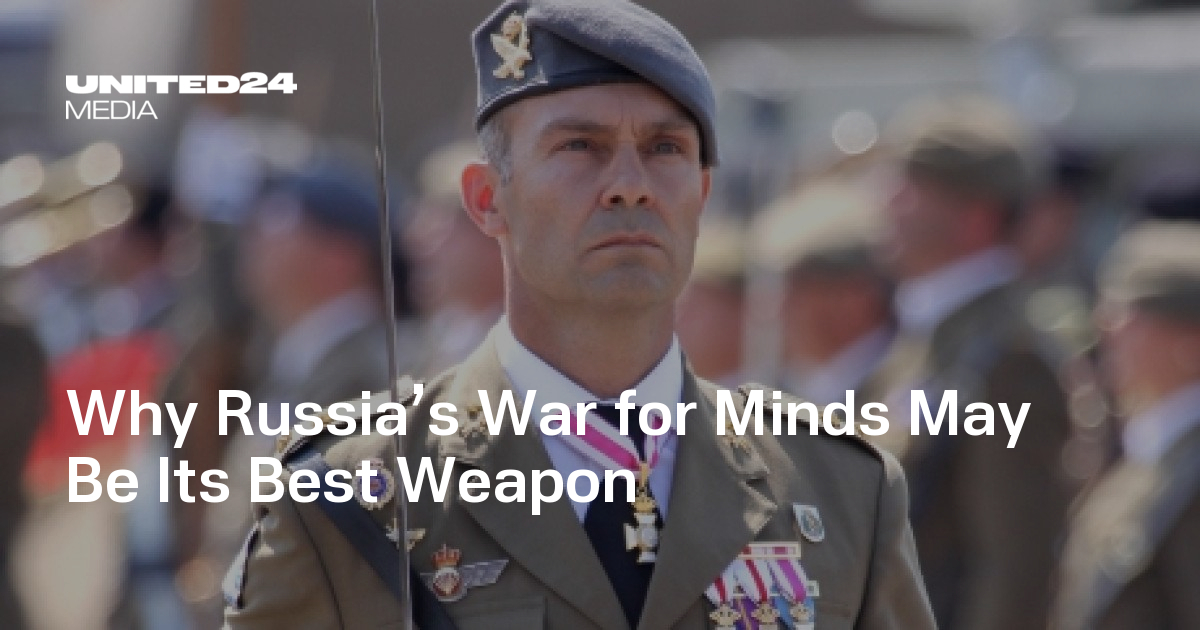
Europe faces a new threat as Russia wages sophisticated cognitive warfare against Western democracies, according to Spanish Colonel Juan Bustamante, an expert in strategic communications and veteran of international missions from Bosnia to Afghanistan.
In contrast to traditional military domains where Europe has invested billions in hardware and cyber defenses, Bustamante warns that the battlefield has shifted to citizens’ minds, with autocratic regimes like Russia deploying coordinated disinformation campaigns to fracture democratic societies from within.
“There is no longer a rear guard,” explains Bustamante, the former Chief of the Strategic Communication Section at Spain’s Operations Command of the Defense Staff. “The population is the target. The goal is not to occupy physical territory, but to conquer minds.”
This cognitive warfare represents a fundamental shift in modern conflict. Rather than imposing a single narrative, Russia’s strategy involves creating confusion, generating noise, and exploiting existing divisions to weaken democratic institutions. The approach takes advantage of democracies’ inherent openness and leverages social media algorithms that amplify polarization.
“Russia is the country that uses cognitive warfare without limits the most,” Bustamante notes. “The most autocratic countries use it more because they go directly for the effect. It’s much cheaper than maintaining soldiers: giving whatever information they want, affecting our information, adding a manipulation charge.”
Recent events validate his concerns. In February 2026, the “Matryoshka” bot network launched a massive disinformation campaign using the Epstein files to fabricate false accusations against French President Macron and Ukrainian children, mimicking Western media outlets across multiple platforms.
The asymmetry in institutional response capacity presents a serious challenge. While Russia operates professional organizations like the Internet Research Agency (IRA) in St. Petersburg, where hundreds work full-time on information manipulation campaigns, Western nations lack comparable infrastructure.
“There is no comparable structure in the West,” Bustamante laments. “We don’t even understand what a cognitive defense structure should look like. We would need something like a cognitive joint command: a structure capable of analyzing how you’re attacked, planning responses, and measuring the effectiveness of both our own and the adversary’s efforts.”
This institutional gap creates a mathematical disadvantage. “If there’s no structure, there’s no way to respond effectively. Out of 100 disinformation attacks, you only respond to two. It’s useless,” he explains.
What makes societies particularly vulnerable is what Bustamante calls “hypocognition” – knowing many things superficially rather than deeply understanding fewer topics. “We have four clear ideas about each topic, but nothing deep,” he says. Social media’s “infinite scroll” deliberately fosters this state of permanent superficiality.
The resulting polarization isn’t merely uncomfortable – it’s strategically devastating for Western alliances. “NATO’s weak point is social cohesion,” Bustamante explains. “They seek essential polarization: it simplifies and divides. The more nationalist you are, the less pro-alliance you will be.”
The European Union faces particular vulnerability since its strength depends heavily on cooperation and trust between states. When nationalist, confrontational messaging takes hold, the EU ceases to be viewed as a common project and instead becomes an object of suspicion.
Ukraine exemplifies this dynamic. President Zelenskyy must not only lead the military response but constantly reaffirm his government’s legitimacy against coordinated disinformation aimed at fragmenting Western support by sowing doubts about aid effectiveness and corruption allegations.
Bustamante identifies democracy’s inherent tension as a vulnerability: “What is democracy’s weak point? I tolerate everything as long as what you’re thinking doesn’t affect my security. When I notice my security is wavering, then I say: wait, wait, wait.”
This creates a situation where any perceived threat – real or manufactured – can trigger fear-based rather than reason-based responses. “We stop thinking with a sense of reason, and start acting out of fear and paranoia,” he says.
Bustamante’s prescription for resilience begins with individual information habits. He recommends dedicating less time to “infinite scrolling” and more to reading extensive, intellectually demanding articles. Perhaps more challenging, he suggests cultivating intellectual empathy – recognizing that political opponents may occasionally have valid points.
For organizations, he emphasizes internal communication as a critical defense. Drawing from his experience commanding Spain’s Cavalry Regiment No. 11, Bustamante describes monthly meetings with all 650 soldiers: “They have to know what you’re like, because that cuts off rumors, because that cuts off disinformation, because with that they start trusting you.”
The long-term solution, according to Bustamante, isn’t technological but educational: teaching critical thinking from an early age. This approach faces headwinds from social media platforms that profit from predictable, polarized user behavior, which generates more valuable data for advertisers.
As Western democracies confront this cognitive battlefield, the question remains whether they can develop the institutional structures and social resilience needed to counter increasingly sophisticated information warfare. In Bustamante’s words, “We cannot afford not to know how to do it.”
Fact Checker
Verify the accuracy of this article using The Disinformation Commission analysis and real-time sources.

10 Comments
Fascinating insights from Colonel Bustamante on the evolving nature of modern conflict. The shift towards ‘cognitive warfare’ that targets citizens’ minds rather than physical territory is quite alarming and requires a fundamental rethinking of defense strategies.
As a mining and commodities investor, I’m curious how this type of cognitive warfare could impact the resource sector. Do you think it could lead to increased volatility or uncertainty around policy decisions affecting mining, energy, and other industries?
That’s an insightful question. Disinformation campaigns that undermine trust in institutions and decision-making processes could certainly create ripples in commodity markets and investment decisions. Something to keep an eye on going forward.
As someone invested in mining and commodities, I’ll be closely watching how these disinformation tactics could impact market volatility, investment decisions, and policies affecting the resource sector. Maintaining the integrity of information and decision-making processes will be critical.
Agreed. The resource sector’s vulnerability to cognitive warfare campaigns is a concerning development that warrants close attention from industry participants, policymakers, and the public.
Colonel Bustamante’s warning about the ‘no longer a rear guard’ dynamic is quite alarming. If Russia’s strategy is to conquer minds rather than territory, that poses major challenges for Western democracies to defend against.
Interesting to see how Russia is deploying sophisticated disinformation tactics to target Western democracies. This cognitive warfare approach seems highly concerning, as it aims to weaken institutions from within rather than occupy physical territory.
You’re right, this represents a fundamental shift in modern conflict. Democracies’ openness and social media algorithms make them vulnerable to these coordinated campaigns that sow confusion and exploit divisions.
This article highlights the growing sophistication of information warfare tactics used by autocratic regimes. As an energy and mining analyst, I’m concerned about how disinformation could impact policy decisions, market sentiment, and public perception around critical industries.
I share your concerns. Maintaining trust and stability in these sectors will be crucial, especially as the world navigates the energy transition and shifts in global supply chains. Vigilance against malign influence campaigns will be key.