


Listen to the article
Pulitzer Center Grantee to Examine Fatal Impact of Vaccine Misinformation in Samoa
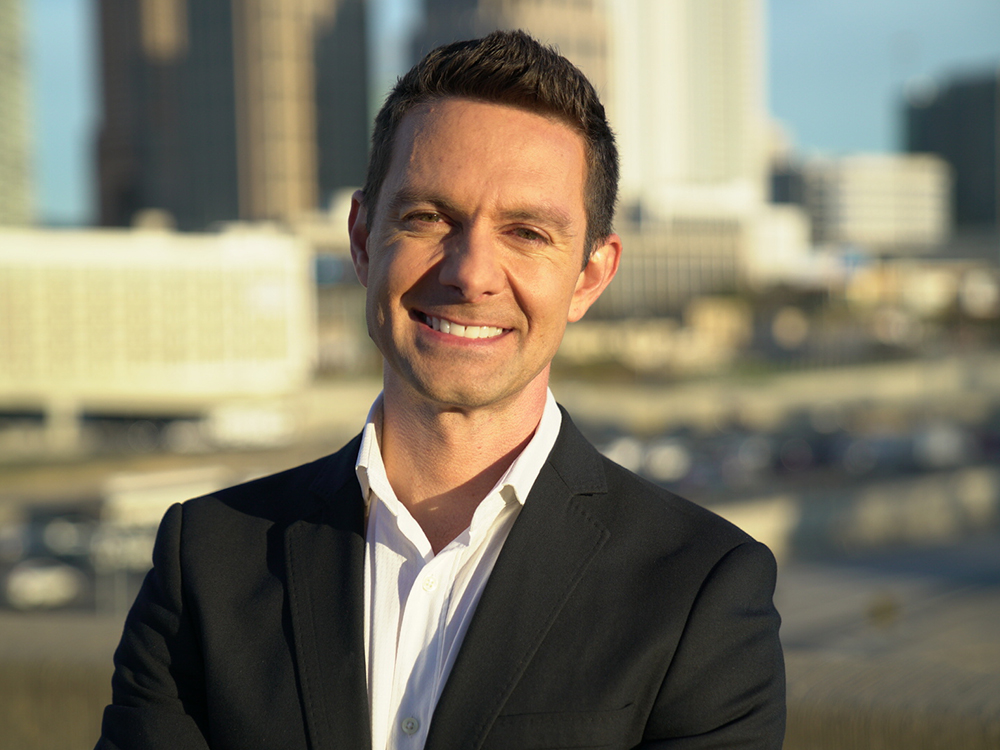
Investigative reporter Andy Pierrotti will visit Elon University next week to share his groundbreaking work documenting how a wave of vaccine misinformation led to a devastating measles outbreak in Samoa that claimed 83 lives, most of them children.
Pierrotti, an award-winning journalist with Atlanta News First, will present “Tragedy in Paradise: Disinformation and the Samoan Measles Outbreak” on Wednesday, October 22, at 5 p.m. in the Jane and Brian Williams Studio at the McEwen Communications Building. The event is sponsored by Elon’s Department of Journalism in partnership with the Pulitzer Center Campus Consortium.
The five-part series “Tragedy in Paradise” explores the 2019 Samoan measles epidemic that infected 5,700 people on the Pacific island nation. Pierrotti traveled to Samoa in 2025 to revisit the deadly outbreak, which has gained renewed attention following Robert F. Kennedy Jr.’s recent confirmation as U.S. Secretary of Health and Human Services.
Kennedy’s 2019 visit to Samoa to meet with anti-vaccine activists occurred shortly before the outbreak, raising questions about the real-world impact of vaccine skepticism that has spread globally through social media platforms.
“Andy is meticulous – and compassionate – in showing us how an outbreak of a completely preventable disease can spread, with tragic results,” said Assistant Professor of Journalism Lorraine Ahearn, who serves as Elon’s liaison to the Pulitzer Center Campus Consortium. “Of special relevance to students of health communications is how this series exposes the role of social media platforms in disseminating vaccine disinformation on the ground.”
The timing of Pierrotti’s presentation is particularly significant as several U.S. states reconsider vaccine mandates amidst a recent domestic measles outbreak that has already claimed three lives. Public health experts have expressed growing concern about declining vaccination rates across the United States, pointing to the Samoan tragedy as a stark warning about the consequences of vaccine hesitancy.
Pierrotti, whose distinguished career includes recognition with the duPont-Columbia University Award, a Peabody, and multiple Emmy and Edward R. Murrow awards, reflected on the emotional toll of his reporting from Samoa.
“Interviewing parents who have lost children always weighs heavily on your heart. It can last for months,” he said. “Not only can you feel like you’re absorbing their trauma, but you feel guilty about asking a parent to relive the worst day of their lives.”
Despite these challenges, Pierrotti emphasized the importance of sharing these stories. “These mothers wanted to share a message I thought the United States needed to hear. They wanted to explain that their decision to not vaccinate their family cost them their children’s lives. They did not want others to make the same mistake.”
One such parent was Elsie Fa’Atauu’u, whose baby daughter Noel died in the outbreak. In a powerful moment captured during Pierrotti’s reporting, she pleaded: “I’m begging every parent in America. Please, get your child vaccinated.”
The presentation comes at a critical moment in public discourse about vaccines. The World Health Organization has identified vaccine hesitancy as one of the top ten threats to global health, with measles cases surging worldwide in recent years after decades of decline. The CDC reports that measles is one of the most contagious diseases, with each infected person capable of spreading the virus to up to 18 unvaccinated people.
Elon University’s partnership with the Pulitzer Center is part of the organization’s Campus Consortium network, an educational initiative that brings Pulitzer Center staff and journalists to campus twice yearly. Pierrotti’s visit includes several classroom lectures in addition to the public presentation.
“This series is a textbook case of why we need investigative reporters,” Ahearn noted. “This is life and death.”
The event is free and open to the public, with a Q&A session to follow Pierrotti’s presentation.
Fact Checker
Verify the accuracy of this article using The Disinformation Commission analysis and real-time sources.

10 Comments
This is a concerning story about the devastating impact of vaccine misinformation. I’m curious to learn more about how the anti-vaccine rhetoric spread in Samoa and the challenges the country faced in responding to the outbreak.
Yes, it’s a tragic situation that highlights the real-world consequences of spreading false information about vaccines. I hope the lecture provides valuable insights to prevent similar outbreaks in the future.
This lecture is an important opportunity to examine the complex factors that allowed vaccine misinformation to spread in Samoa and claim so many lives. I hope the discussion leads to insights that can help prevent similar tragedies in the future.
Yes, understanding the specific challenges Samoa faced in countering the disinformation campaign will be crucial. Lessons learned could benefit other vulnerable communities as well.
Kudos to journalist Andy Pierrotti for shedding light on this important issue. Vaccine misinformation can have lethal consequences, as seen in Samoa, and it’s crucial to counter it with facts and science.
I agree. Investigative reporting plays a vital role in exposing the harm caused by vaccine disinformation and holding those responsible to account.
Pierrotti’s five-part series on the Samoan measles outbreak sounds like essential viewing. Documenting the real-world impact of vaccine misinformation is vital work, and I commend him for his investigative efforts.
Agreed. Shining a spotlight on these issues through in-depth reporting can help raise awareness and spur action to address the underlying problems.
It’s alarming that a US government official like Robert F. Kennedy Jr. would visit Samoa and meet with anti-vaccine activists, potentially fueling the misinformation that led to the deadly measles outbreak. This highlights the need for public figures to be more responsible with their messaging.
Absolutely. Public officials should be promoting evidence-based public health policies, not legitimizing fringe anti-vaccine views that can have catastrophic real-world impacts.