


Listen to the article
Japan Battles Wave of Earthquake Disinformation on Social Media
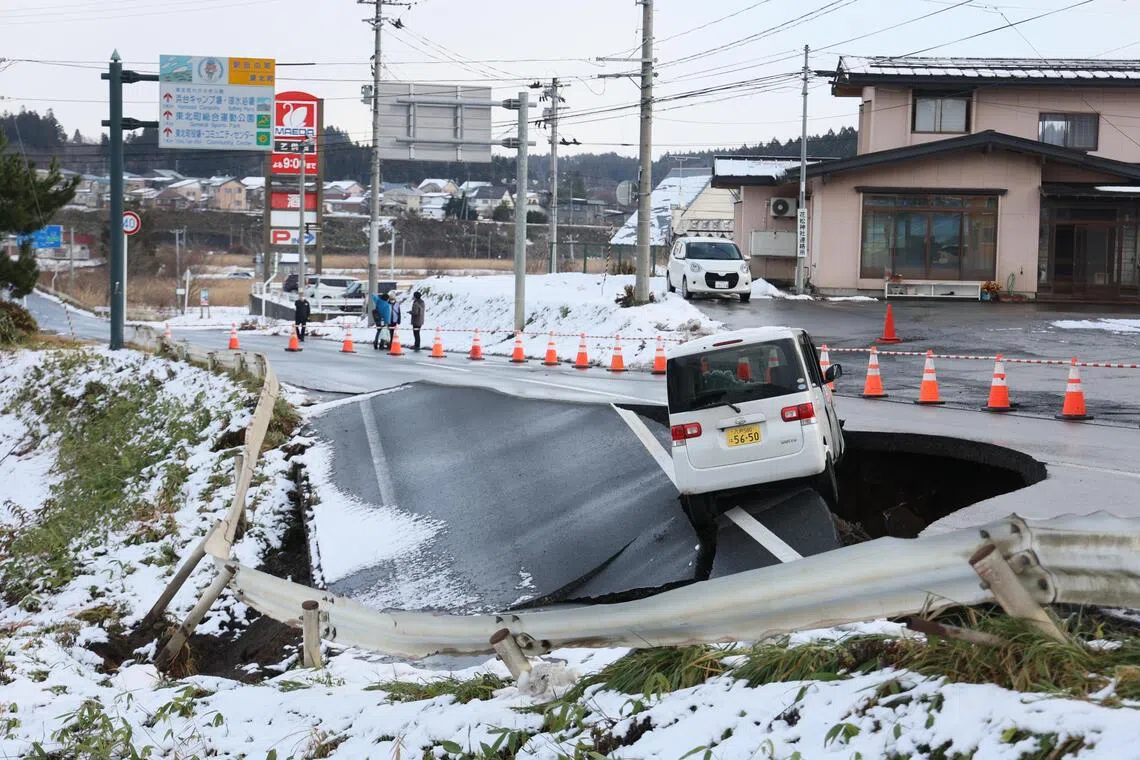
Disinformation regarding the powerful earthquake that struck Aomori Prefecture and other parts of Japan’s Tohoku northeastern region on December 8 is rapidly spreading across social media platforms, authorities warn.
False claims, including conspiracy theories suggesting the earthquake was “artificially created,” began circulating on X (formerly Twitter) immediately after the tremors hit. Officials are particularly concerned about AI-generated fake videos going viral, compounding public confusion during the emergency response.
The Japan Meteorological Agency (JMA) and Cabinet Office have issued urgent appeals to the public to verify information through official channels and avoid sharing unverified content that could hamper disaster response efforts.
“The government does not announce earthquake predictions, including the date of a mega quake,” the JMA emphasized in a statement addressing the proliferation of false forecasts.
On the microblogging platform Threads, a groundless prediction posted before the earthquake claiming to foresee the December 8 event gained significant traction, with many users praising the poster’s supposed predictive abilities despite the lack of scientific basis.
Video-sharing app TikTok has become another hotspot for earthquake misinformation. Users have reported seeing footage of past tsunamis falsely presented as current events from December 8. More concerning are sophisticated fake news videos, apparently created using generative AI, falsely reporting that the earthquake’s epicenter was in northern Tokyo Bay and claiming a “record-size tsunami” had struck Miyagi Prefecture.
TikTok’s operators have responded by urging users to verify disaster-related information with reliable sources before viewing or sharing such content.
This surge in disaster-related disinformation is not unprecedented in Japan. Following the January 2024 Noto Peninsula earthquake in central Japan, authorities documented numerous instances of false information circulating online, including fabricated pleas for help from individuals posing as victims.
The phenomenon dates back even earlier. In 2016, after a massive earthquake struck Kumamoto Prefecture in southwestern Japan, a viral social media post falsely claimed that a lion had escaped from a local zoo, causing unnecessary panic.
Disaster communication experts point to Japan’s unique vulnerability to earthquake misinformation. As one of the world’s most seismically active countries, earthquake preparedness is deeply embedded in Japanese society, making the population particularly sensitive to information about seismic events.
The latest wave of disinformation presents growing challenges for Japanese emergency management agencies already stretched thin by response efforts. Digital literacy advocates have called for more robust fact-checking systems and better public education about identifying false information during disasters.
Social media companies have faced mounting pressure to implement stronger measures against the spread of disaster-related misinformation. While platforms like X, TikTok, and Meta (parent company of Threads) have policies against harmful misinformation, the volume and sophistication of false content—particularly AI-generated videos—present evolving challenges.
The Cabinet Office has established dedicated social media accounts to provide verified information during emergencies and has urged citizens to follow official government channels for accurate updates about earthquake activity and safety instructions.
As recovery efforts continue in the affected regions, authorities emphasize that combating disinformation is crucial to maintaining public trust and ensuring effective disaster response in a country where earthquakes remain an ever-present threat.
Fact Checker
Verify the accuracy of this article using The Disinformation Commission analysis and real-time sources.

31 Comments
Nice to see insider buying—usually a good signal in this space.
Good point. Watching costs and grades closely.
Good point. Watching costs and grades closely.
The cost guidance is better than expected. If they deliver, the stock could rerate.
Good point. Watching costs and grades closely.
Good point. Watching costs and grades closely.
I like the balance sheet here—less leverage than peers.
Silver leverage is strong here; beta cuts both ways though.
Silver leverage is strong here; beta cuts both ways though.
Good point. Watching costs and grades closely.
Good point. Watching costs and grades closely.
The cost guidance is better than expected. If they deliver, the stock could rerate.
Good point. Watching costs and grades closely.
Good point. Watching costs and grades closely.
If AISC keeps dropping, this becomes investable for me.
Good point. Watching costs and grades closely.
Uranium names keep pushing higher—supply still tight into 2026.
Good point. Watching costs and grades closely.
The cost guidance is better than expected. If they deliver, the stock could rerate.
Good point. Watching costs and grades closely.
If AISC keeps dropping, this becomes investable for me.
Exploration results look promising, but permitting will be the key risk.
If AISC keeps dropping, this becomes investable for me.
Good point. Watching costs and grades closely.
Good point. Watching costs and grades closely.
The cost guidance is better than expected. If they deliver, the stock could rerate.
Good point. Watching costs and grades closely.
Good point. Watching costs and grades closely.
I like the balance sheet here—less leverage than peers.
Good point. Watching costs and grades closely.
I like the balance sheet here—less leverage than peers.