


Listen to the article
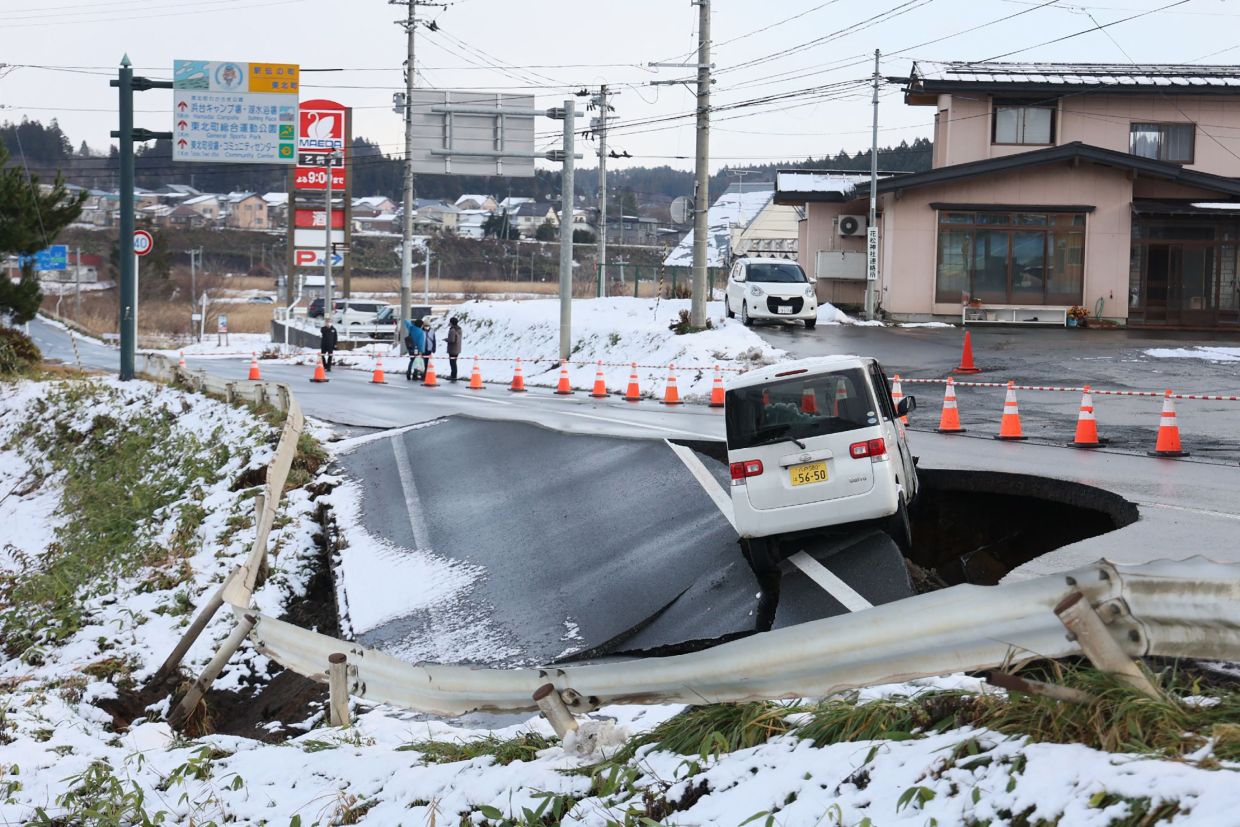
Japan’s northeastern region was rattled by a powerful earthquake Monday night, triggering an immediate wave of disinformation across social media platforms. False claims, manipulated videos, and conspiracy theories began circulating within minutes of the tremors that primarily affected Aomori prefecture and surrounding areas in Tohoku.
Government agencies are now battling both the earthquake’s aftermath and a surge of misleading content online. Shortly after the quake struck on December 8, social media users on X (formerly Twitter) began propagating conspiracy theories claiming the earthquake was “artificially created” and alluding to a supposed “government conspiracy” behind the natural disaster.
The spread of AI-generated fake videos has particularly alarmed authorities. These sophisticated forgeries, which appear convincingly realistic to many viewers, show fabricated footage of tsunami destruction supposedly from the December 8 event. Some videos falsely relocated the earthquake’s epicenter to Tokyo Bay, while others claimed “record-size” tsunamis had struck Miyagi prefecture—neither of which occurred.
On the platform Threads, a user who allegedly “predicted” the earthquake gained substantial attention, with followers praising their supposed predictive abilities. The Japan Meteorological Agency (JMA) was quick to refute such claims, stating unequivocally: “The government does not announce earthquake predictions, including the date of a mega quake.”
TikTok has become another breeding ground for misinformation, with users sharing historical tsunami footage falsely labeled as current events. The platform’s operator has urged users to verify information through reliable sources when viewing disaster-related content, though misleading videos continue to circulate.
This pattern of disaster-related misinformation isn’t new to Japan. Following the devastating Noto peninsula earthquake in January 2024, authorities faced similar challenges with false information spreading rapidly online. In one particularly troubling instance, individuals posed as victims with fake pleas for help, potentially diverting emergency resources from genuine cases.
The problem dates back years. During the 2016 Kumamoto earthquake in southwestern Japan, a viral social media post falsely claimed a lion had escaped from a local zoo, causing unnecessary panic among residents already coping with disaster conditions.
Experts note that disaster misinformation presents unique challenges in Japan, where earthquakes and tsunamis remain persistent threats. False information can hamper rescue efforts, create unnecessary panic, and complicate official response measures in critical hours following natural disasters.
The JMA and Cabinet Office have issued strong warnings against sharing unverified information during crisis situations. Officials stress that spreading misinformation, even without malicious intent, can have serious consequences for disaster management operations and public safety.
Social media companies face mounting pressure to improve their disaster response protocols in Japan, one of the world’s most seismically active regions. While platforms like TikTok have attempted to direct users toward official information sources, the rapid spread of convincing AI-generated content presents new challenges for content moderation systems.
Japan’s experience highlights the growing global challenge of managing information during crises in the age of artificial intelligence and instantaneous communication. As technology makes fake content increasingly difficult to distinguish from reality, authorities worldwide are watching Japan’s response for potential lessons in combating disaster misinformation.
For residents in affected areas, officials continue to emphasize the importance of relying on official government announcements, the JMA, and established news organizations rather than unverified social media posts during earthquake events.
Fact Checker
Verify the accuracy of this article using The Disinformation Commission analysis and real-time sources.

27 Comments
Exploration results look promising, but permitting will be the key risk.
Good point. Watching costs and grades closely.
Good point. Watching costs and grades closely.
Exploration results look promising, but permitting will be the key risk.
Good point. Watching costs and grades closely.
Good point. Watching costs and grades closely.
I like the balance sheet here—less leverage than peers.
Good point. Watching costs and grades closely.
Good point. Watching costs and grades closely.
Production mix shifting toward Disinformation might help margins if metals stay firm.
Production mix shifting toward Disinformation might help margins if metals stay firm.
Good point. Watching costs and grades closely.
Good point. Watching costs and grades closely.
I like the balance sheet here—less leverage than peers.
Silver leverage is strong here; beta cuts both ways though.
Interesting update on Japan Earthquake: Social Media Flooded with Disinformation. Curious how the grades will trend next quarter.
Interesting update on Japan Earthquake: Social Media Flooded with Disinformation. Curious how the grades will trend next quarter.
Good point. Watching costs and grades closely.
Good point. Watching costs and grades closely.
Interesting update on Japan Earthquake: Social Media Flooded with Disinformation. Curious how the grades will trend next quarter.
Nice to see insider buying—usually a good signal in this space.
Exploration results look promising, but permitting will be the key risk.
Good point. Watching costs and grades closely.
The cost guidance is better than expected. If they deliver, the stock could rerate.
Uranium names keep pushing higher—supply still tight into 2026.
Good point. Watching costs and grades closely.
Uranium names keep pushing higher—supply still tight into 2026.