


Listen to the article
The Forgotten Massacre: How 1929 Hebron Violence Shaped a Century of Conflict
Journalist Yardena Schwartz’s research into a pivotal historical event reveals how disinformation campaigns about holy sites have repeatedly triggered violence in the Israeli-Palestinian conflict for nearly a century.
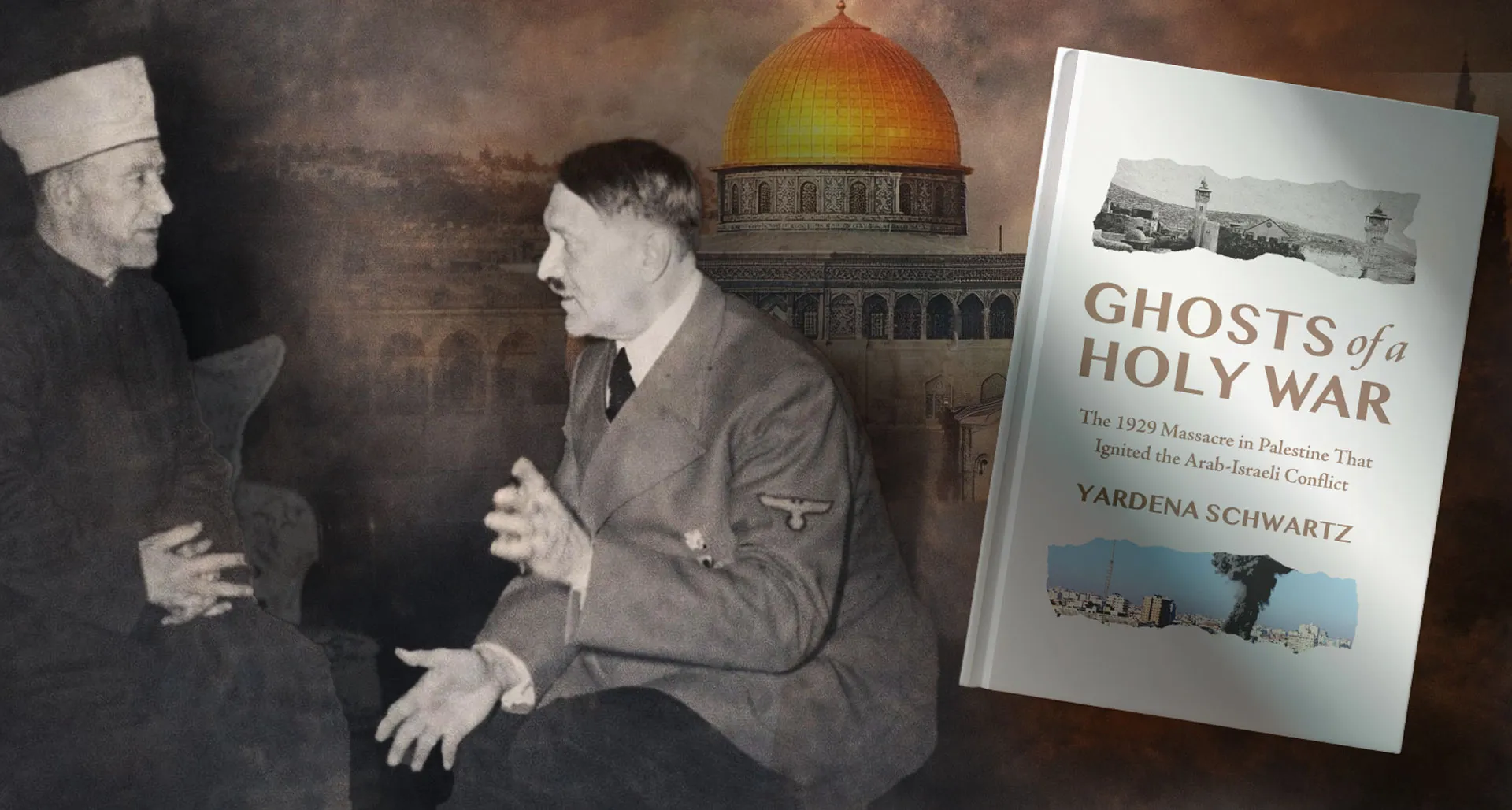
The journey began with an unexpected discovery: a box of letters found in a Memphis family’s attic, written by David Schoenberg, a young American Jew who traveled to study at the Hebron Yeshiva in 1928. His correspondence ended abruptly when he became one of 67 Jews killed in the Hebron massacre of 1929 – what Schwartz describes as “the deadliest pogrom ever perpetrated outside of Europe” at that time.
“This massacre was ground zero of the Arab-Israeli conflict as we know it,” Schwartz concluded after years of research, noting the absence of any English-language book focused on this pivotal event.
The violence, according to Schwartz’s findings, stemmed from a disinformation campaign initiated in 1928 by the Grand Mufti of Jerusalem, Haj Amin al-Husseini. He spread claims that Jews were plotting to take over Al-Aqsa Mosque to rebuild the Jewish Temple. In Hebron specifically, similar rumors circulated about Jewish designs on the Tomb of the Patriarchs, known to Muslims as the Ibrahimi Mosque.
“This lie that began a century ago has sustained itself and actually intensified,” Schwartz explains, pointing to more recent examples like the naming of the “Al-Aqsa Intifada” (Second Intifada) and Hamas’ “Al-Aqsa Flood” (their term for the October 7 attack). Even practical security measures like metal detectors at the holy site in 2015 triggered violent backlash because of this persistent narrative.
Perhaps most controversial in Schwartz’s research is her documentation of the Grand Mufti’s close alliance with Nazi Germany. “He wasn’t just a supporter of the Nazis. He himself was a Nazi,” she states, describing how he lived in Berlin from 1941 to 1945, directed the Arab Bureau of the Nazi Propaganda Ministry, and recruited thousands of Muslims into the Waffen-SS.
Despite being placed on a list of wanted Nazi war criminals after World War II, the Mufti’s role has been minimized in most historical accounts. “When we’re taught about the Holocaust, we really only hear about how the Holocaust played out in Europe,” Schwartz notes, arguing that this erases the significant Middle Eastern dimension of Nazi alliances.
Schwartz also highlights a connection often overlooked: Yasser Arafat, widely considered the first Palestinian leader, was actually the Grand Mufti’s cousin and “closest disciple.” She describes how they grew close in post-WWII Egypt, where Arafat became involved in weapons-smuggling while the aging Mufti gathered allies to wage jihad against Jews in Mandatory Palestine.
Following the 1929 massacre, Schwartz identifies a propaganda pattern that she says continues today: first deny atrocities occurred, then blame Jews for orchestrating them. She cites a statement from an Arab leader at the time claiming that Jews in Hebron “were slaughtered by Jewish Yeshiva students who wanted to raise funds from the Diaspora.”
In her contemporary reporting in Hebron and the West Bank, Schwartz encountered similar denial. Many locals either didn’t know about the 1929 massacre or claimed Jews initiated the violence. Some leaders she interviewed rejected Jewish historical connections to the land entirely, including claims that Abraham was Muslim, not Jewish.
Schwartz also observes a shift in Western media coverage over time. “In newspapers like the New York Times, the massacre was presented as a massacre by Arabs of unarmed Jews,” she says of 1929 reporting. “What was really shocking to me was to see how journalism has fallen. Now journalism is ‘he said, she said.'” She pinpoints the 1980s as when coverage began to change, coinciding with Israel no longer being viewed as the underdog.
As a working journalist, Schwartz reports increased difficulty placing stories critical of Palestinian leadership since October 7, 2023. “If it’s critical of Israel, they’ll run it. But if it’s critical of the Palestinians, it’s just not going to be touched,” she says.
Despite these challenges, Schwartz’s research also uncovered hopeful stories, including accounts of Arab families who risked their lives to save approximately 250 Jewish neighbors during the 1929 violence. She also includes Jewish wrongdoing in her account, such as Baruch Goldstein’s 1994 massacre at the same site.
Schwartz advocates for persistence in countering disinformation rather than surrendering to it. “We can’t afford to stop drawing attention to these cases of journalistic failure,” she says, expressing belief in a “silent majority that still believes in truth and is still able to see who’s right and who’s wrong.”
Despite the historical darkness she’s documented, Schwartz maintains cautious optimism: “I keep holding out hope that the world will turn back right side up.”
Fact Checker
Verify the accuracy of this article using The Disinformation Commission analysis and real-time sources.

34 Comments
The scale and brutality of the 1929 Hebron massacre is truly shocking. It’s disturbing to think how this pivotal event has been overshadowed and forgotten in the broader public consciousness.
Absolutely, the fact that this was the “deadliest pogrom ever perpetrated outside of Europe” at the time and yet remains relatively obscure is quite remarkable. Uncovering these suppressed histories is so important.
It’s tragic that this pivotal event in the Israeli-Palestinian conflict has been so underreported and forgotten. Uncovering the true story behind the Hebron massacre is vital for understanding the roots of the ongoing tensions in the region.
Yes, shining a light on these historical flashpoints is essential. Disinformation and media amnesia have allowed false narratives to take hold. Balanced, well-researched journalism can help counter that.
The discovery of those letters from David Schoenberg is an incredible find that personalizes this historical event. It’s a powerful reminder of the human toll of the violence fueled by disinformation campaigns. This is an important story that deserves wider attention.
This article highlights how disinformation campaigns targeting holy sites have repeatedly triggered violence in the region. It’s a sobering reminder of the power of misinformation to inflame long-standing tensions.
Absolutely, the exploitation of religious sensitivities through the spread of false claims is a deeply troubling tactic. Understanding this history is crucial for preventing such tragedies in the future.
It’s remarkable how little attention the Hebron massacre has received, given its pivotal place in the origins of the conflict. Kudos to Yardena Schwartz for shining a light on this important but overlooked history.
Agreed, uncovering these buried narratives is so important. The lack of an English-language book on this seminal event is really quite surprising. Schwartz’s research is a valuable contribution.
This article highlights the dangerous power of disinformation, especially when it comes to inflaming tensions around holy sites. It’s a sobering reminder of how the spread of false claims can have devastating real-world consequences.
You’re right, the Grand Mufti’s campaign of misinformation about Jewish plans for the Al-Aqsa Mosque is a clear example of how disinformation can be weaponized to tragic effect. Understanding this history is crucial for preventing such tragedies in the future.
As someone interested in the history of this region, I appreciate the in-depth research Yardena Schwartz has done to shed light on this forgotten massacre. It’s an important contribution to our understanding of the Israeli-Palestinian conflict.
Absolutely. Uncovering these less-known historical events and narratives is crucial for having a more complete picture of the conflict’s origins and evolution over time.
The Hebron massacre seems to be a crucial but overlooked event in the history of the Israeli-Palestinian conflict. Examining how disinformation and religious tensions contributed to this tragedy provides crucial context. Kudos to Yardena Schwartz for her in-depth reporting.
Fascinating look at how disinformation and historical amnesia have fueled conflict in the region for decades. Examining these pivotal events is crucial for understanding the complex dynamics at play.
Absolutely, the 1929 Hebron massacre seems to be a seminal but often overlooked moment in the history of the Israeli-Palestinian conflict. Uncovering these buried narratives is important.
This is a fascinating look into how disinformation has fueled conflict in the Israeli-Palestinian region for decades. The 1929 Hebron massacre seems like a pivotal but often overlooked event in this long-running dispute.
The role of the Grand Mufti in spreading disinformation about Jewish plans for the Al-Aqsa Mosque is alarming. Manipulation of religious narratives is a dangerous tactic that has had long-lasting impacts. Balanced, fact-based reporting on these complex issues is so important.
Agreed. Journalists like Yardena Schwartz who delve into the nuances of this history can provide crucial context that is often missing from mainstream coverage of the conflict.
This article highlights how vital it is to have journalists who are willing to dig into the complex roots of conflicts like the Israeli-Palestinian one. Uncovering the truth behind events like the Hebron massacre, even decades later, is crucial for understanding the present-day dynamics.
I’m glad this research is bringing more attention to the 1929 Hebron massacre, which seems to have been a major turning point that set the stage for the later Israeli-Palestinian conflict. Learning from these past events is so important.
Agreed. Uncovering this history and understanding how disinformation campaigns fueled the violence is a vital part of trying to work towards a more peaceful resolution in the region.
The connection between the 1929 Hebron massacre and the origins of the broader Israeli-Palestinian conflict is fascinating. This article provides important historical context often missing from contemporary narratives.
Yes, tracing these earlier events and their lasting impact is vital for grappling with the complexities of the conflict. Schwartz’s research fills an important gap in the historical record.
The role of the Grand Mufti in spreading false claims about Jewish plans for the Al-Aqsa Mosque is really concerning. It’s a stark example of how disinformation can tragically escalate tensions and violence.
You’re right, the use of disinformation to inflame religious tensions is a deeply troubling tactic that has had devastating consequences. Understanding this history is crucial for avoiding such pitfalls in the future.
The role of the Grand Mufti in spreading disinformation about Jewish plans for the Al-Aqsa Mosque is a troubling example of how religious narratives can be weaponized for political ends. Careful, nuanced reporting on these issues is essential to counter misinformation.
This is a powerful reminder of how disinformation and media amnesia can obscure the true history of conflicts. The Hebron massacre seems to be a pivotal but overlooked event that deserves greater attention. Kudos to Yardena Schwartz for her important work.
This article highlights how the media has often overlooked or downplayed the significance of the Hebron massacre. It’s concerning to see how disinformation and ‘media amnesia’ can distort the public’s understanding of such pivotal events.
Disinformation about holy sites sparking violence is a disturbing pattern that has repeated throughout history. The 1929 Hebron massacre is a powerful example of how these manipulative tactics can have devastating real-world consequences. Shedding light on these dynamics is vital.
The role of the Grand Mufti in spreading false claims about Jewish plans for the Al-Aqsa Mosque is really concerning. It’s a clear example of how religious and nationalist narratives can be weaponized to incite violence.
Absolutely. Disinformation about holy sites has been a recurring trigger for violence in this conflict. It’s crucial to understand these historical roots in order to try to prevent such tragedies from happening again.
The findings about the letters from the American Jew killed in the 1929 massacre are really poignant. It’s a sobering reminder of the human toll of this conflict and the need to keep studying its complex history.
This is a fascinating historical account of how disinformation can fuel violence. The 1929 Hebron massacre was a pivotal event that set the stage for the Israeli-Palestinian conflict. It’s sobering to see how false claims about religious sites can have such devastating consequences.