


Listen to the article
Iran’s Protests Face Information Blackout as Regime Restricts Internet Access
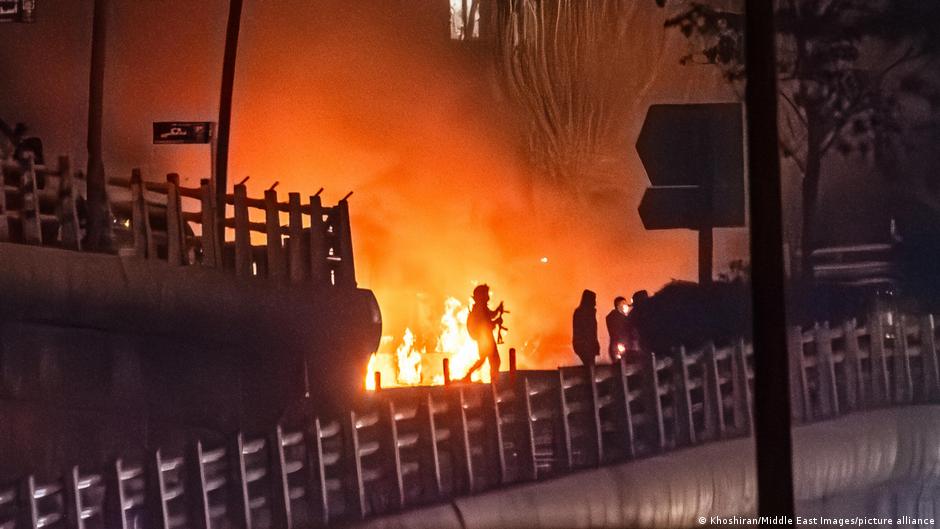
Iran has been gripped by widespread anti-regime protests for more than two weeks, with demonstrations erupting across multiple cities and towns. However, a deliberate information blackout imposed by authorities has created significant challenges in verifying protest-related content, leaving much of the footage circulating online unverifiable.
The Iranian government has implemented an almost total shutdown of internet and phone services, with international calls only intermittently possible after days of disruption. This strategy has severely limited access to reliable information from inside the country, creating what experts describe as an “information vacuum.”
“It’s a complete shutdown,” says Farhad Souzanchi, editor-in-chief of Factnameh, a Canada-based fact-checking platform that verifies Iran-related claims. “It’s very hard to verify certain videos that make their way outside. Because you need to cross-match and cross-reference them.”
Foreign media outlets can barely report from within Iran, and citizens who document protests face serious risks to their safety. According to the US-based Human Rights Activists News Agency, at least 2,400 people have been killed in security crackdowns during the latest wave of protests, with some rights groups suggesting even higher casualties.
Sara Bazoobandi, a senior researcher at the Institute for Security Policy at Kiel University in Germany, explains that internet shutdowns are a deliberate tactic by the regime. “It’s meant to create doubt when people cannot share information,” Bazoobandi told DW. “And for us to be confused with who is telling the truth.”
AI-Generated Content Fills the Void
The scarcity of verified information has created fertile ground for misinformation. DW Fact Check has identified several examples of misleading or fabricated content circulating online, including AI-generated videos purporting to show massive protests.
One particularly viral AI-generated video showed large crowds marching at night with phone flashlights, allegedly during current protests in Iran. The video, which garnered more than 750,000 views, claimed: “The government shut down street lights to hide the massive scale of protesters but everyone used their phone lights to show they are out there.”
Visual indicators consistent with AI-generated imagery were evident, including bird’s-eye views, lack of visible faces, and unnaturally patterned flashlights. The Instagram user who created the video later admitted she made it using AI tools because she was “inspired” by the protests. Despite this admission, many who reshared the video failed to label it as AI-generated, contributing to its spread as supposed documentary evidence.
Recycled Footage Presented as Current Events
In another instance, a video circulated showing a man tearing down a flag from a building, with captions claiming it showed protesters taking control of an Islamic Revolutionary Guard Corps (IRGC) headquarters in Iran. DW’s investigation revealed the footage actually originated from protests in Nepal in September 2025, illustrating how old material is frequently repurposed when new, authentic footage is scarce.
“This scarcity of authentic material often leads to old footage being presented as new — a common pattern during crises,” DW Fact Check noted.
Verification Imbalances
While anti-regime protest visuals remain difficult to authenticate, pro-regime rallies receive extensive coverage through state media and international photo agencies. Many such rallies occur openly, sometimes with visible security presence, making verification simpler.
However, these pro-regime demonstrations don’t reveal their organizational nature. “These are government-arranged gatherings and government-sanctioned gatherings with full protection, with people being provided with placards and everything. There are even means of transportation for them,” claims Souzanchi, describing them as “highly propagandized.”
Pro-regime supporters have also deployed AI-generated content, with DW identifying a synthetic video showing a massive crowd holding a large Iranian flag, circulated in multiple languages including Hindi and Arabic as evidence of popular support for the government. Analysis revealed telltale signs of AI generation, including indistinct faces and a person appearing to emerge from the flag itself.
Regime’s Information Control Strategy
Iran has faced similar protest movements before, and experts say the government has developed sophisticated methods for information control and manipulation. However, some observers noted an unusual hesitation in the regime’s initial response to the current protests.
“There was a certain confusion and a lack of strategy among the authorities at first,” Souzanchi observed. Bazoobandi concurred, adding that some of the regime’s methods in this episode “were very flawed and, in my opinion, were selected hurriedly.”
As protests continue, the information vacuum remains a significant challenge for understanding the true scope and nature of events inside Iran, leaving both international observers and Iranians themselves struggling to discern truth from manipulation in a highly controlled media environment.
Fact Checker
Verify the accuracy of this article using The Disinformation Commission analysis and real-time sources.

8 Comments
Concerning to see the Iranian regime clamping down on internet access and information flow during these protests. It’s crucial that we get accurate, verified information out of the country to understand the reality of the situation on the ground.
It’s alarming to see the Iranian authorities resorting to such extreme measures to restrict internet access and media coverage of the protests. Maintaining transparency and verifying claims is essential in this complex situation.
The Iranian government’s tactics to restrict communication and control the narrative are deeply troubling. Reliable, real-time information is essential for the world to understand and respond appropriately to the protests.
You’re right, the information blackout makes it very difficult to get a clear picture of what’s happening. Cross-checking and verifying claims is critical to avoid spreading misinformation.
The Iranian regime’s efforts to control the narrative and limit information flow during these protests are deeply troubling. Ensuring accurate, real-time data is critical for the international community to properly assess and respond to the situation.
The Iranian government’s internet and communication shutdowns are a blatant effort to stifle the flow of information and restrict the world’s understanding of the protests. Protecting the free exchange of verified facts is crucial.
I agree, the information vacuum created by these tactics is extremely problematic. It’s vital that reliable, on-the-ground reporting and documentation reaches the outside world.
This crackdown on internet access and media reporting is a concerning attempt by the Iranian regime to maintain control and limit transparency around the protests. Preserving open communication channels is vital.