


Listen to the article
A week into the U.S.-Israel military campaign against Iran, the public remains largely in the dark about what’s actually occurring on the ground, despite an abundance of media coverage. This paradox reflects a fundamental shift in how modern conflicts are reported and understood.
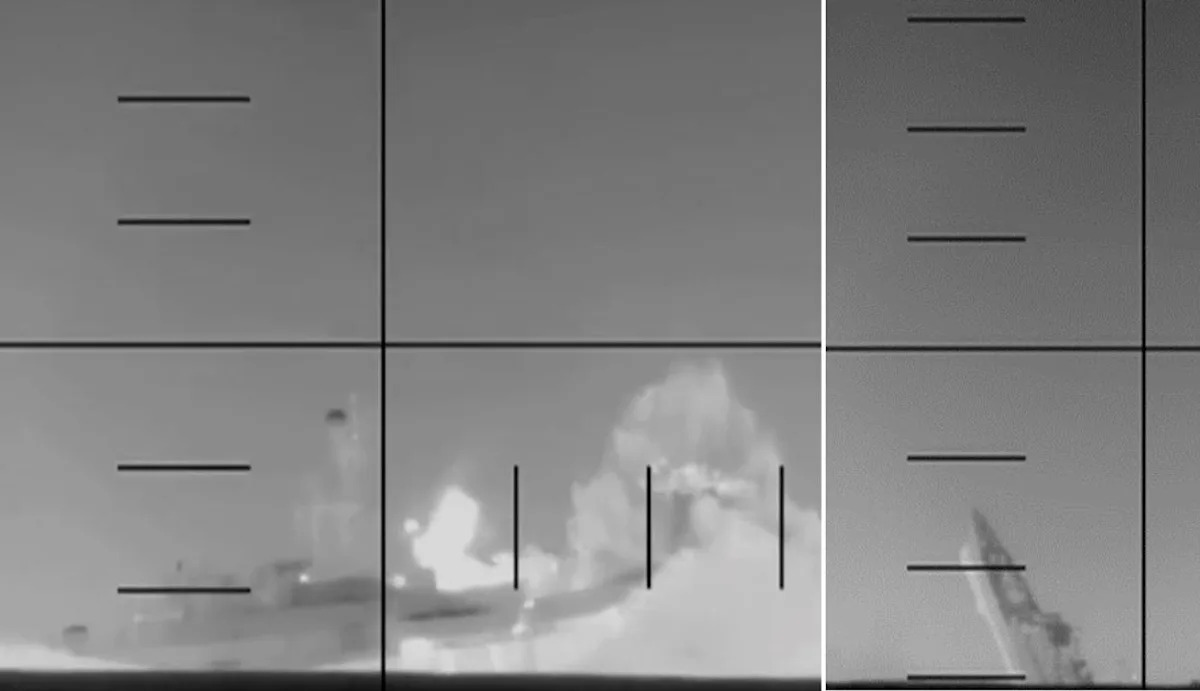
The Pentagon has released dramatic footage showing ships sinking and precision strikes hitting targets, while Israeli military officials provide detailed operational briefings highlighting their successes. Yet these carefully curated visuals tell only the story their creators wish to convey.
What makes this conflict particularly opaque is the near-complete absence of independent Western journalists operating inside Iran. Unlike traditional ground wars with accessible front lines, this campaign involves submarines launching torpedoes, carrier aircraft striking targets hundreds of miles away, and drones operating in restricted airspace—creating a battlefield that no reporter can meaningfully access.
This information vacuum leaves the public almost entirely dependent on official Pentagon and Israeli military sources, both of which have strong institutional incentives to present a narrative of successful operations. While the footage they release may be authentic, it’s important to recognize these images are specifically selected and distributed by the same entities conducting the strikes.
The blurring of reality reached a concerning new level this week when the White House released a video that mixed actual Iran strike footage with scenes from the video game “Call of Duty.” This wasn’t merely a tasteless marketing decision—it represented a candid demonstration of how military operations are increasingly presented as spectacle rather than documentation.
This convergence between military imagery and entertainment is not accidental. For decades, Pentagon weapons interfaces, drone operation consoles, and targeting systems have been designed with interfaces resembling video games. The administration’s approach acknowledges that for many modern viewers, the visual language of warfare and gaming have already merged—a far more unsettling reality than CNN’s coverage of the incident as merely bizarre.
Social media exacerbates these challenges by distributing wartime imagery faster than it can be verified. Platform algorithms prioritize engagement over accuracy, while advanced AI-generated video now creates synthetic battlefield footage indistinguishable from authentic content to average viewers. This environment enables state-sponsored disinformation from multiple actors to fill any gaps left by independent reporting.
The collapse of trusted media institutions compounds the problem. In today’s fractured information landscape, outlets are assumed to have political agendas, making it easy to dismiss inconvenient reporting as biased rather than engage with it as evidence.
This stands in stark contrast to the Ukraine war just four years ago, which many observers considered the most thoroughly documented conflict in modern history. There, journalists operated across accessible territory while soldiers and civilians captured events in real time on their phones. But Ukraine was an anomaly—a ground war with fixed front lines across territory reporters could physically reach, involving a combatant motivated to share information with Western audiences.
The stakes in the current conflict are extraordinarily high. Iran commands an extensive regional proxy network, possesses a significant missile arsenal, and maintains a nuclear program that has shaped international diplomacy for decades. The conflict has no clearly articulated end state or exit conditions, with realistic escalation paths that could draw American ground troops into a wider regional war.
Meanwhile, the media conversation has largely focused elsewhere. Recent debates about Pentagon official Pete Hegseth’s attacks on casualty coverage consumed attention while the deeper structural challenges of accurately reporting on this conflict went largely unexamined. Defending the press’s right to cover the war is important but fundamentally different from acknowledging the limitations of what journalists can actually verify.
This may be a preview of future conflicts between technologically advanced states—fought at distances keeping journalists far from the action through submarines, long-range missiles, cyber operations, and autonomous drones. The public’s disorientation about the Iran conflict isn’t confusion—it’s a rational response to genuinely degraded information conditions as we navigate a consequential regional confrontation with increasingly unreliable tools for understanding it.
Fact Checker
Verify the accuracy of this article using The Disinformation Commission analysis and real-time sources.

9 Comments
The use of AI-generated fakes and disinformation is a concerning development that erodes public trust. Maintaining integrity in journalism is essential, even (or especially) during times of conflict.
Interesting to see how the Pentagon and Israeli military are leveraging technology and media to shape the narrative around this conflict with Iran. It highlights the challenge of getting unbiased, on-the-ground reporting in modern warfare.
While the military’s technological capabilities are impressive, the lack of independent reporting is troubling. We need to find ways to ensure transparency and accountability, even in the face of sophisticated propaganda.
The military’s use of carefully curated visuals and messaging is a reminder that we need to be skeptical consumers of information, especially during times of conflict. Verifying sources and facts is so important.
While the military’s technological edge provides advantages, it also creates new challenges in terms of transparency and public understanding. Navigating this information landscape requires nuance and critical thinking.
Well said. We can’t let advanced tech and slick propaganda distract us from the realities on the ground. Maintaining a healthy skepticism is crucial.
This is a concerning trend of increased use of disinformation and AI-generated fakes to obscure facts and confuse the public. It’s critical that we have independent, fact-based journalism to cut through the fog of war.
I agree, the lack of access for independent journalists is really troubling. It leaves us dependent on official sources that may have their own agendas.
This situation highlights the need for balanced, multi-sourced reporting to cut through the fog of war. Relying solely on official military narratives leaves the public at risk of being misled.