


Listen to the article
Investigative Journalist Tackles Health Misinformation Through Nonprofit Organization
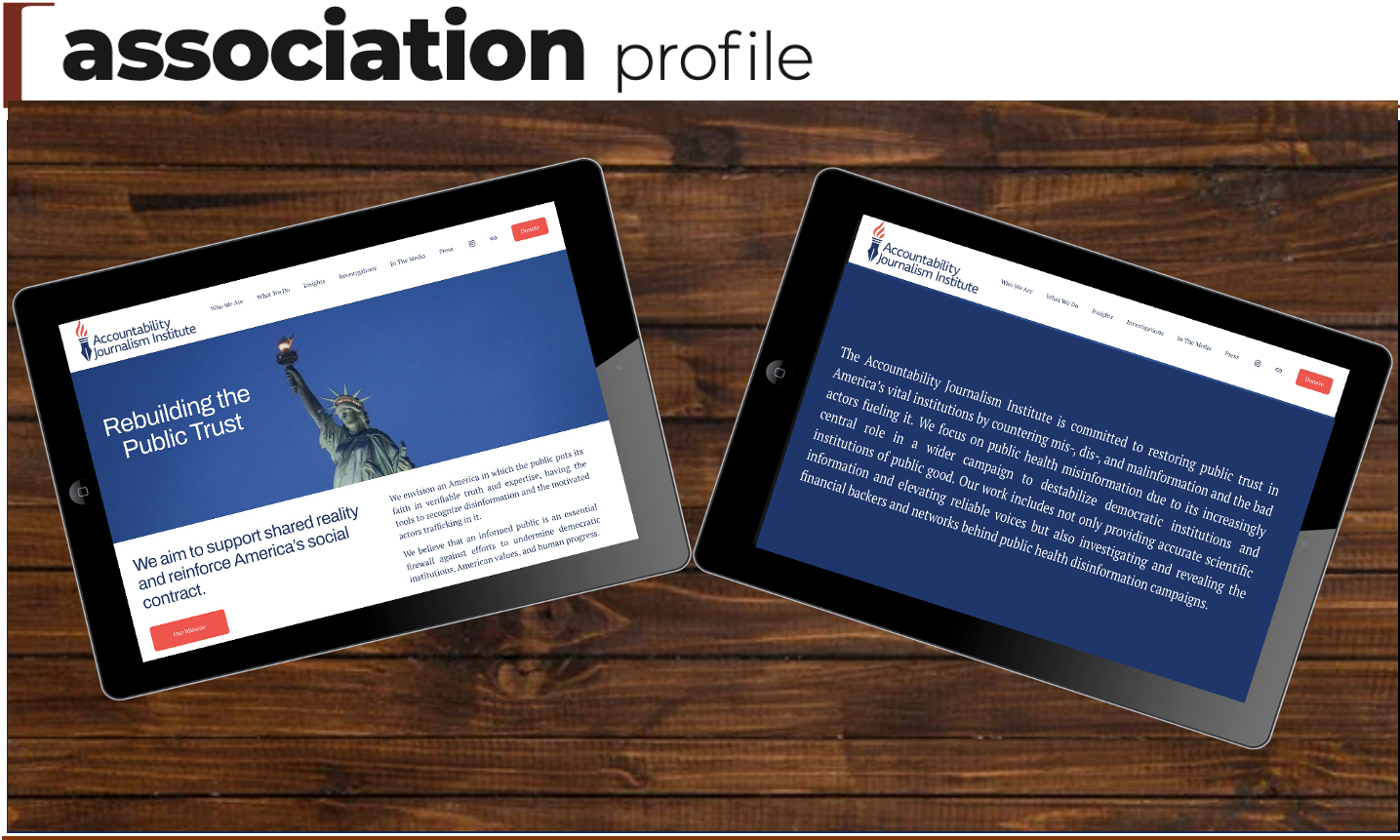
Walker Bragman isn’t satisfied with merely debunking misinformation. The bespectacled New Yorker with a welcoming smile is on a mission to expose the origins of politically motivated truth-tampering through his newly established nonprofit, the Accountability Journalism Institute (AJI).
“The point of journalism is the pursuit of justice,” Bragman told Editor & Publisher in a recent interview. His focus isn’t on defending journalism as an institution but rather uncovering the bad actors who spread misinformation, particularly in the realm of public health and science.
Bragman believes the COVID-19 pandemic and its mishandling represent the defining news story of this generation. He points to how distrust in science and journalism contributed significantly to the million U.S. deaths from the virus, fueled by political operatives who undermined scientifically-based public health recommendations.
“When the pandemic hit, I sort of walked in on the public health beat, and I’ve been there ever since,” said Bragman, who previously covered federal policy, foreign policy, and political races before finding his investigative niche.
The Accountability Journalism Institute primarily operates as a website dedicated to tracing the origins of health misinformation. Bragman has assembled a science advisory board of doctors and scientists from various fields, while the organization’s board of directors consists of medical professionals and science journalists.
Currently, most of AJI’s investigative work is conducted by Bragman himself, with support from deputy director Olivia Riggio. The organization relies on small donations and reader contributions to fund its operations.
Despite its modest size, AJI’s impact has been substantial. One of its featured investigations revealed how major corporations funneled millions through charitable foundations to groups promoting vaccine misinformation. The report specifically highlighted how Fidelity Charitable gave $1 million to a nonprofit founded by Robert Kennedy Jr., the current U.S. Secretary of Health and Human Services, who has promoted debunked theories linking vaccines to autism.
Another significant investigation by Bragman exposed the Brownstone Institute as a “central hub of COVID-related misinformation and conspiracy thinking,” revealing that 85% of the institute’s $1 million fundraising came from just nine wealthy donors.
In perhaps their most high-profile story, Bragman and Riggio broke the news that actor Liam Neeson had provided voice-over narration for a conspiracy film questioning vaccine safety. The story was subsequently picked up by major outlets including Rolling Stone and Variety, prompting Neeson to publicly deny holding anti-vaccine views.
Riggio, who joined AJI after working with Bragman on a previous journalism app project called OptOut, articulates the urgency of their mission: “It is no secret that our democracy is under attack right now. One of the first steps of taking power away from the people is making people doubt objective reality. A great way to do that is to attack science, because science is our best way of understanding objective reality.”
Before transitioning to her administrative role, Riggio worked as a newspaper reporter and brings that journalistic perspective to AJI. “It’s not our job to serve advertisers; it’s not our job to serve the administration in power. It’s our job to serve the public,” she emphasized.
Like many independent news organizations, securing sustainable funding remains a significant challenge for AJI. Current revenue comes primarily from newsletter subscribers and small grants, with ongoing efforts to secure additional foundation support.
Looking ahead, Bragman’s goals remain focused on continuing to produce accountability journalism while expanding the organization’s internship program to help young journalists gain experience and exposure.
Addressing media leaders, Bragman didn’t mince words about his vision for journalism’s role: “There’s a lot of gatekeeping in the media industry, people who feel that their job is to preserve the status quo. We are a small, scrappy organization, and we believe that injustice anywhere is injustice everywhere, and our job is to expose it and hold the people accountable to the public.”
Fact Checker
Verify the accuracy of this article using The Disinformation Commission analysis and real-time sources.

9 Comments
The COVID-19 pandemic has really highlighted how damaging politically-motivated disinformation can be, with real-world impacts on public health. I’m glad to see organizations like AJI working to expose the origins of these truth-tampering efforts.
I agree, the pandemic has been a stark reminder of the urgent need for objective, science-based reporting to counter the tide of misinformation. AJI’s mission to uncover the bad actors behind these campaigns is crucial.
Interesting to see how AJI is tackling the complex problem of disinformation, especially around public health and science. It’s crucial that we have reliable, fact-based journalism to counter the spread of misinformation.
Investigative journalism tackling misinformation is vital, especially on high-stakes issues like public health. Looking forward to seeing how AJI’s approach evolves and what impacts they’re able to have.
Kudos to Walker Bragman and the team at AJI for taking on this important work. Journalism should indeed be in the pursuit of justice, not just defending the institution itself. Looking forward to seeing their investigations unfold.
Appreciate the article highlighting AJI’s mission to uncover the bad actors behind politically-driven disinformation campaigns. Holding these groups accountable is crucial for maintaining trust in our institutions and democratic processes.
The article raises some important points about how distrust in science and journalism contributed to the tragic COVID-19 death toll. Excited to see AJI’s efforts to expose the origins of this politically-driven misinformation.
Yes, the politicization of public health guidance during the pandemic was incredibly damaging. I hope AJI’s work can help restore faith in science-based decision making on critical issues.
As someone who closely follows news and commentary on mining, commodities, and energy, I’m curious to see if AJI takes on disinformation campaigns in these sectors as well. Transparency and accuracy are so important in these industries.