


Listen to the article
Indonesia Confirms Anti-Disinformation Law Still in Early Discussion Phase
Indonesian government officials have clarified that the controversial Draft Law on Countering Disinformation and Foreign Propaganda remains in preliminary discussions and has not yet been formally drafted into legislation.
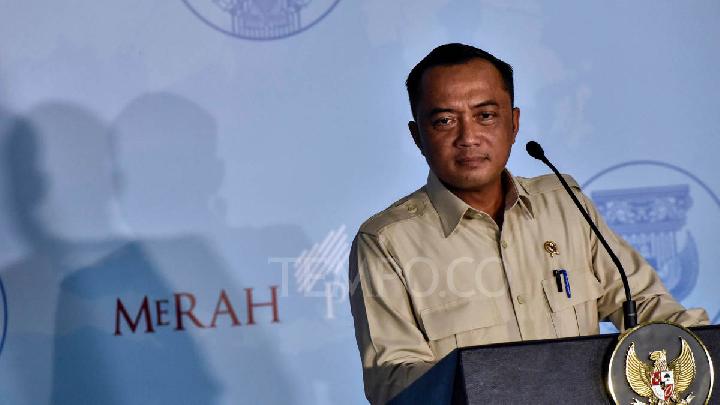
State Secretary Minister Prasetyo Hadi emphasized the preliminary nature of the initiative during a press briefing at the Presidential Palace in Jakarta on Thursday. “The drafting hasn’t started yet. It’s still a discourse,” said Prasetyo, who is also a Gerindra Party politician.
According to Prasetyo, the discussions stem from growing concerns about information accountability in the digital age. “The government is considering the impact of various information and communication platforms, especially if there are irresponsible parties. That’s the spirit behind this,” he explained.
The minister specifically highlighted the rapid advancement of artificial intelligence technologies as a driving factor behind the potential regulations. “We don’t want AI or technology to be used irresponsibly or for harmful purposes,” he stated, adding that technological progress should ultimately benefit society rather than cause harm. “We must be tech-savvy and strive to keep pace with innovation.”
Prasetyo was quick to dismiss suggestions that the proposed legislation aims to limit transparency, saying, “It’s not that we don’t want transparency.” Rather, he characterized the initiative as an attempt to foster responsible information sharing while maintaining an open information environment.
However, these assurances contrast somewhat with statements from Yusril Ihza Mahendra, the Coordinating Minister for Legal Affairs, Human Rights, Immigration, and Corrections. Mahendra confirmed to Tempo on Tuesday that the government is indeed preparing a draft bill. “There will indeed be a draft,” he stated via instant message, though he declined to provide specific details about the legislation’s contents.
Reports indicate that the Ministry of Law has already prepared an academic manuscript related to the draft, which has been circulating on social media platforms. This suggests the process may be further along than Prasetyo’s comments indicate.
The proposal has already generated significant pushback from civil liberties organizations. The Indonesian Legal Aid Foundation (YLBHI) has raised serious constitutional concerns about the potential law. The organization argues that the bill could infringe upon freedom of expression guarantees enshrined in Articles 28E and 28F of Indonesia’s 1945 Constitution.
Article 28F explicitly protects every citizen’s right to seek, receive, and share information for personal and social development purposes. Similarly, Article 28E safeguards individual freedoms, including the right to express thoughts and opinions without government interference.
In a statement released Thursday, YLBHI warned that the proposed legislation could be weaponized against government critics and used to control information flow within the country. The organization also expressed concern that the law might be employed to restrict funding and support for civil society organizations.
“YLBHI views this plan as targeting active citizens and civil society institutions,” the group cautioned in its statement.
The debate over this potential legislation comes at a time when many countries worldwide are grappling with how to address disinformation in the digital era without compromising fundamental freedoms. Indonesia’s approach to this challenge will likely be closely watched by regional neighbors and international observers concerned with digital rights and press freedoms in Southeast Asia.
As discussions continue, the government faces the difficult task of balancing legitimate concerns about harmful disinformation with the constitutional rights of Indonesian citizens to free expression and access to information.
Fact Checker
Verify the accuracy of this article using The Disinformation Commission analysis and real-time sources.

7 Comments
This is a timely issue as AI and digital platforms continue to evolve rapidly. I’m glad to see Indonesia taking the time to consider the implications and potential policy responses.
Given the complexities around disinformation, I’m not surprised this bill is still under discussion. Responsible development of new technologies should absolutely be a priority.
Indonesia seems to be taking a thoughtful approach here. Tackling disinformation without stifling legitimate discourse is a delicate challenge, but an important one.
Absolutely. Any new regulations will need to be carefully crafted to achieve their intended goals without unintended consequences.
Interesting to see Indonesia grappling with the challenges of disinformation and managing new technologies like AI. Seems like they’re taking a cautious, deliberative approach to drafting any new regulations.
The potential for misuse of AI and digital platforms is certainly a valid concern. I’m curious to see what specific policies Indonesia ends up proposing to address this issue.
Agreed. Striking the right balance between regulating harmful content and preserving free speech will be crucial.