


Listen to the article
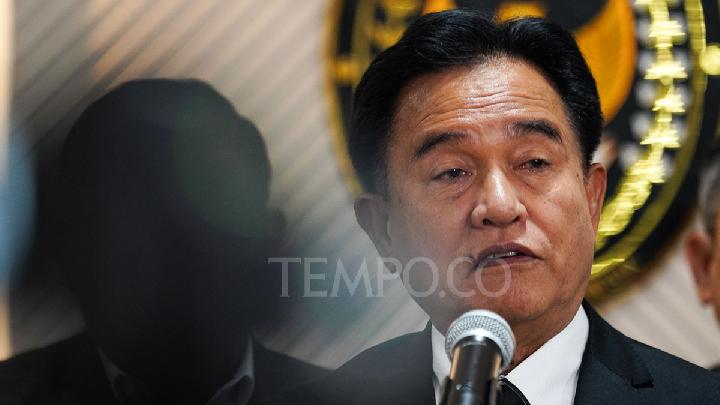
The Indonesian government is developing new legislation aimed at countering foreign disinformation and propaganda, according to Coordinating Minister for Law, Human Rights, Immigration, and Correction Affairs Yusril Ihza Mahendra. The minister confirmed the initiative in a text message to Tempo on Tuesday, but provided few specifics about the proposed regulations.
“Indeed, there will be [such a bill],” Mahendra stated when questioned about the draft law. He indicated that the Ministry of Law is currently preparing the legislation, though he has not yet reviewed the draft personally. “I haven’t read it myself, so I can’t answer questions yet,” the minister added.
The Draft Law on Combating Foreign Disinformation and Propaganda is reportedly being handled by Minister of Law Supratman Andi Agtas, who could not be reached for comment despite multiple attempts by Tempo to contact him on Tuesday evening.
The emergence of this legislation has raised questions among digital rights advocates regarding its timing and necessity. Wahyudi Djafar, Co-Founder of Raksha Initiatives, expressed concern about the sudden appearance of the academic draft for the policy, noting that it was not included in the standard legislative planning process.
“It should have appeared during the drafting process of the National Legislation Program (Prolegnas),” Djafar said. He pointed out that the deadline for drafting the 2025-2029 National Legislation Program was September 2025, yet there was no mention of this bill at that time.
Furthermore, Djafar highlighted that the proposed legislation does not appear in the 2026 Priority Prolegnas, which currently includes other digital governance initiatives such as the Cyber Security and Resilience Bill, an amendment to the Personal Data Protection Law, and the Indonesian Single Data Bill.
The timing raises questions about the government’s priorities and the regulatory framework for digital content in Indonesia. Djafar noted that content governance issues, including disinformation, are already addressed in the recently revised Information and Electronic Transactions (ITE) Law. This existing legislation mandates updates to Government Regulation No. 71 of 2019 concerning the Operation of Electronic Systems and Transactions to refine provisions on content and digital platform accountability.
“The revision of Government Regulation 71/2019 is still being processed by the Ministry of Communication and Digital,” Djafar explained. “But instead, a draft of the academic paper for the Draft Law on Combating Foreign Disinformation and Propaganda suddenly emerged. So, where does the urgency for this academic draft actually come from?”
This development comes at a time when many countries worldwide are grappling with how to address cross-border information threats without compromising free speech. Southeast Asian nations in particular have been increasingly concerned about foreign influence operations targeting their domestic affairs.
Indonesia, as the region’s largest economy and most populous democracy, has significant stakes in maintaining information integrity while preserving its democratic principles. The country has previously implemented various digital regulations, sometimes drawing criticism from press freedom and human rights organizations concerned about potential overreach.
The proposed legislation would add another layer to Indonesia’s evolving digital governance framework, which has expanded in recent years through various regulatory instruments. How the draft law will define “foreign disinformation and propaganda” and what enforcement mechanisms it might establish remain key questions as the bill continues through the development process.
The Ministry of Law has not yet announced a timeline for when the draft will be formally introduced to parliament or opened for public consultation.
Fact Checker
Verify the accuracy of this article using The Disinformation Commission analysis and real-time sources.

7 Comments
Addressing foreign disinformation is a growing priority globally. Indonesia’s proposed law is an interesting development, but the details will be crucial to assess its potential impacts – both beneficial and problematic – on the country’s digital ecosystem.
Interesting development in Indonesia’s efforts to counter foreign disinformation. While safeguarding national security is important, digital rights advocates raise valid concerns about the necessity and scope of this proposed legislation. Transparency and public input will be crucial to ensure a balanced approach.
Combating foreign disinformation is a complex challenge many countries face. Indonesia’s proposed legislation aims to address this, but the details will be important to evaluate its potential impact on free expression and access to information.
Agreed. The lack of specifics so far raises questions that will need to be addressed as the draft legislation takes shape.
As a resource-rich country, Indonesia has a vested interest in protecting its domestic information landscape. This new legislation could be an important step, but the digital rights community’s concerns about its scope and implementation deserve close attention.
Indonesia’s move to combat foreign disinformation is understandable, but the proposed law will require careful consideration to ensure it doesn’t infringe on legitimate digital rights. Transparency and public input should be prioritized in the legislative process.
Indonesia’s move to counter foreign disinformation is understandable, but the draft law will need to strike a careful balance between national security and digital rights. Transparent public consultation should be a priority as this legislation takes shape.