


Listen to the article
The specter of Russian interference has emerged once again in European politics, this time targeting Hungary’s upcoming election. Political observers are drawing stark parallels between current allegations against Prime Minister Viktor Orbán and the controversial “Russia collusion” narrative that dogged former U.S. President Donald Trump during his first term.
The controversy began when journalist Szabolcs Panyi published claims that Russian intelligence agents had entered Hungary to influence public opinion in favor of Orbán’s Fidesz party. Critics have noted that Panyi has connections to organizations funded by George Soros and previously worked for publications with USAID financing. Despite presenting no substantial evidence, opposition parties quickly adopted these allegations as a centerpiece of their campaign strategy.
The narrative gained international traction when the Washington Post published an article citing an unnamed European Union country’s intelligence agency. The report claimed Russian operatives were planning to stage a fake assassination attempt on Orbán—again without providing concrete evidence. The Post also alleged that Hungarian Foreign Minister Péter Szijjártó had been leaking EU Council decisions to Moscow, despite such decisions being publicly available information.
Catherine Belton, the British journalist who authored the Washington Post piece, has an extensive background covering Russia as the Moscow correspondent for the Financial Times. Notably, Belton was in Hungary recently to promote the Hungarian translation of her book “Putin’s People: How the KGB Took Back Russia and Then Took on the West,” raising questions about potential bias.
The situation took a dramatic turn when a leaked audio recording emerged in which Panyi allegedly admits to collaborating with European intelligence services. In the recording, he reportedly acknowledges spying on the Hungarian Foreign Minister in exchange for intelligence and claims to have close ties with the opposition Tisza Party, suggesting he would wield influence in a potential Tisza government.
Supporters of Orbán view these developments as part of a coordinated disinformation campaign designed not only to boost opposition chances but also to delegitimize potential Fidesz victory. They argue this narrative serves to distract from what they consider genuine election interference involving Ukraine and the European Commission.
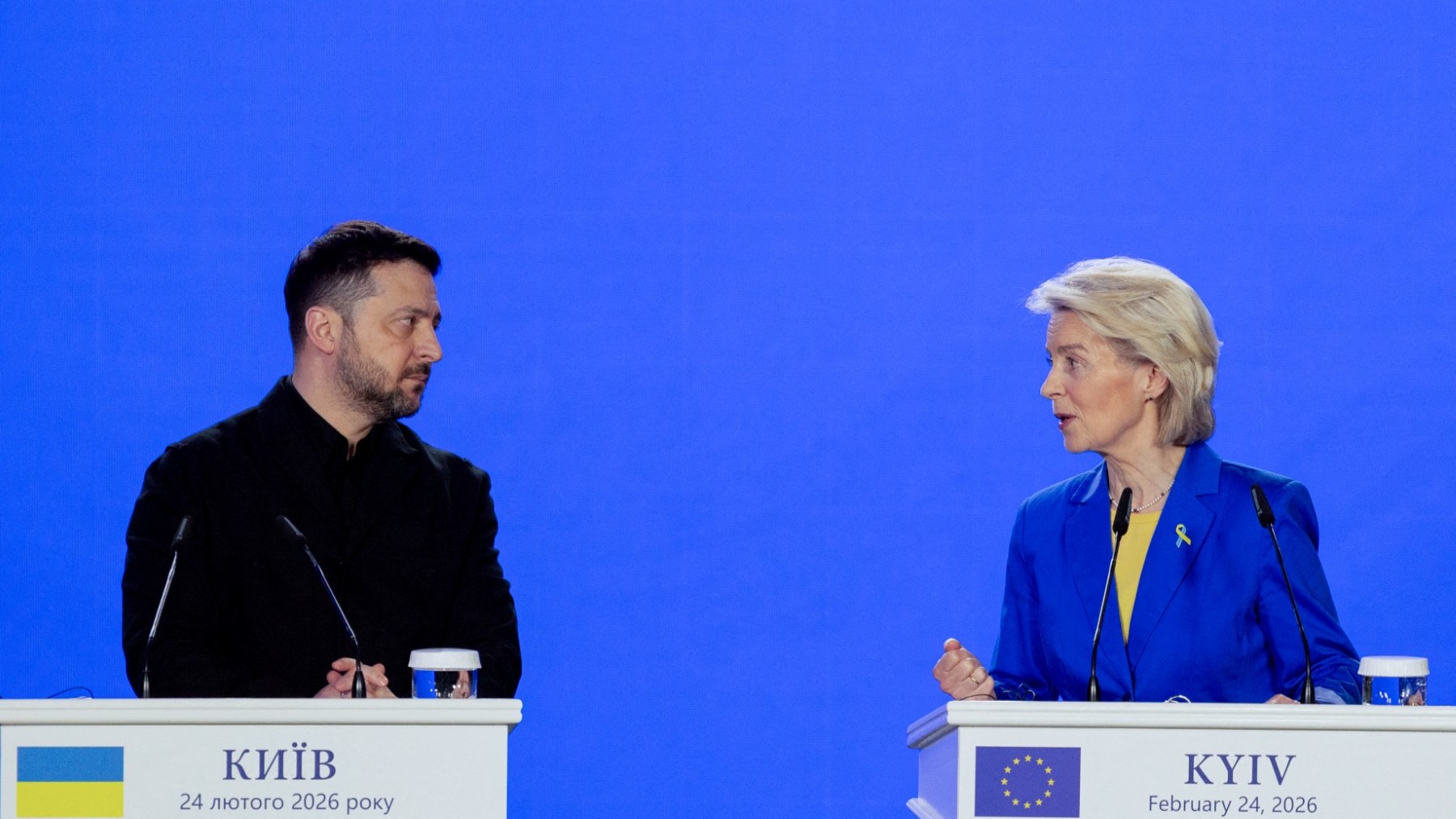
Ukrainian President Volodymyr Zelensky has acknowledged blocking Hungary’s oil imports through the Druzhba pipeline, a move critics characterize as politically motivated to drive up fuel prices ahead of the election and turn voters against Orbán’s government. According to Politico, Zelensky’s office maintains regular contact with the Hungarian opposition’s campaign team, suggesting coordination between Kyiv and the Tisza Party.
Meanwhile, reports indicate the European Commission has invoked the Digital Services Act to pressure social media platforms like Meta to restrict the visibility of content from Prime Minister Orbán while promoting posts from Tisza Party leader Péter Magyar. A recent report from the U.S. Republican Judiciary Committee claims the Commission has interfered in at least seven European elections since 2023 to benefit its political allies.
The underlying tensions stem from Hungary’s resistance to European involvement in the Ukraine conflict. The Orbán government has consistently opposed sending Hungarian taxpayer money to finance the war, refused to compromise its energy security by seeking more expensive alternative sources, and resisted Ukraine’s EU membership bid without stringent conditions and a stable peace agreement.
These positions align with Hungarian national interests and enjoy substantial domestic support. However, Brussels, Kyiv, and certain EU member states appear determined to alter Hungary’s stance on Ukraine by supporting opposition forces in the upcoming election.
As Hungary approaches this pivotal vote, the controversy highlights the increasingly complex interplay between national sovereignty, regional alliances, and geopolitical pressures in contemporary European politics. The allegations of Russian interference, whether substantiated or not, have already shaped the electoral landscape and raised important questions about external influences on democratic processes.
Fact Checker
Verify the accuracy of this article using The Disinformation Commission analysis and real-time sources.

7 Comments
Interesting allegations, but the lack of concrete evidence is concerning. I’d like to see more transparency and fact-based reporting before drawing conclusions about Russian interference in Hungary’s election.
This sounds like another politically-charged ‘Russia hoax’ story. I hope journalists and officials can get to the bottom of things objectively, without rushing to judgment or sensationalism.
Allegations of foreign meddling in elections are always troubling, but the details here seem murky. I hope all sides can work to ensure a free and fair democratic process in Hungary.
Given the history of similar allegations, I approach this with a healthy dose of skepticism. Extraordinary claims require extraordinary proof, and I haven’t seen that here so far.
This is a complex geopolitical issue, and I’m curious to see how it unfolds. Rigorous, impartial investigation is needed to get to the truth of the matter.
Well said. The stakes are high, so all parties involved should prioritize facts over political posturing.
I agree, transparency and objectivity are crucial here. Jumping to conclusions without solid evidence helps no one.